




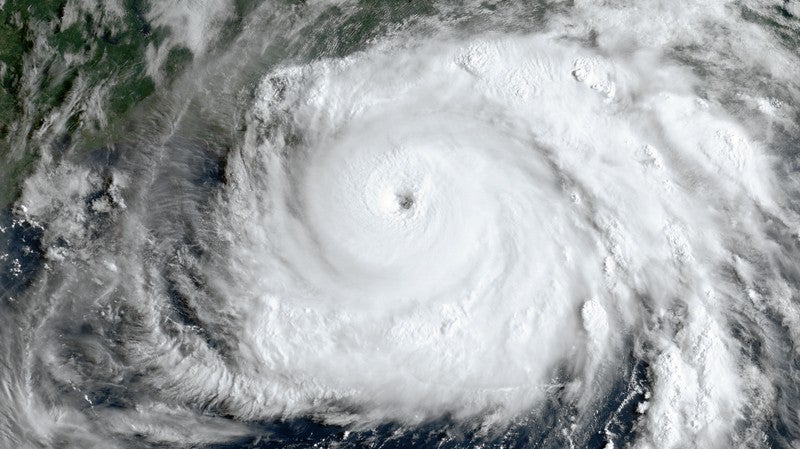
Over the weekend, tropical storms Peter and Rose became the 16th and 17th named storms of this year’s Atlantic hurricane season, respectively. But what’s in a name, or at least a tropical storm or hurricane name?
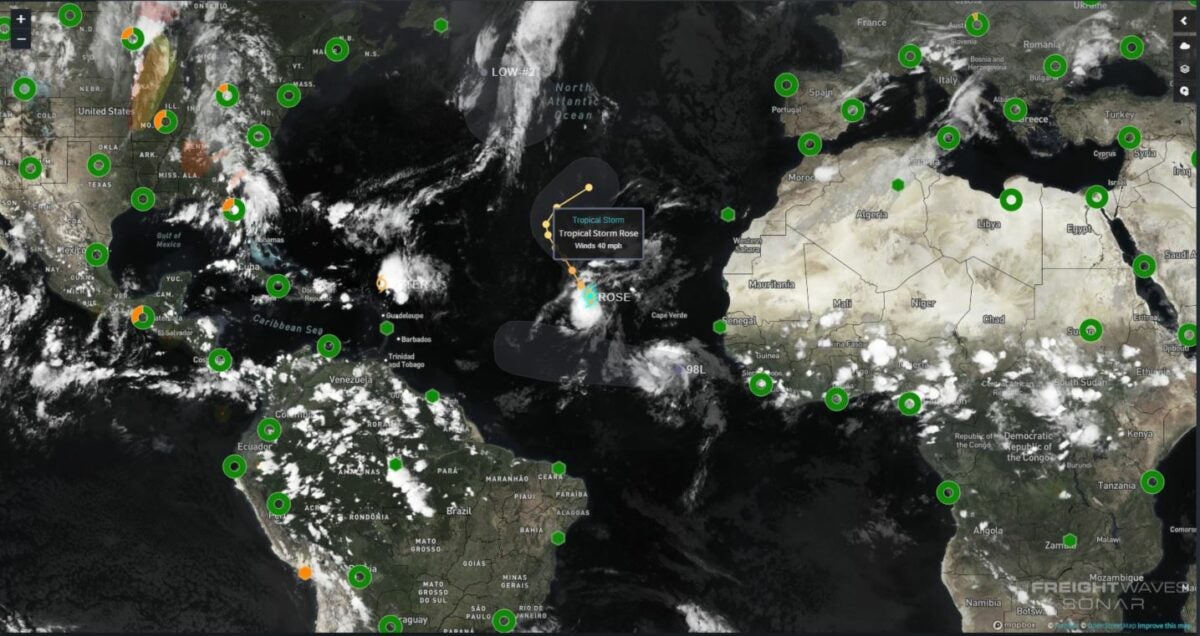
Before they started naming storms, hurricane forecasters referred to them by saying something like “the storm 500 miles east-southeast of Miami.” But six hours later, the storm’s position would change.
Also, when more than one storm was going on at the same time, it was more difficult to make clear which storm was being described. Forecasters needed to come up with a better method of tracking tropical storms and hurricanes.
Early history
For several hundred years, many hurricanes in the West Indies were named after the particular saint’s day on which the hurricanes occurred.
For example, there was Hurricane Santa Ana that struck Puerto Rico on July 26, 1825, as well as San Felipe (the first) and San Felipe (the second) that hit Puerto Rico on Sept. 13 in both 1876 and 1928. These were described in the textbook “Hurricanes” by Ivan R. Tannehill, an early 20th century meteorologist at the U.S. Weather Bureau (which later became the National Weather Service).
Tannehill also told of Clement Wragge, an Australian meteorologist who began giving women’s names to tropical storms before the end of the 19th century.
An early example of the use of a woman’s name for a storm, in this case Maria, was in the novel “Storm” by George R. Stewart, published in 1941. During World War II, this practice became widespread in weather map discussions among forecasters, especially Army and Navy meteorologists who plotted the movements of storms over the wide ocean expanses.
Making it official
A tropical storm gets a name when its sustained winds reach 39 mph. It becomes a hurricane when its winds reach 74 mph, and the cyclone retains its name. A cyclone is a large storm system that rotates around a strong center of low atmospheric pressure (counterclockwise in the Northern Hemisphere, clockwise in the Southern Hemisphere).
In 1953, the U.S. abandoned a confusing 2-year-old plan to name storms by a phonetic alphabet (Able, Baker, Charlie, etc.) when a new international phonetic alphabet was introduced. That year, the National Hurricane Center began using female names for storms in the Atlantic basin — the Gulf of Mexico, Caribbean and western Atlantic. The NHC added male names in 1979.
Six lists of names are used in rotation and recycled every six years — i.e., the 2021 list will be used again in 2027. The lists of names are now maintained and updated through a strict procedure by an international committee of the World Meteorological Organization (WMO), based in Geneva.
The names on each list alternate alphabetically between male and female, and the first name on each year’s list alternates between male and female. For example, the first two names on the 2020 list were Arthur and Bertha. This year, the first two names were Ana and Bill.
The names are chosen from English, French and Spanish since those are the primary languages spoken in the countries impacted by tropical cyclones in the Atlantic basin. There are no Q, U, X, Y or Z names because of the lack of usable names that begin with those letters.
The NHC believes the use of easily remembered names greatly reduces confusion in exchanging detailed storm information among hundreds of widely scattered stations, coastal bases and ships at sea.
The nomenclature also less confusing when two or more tropical storms occur at the same time. For example, one hurricane can be moving slowly westward in the Gulf of Mexico, while at exactly the same time another hurricane can be moving rapidly northward along the Atlantic coast. In the past, confusion and rumors have arisen when storm advisories broadcast from radio stations were mistaken for warnings concerning an entirely different storm located hundreds of miles away.
There is a separate list for tropical storms and hurricanes that form in the eastern Pacific Ocean. In addition, separate lists are kept for typhoons in the western Pacific and tropical cyclones in the Indian Ocean.
Additional information
If a hurricane is particularly deadly or costly, the WMO “retires” the name and replaces it with a new one. Several names have been retired since the lists were created, including Andrew, Camille, Hugo and Katrina, just to name a few.
If a storm forms during the Atlantic offseason from Dec. 1 to May 31, it will take the next name in the list based on the current calendar date. For example, if a tropical cyclone formed on Dec. 28, it would take the name from the previous season’s list of names. If a storm formed in February, it would be named from the subsequent season’s list of names.
Prior to this year, the Greek alphabet was used if all the names on the primary list were exhausted, using such names as Alpha, Beta, etc. But from now on, the Greek alphabet won’t be used “because it creates a distraction from the communication of hazard and storm warnings and is potentially confusing,” the WMO said in a statement. The pronunciation guide for the alternate list can be found here.
Click here for more FreightWaves articles by Nick Austin.
You might also like:
Wildfire crews battling blazes — and supply chain kinks
Hours-of-service relief part of response to historic Minnesota drought
Brokerage Compliance Symposium
The day before F3. Every compliance issue you face - fraud exposure, carrier liability, FMCSA rules, cargo theft, insurance gaps - navigated by attorneys and operators defining best practices in a changing industry.
F3 Awards Dinner
The night before F3. FreightTech100 companies honored. FreightTech 25 and Shipper of Choice winners revealed live. Cocktail reception into dinner and live music - 300 industry leaders in one purpose-built room.
F3: Future of Freight Festival
Industry-defining keynotes, rapid-fire technology demos, and industry leaders networking in experiences across Chattanooga - plus the inaugural F3 Awards Dinner featuring the FreightTech and Shipper of Choice reveals.
The day before F3. Every compliance issue you face - fraud exposure, carrier liability, FMCSA rules, cargo theft, insurance gaps - navigated by attorneys and operators defining best practices in a changing industry.
The Signal at Chattanooga Choo Choo • Chattanooga, TN Register NowThe night before F3. FreightTech100 companies honored. FreightTech 25 and Shipper of Choice winners revealed live. Cocktail reception into dinner and live music - 300 industry leaders in one purpose-built room.
The Signal at Chattanooga Choo Choo • Chattanooga, TN Register NowIndustry-defining keynotes, rapid-fire technology demos, and industry leaders networking in experiences across Chattanooga - plus the inaugural F3 Awards Dinner featuring the FreightTech and Shipper of Choice reveals.
The Signal at Chattanooga Choo Choo • Chattanooga, TN Register Now