Why Trucking Rates Are Rising Without More Freight
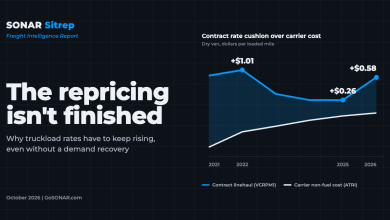
Truckload rates rose in 2026 on flat freight. SONAR data and ATRI’s 2026 cost study show carriers still earn too little to cover costs. See why rates must keep rising.
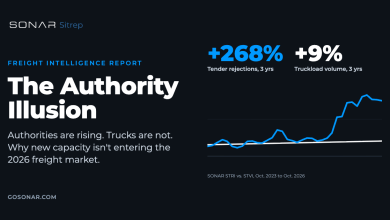

Tender rejections are up 268% in three years while volume is up 9%. SONAR data shows why new trucking capacity isn’t entering the 2026 market.
A recent SONAR Sitrep freight intelligence report examines how shippers can protect service and cost when market conditions change.
Commercial trucking carriers are in an increasingly expensive legal bullseye due to costly nuclear verdicts from civil lawsuits.
While a booming heavy-industrial sector has shielded certain segments, the broader housing affordability crisis is actively suppressing volumes across multiple shipping modes.
As the freight market undergoes a rapid reallocation of transportation responsibility, customer pick-up arrangements are reversing and causing incremental rate increases.
As van and flatbed volumes surge and rejection rates climb, the very conditions driving optimism are making it increasingly difficult for major fleets to recruit and retain drivers.
As the freight cycle recovers and utilization rises, the industry is confronting a massive accumulation of deferred maintenance from the prolonged freight recession of 2022–2026.
While global competitors in Europe and Asia are grappling with surging gas prices and heavy war-risk premiums, the United States is emerging as a structural winner in heavy manufacturing.
FreightWaves has compiled a comprehensive SONAR Sitrep detailing the ground-level logistics impact of America’s AI data center build-out.