




Stuart Chirls
Thursday, June 4, 2026
Peak indicator: $2,600 increase on one U.S. shipping service
A liner drops one of the biggest recent surcharges as demand surges for the peak shipping season.
A liner drops one of the biggest recent surcharges as demand surges for the peak shipping season.

Rate hikes and surcharges pushed up benchmark ocean container rates by $1,000 in the latest week, with more to come.

The Federal Maritime Commission regulator filled its remaining vacant seat with yet another Florida native.

Cargo through the Port of Oakland was little changed from a year ago despite a decline in total vessel calls.

Maersk paid a $1.9 million fine to the Federal Maritime Commission for improper detention billing to non-contracting third parties.

Maersk this week contradicted a consultant’s report that one of its vessels made a recent transit of a violence-plagued Mideast shipping route.

New Port of Virginia CEO and Executive Director Sarah McCoy spoke with FreightWaves at the hub’s annual State of the Port event.

In Virginia, South Korea’s LX Pantos Americas eyes collaboration that will enable long-term growth.

Prologis Ventures will co-anchor a $200 million venture fund dedicated to maritime and logistics innovation investments.
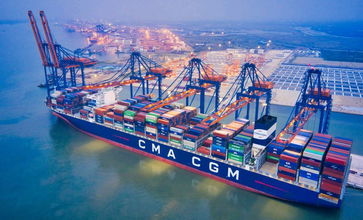
CMA CGM sees precipitous decline in Q1 core earnings as higher volumes failed to boost weak ocean rates.

Port Houston reported its first container slowdown since early 2025 in April, though executives say improving May volumes point to a quick recovery.

Long-serving International Longshoremen’s Association executive James McNamara inducted into the International Maritime Hall of Fame.

The Georgia Ports Authority said higher operating costs and a softer market were reflected in the latest container figures for the Port of Savannah.

The U.S. Justice Department has indicted four major Chinese shipping container manufacturers and seven executives in a global price-fixing conspiracy.

Ahead of a takeover by Hapag-Lloyd, Zim earnings were hit by a softer freight rate environment and weaker demand.

Southern California ports saw broadly steady container dwell in April across truck and rail.

As the peak season nears, freight rates are expected to shift from their currently high fuel-cost baselines due to seasonal demand and fleet capacity management.
Maersk led a growing stream of brand-name vessels transiting the Suez Canal-Red Sea route, says consultant Drewry.

The House released massive surface transportation reauthorization legislation that sets federal spending for infrastructure and services across a range of modes.

An investor’s surprise bid for ZIM Integrated Shipping Services would sweeten the buy price and keep the liner under Israeli control.

The biggest port in northern China is using an autonomous vacuum berthing system that secures a container ship in 30 seconds.

The Navy’s 30-year shipbuilding plan includes orders for 15 nuclear-powered battleships, dozens of autonomous vessels.

The United States and South Korea agreed to formally cooperate on shipbuilding investment and development.

Evergreen Marine Corp. saw first-quarter profit tumble 70% as higher container volumes were dragged by weaker shipping rates.
Flexport leaders said import demand remains uneven across North America, with Houston and East Coast ports gaining share.

Ocean freight rates on the trans-Pacific remain above pre-war levels as retailers warn of tepid peak season gains.

Hapag-Lloyd posted a loss in the first quarter as lower volume and weaker rates hit earnings.

The Justice Department is bringing criminal charges against the operators of a container ship that crashed into a Baltimore bridge in 2024, killing six people.

Chassis provider CCM has expanded its management team with a new senior vice president/general counsel coming over from a major Japanese auto maker.

One of the world’s biggest ocean shipping forwarders officially opened its new U.S. headquarters in New Jersey.

The Port of Los Angeles posted its second-best April ever as consumer-fueled volumes surged above year-ago levels.

A bulk carrier managed by a U.S. company was one of several vessels hit by suspected hostile fire in the Persian Gulf.

The Trump administration’s trade agenda is facing mounting legal and political pressure from importers, the European Union and automakers.

The U.S. Department of Transportation has launched an initiative to explore powering cargo ships with onboard nuclear reactors.

While Portland has struggled to keep the doors open at its lone container terminal, the Maritime Administration has awarded a grant to a similar project from a competing port.

The Georgia Ports Authority’s annual conference showcased supply chain solutions addressing global trade challenges.

Maersk said first-quarter profits fell as weaker rates undercut increased volumes in the ocean container business.

Sarah McCoy will lead the Port of Virginia as CEO and executive director after serving in an interim role this year.

While Panama chased a Chinese terminal operator out of its ports, U.S. companies face long odds in bidding for those port concessions, a source says.

The United States paused military escorts of ships in the Strait of Hormuz after a missile attack on a French container vessel injured crew members Tuesday.

Developers break ground on a new Baltimore container terminal they hope will spur a sea change in mid-Atlantic intermodal transportation.

American Association of Port Authorities tabs Sang Yi, second-in-command at the Maritime Administration, as its new chief executive.

A Maersk vessel under U.S. military contract made a safe exit from the Strait of Hormuz Monday, escorted by American warships.

Port Houston secured a $48 million grant to expand Bayport Container Terminal to boost capacity and truck flow.

Ocean freight rates remain high despite low seasonal demand due to increased fuel costs amid ongoing Strait of Hormuz closure.

The Port of Virginia is in the midst of a massive buildout as it leverages its operating status and structural advantages to cement a ranking among the top American container ports.

Port Houston’s March throughput climbed on grains and energy cargo, even as steel imports declined.

The Trump administration has temporarily extended the Jones Act waiver, allowing foreign vessels to carry oil and gas between U.S. ports.

The Iran war is making it more expensive to ship a container from Asia to the U.S., thousands of miles from the conflict.

America wants to make its maritime sector globally competitive again. But significant obstacles hinder development and expansion, says the chief U.S. ocean shipping regulator.

Persian Gulf vessel traffic still at a trickle as the U.S. presses a blockade of the Strait of Hormuz.
Global reach, transformational change and customer service: Chair Laura DiBella says this isn’t the Federal Maritime Commission you thought you knew.

The Federal Maritime Commission has again rejected a request by Maersk to waive the 30-day waiting period to implement emergency fuel surcharges.

It could take six months from the time hostilities cease for insurers to clear Strait of Hormuz shipping for normal operations.

A weaker March turned out to be a pre-season tuneup as the port of Los Angeles still managed to play up to the back of its baseball card.

Taxpayers won’t be funding automated container handling at two major West Coast ports.

Hong Kong-based Orient Overseas Container Line saw Q1 profits decline on weaker rates despite higher container volumes.

A bullish Evergreen Marine has finalized an order for 11 ultra-large container ships worth $3 billion with two Asia builders.

CMA CGM and the Ocean Alliance have added a direct container service from China and Asia markets to the Port of Jacksonville.

A growing disconnect between demand and pricing is emerging across freight markets, Flexport says.

The U.S. Army Corps of Engineers has allocated a record $131.8 million to the San Pedro Bay port complex, including $70 million for the Port of Los Angeles, to fund harbor maintenance, safety, and other projects.

Ocean container operations are stable across a global market outside the Middle East amid sharply higher fuel costs and uncertain availability.

A plan to charge ships a toll to cross the Strait of Hormuz could further increase fuel prices; container ships trapped in the Persian Gulf have yet to move after the U.S.-Iran ceasefire.

President Trump wants to increase federal spending for shipbuilding by 242%, to $65.8 billion, for battleships, submarines and other military vessels, according to documents released by the White House on Tuesday.

The chief executive of the Port of Montreal has departed after just two years on the job, amid soaring cost estimates for a major new container terminal project.

Disruption in the Strait of Hormuz forced tens of thousands of vessel route diversions in the first month of the Iran war, indicating a significant and sustained shift in global shipping, according to visibility platform project44.

The Federal Maritime Commission for the second time declined to waive the 30-day waiting period to implement an emergency fuel surcharge Maersk says it urgently needs to recoup rising operating costs.

A key on-dock rail hub at the busiest U.S. port has effectively doubled the terminal’s capacity.

A 5,500-TEU container ship operated by CMA CGM of France marked the first transit by a major ocean line through the Iran-controlled Strait of Hormuz.

U.S. Secretary of State Marco Rubio accused China of ‘bullying’ by detaining dozens of Panama-flagged ships at its ports.

Global repercussions of the Iran war are being felt throughout the supply chain, says an analyst, on sharp increases in ocean container rates.

Logistics providers are ramping up investments in Canada as e-commerce growth and cross-border trade drive demand for warehousing, fulfillment and drayage services.

President Trump is reportedly considering a U.S. withdrawal from the Iranian conflict without re-opening the Strait of Hormuz.

A Korean industrial giant will help design a new-generation supply ship for the U.S. Navy.

The Federal Maritime Commission said it is closely monitoring retaliation by China against Panama-flagged ships that could compromise the U.S. supply chain.

A growing list of transportation companies filed for Chapter 11 in March, highlighting continued financial strain across the supply chain.
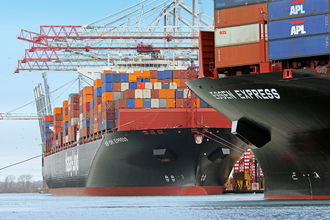
Hapag-Lloyd’s CEO said that the war in Iran is costing the container carrier $40-$50 million per week for added fuel, insurance and other expenses.

TheMaritime Administration announced nearly $489 million in funding aimed at revitalizing U.S. ports, shipyards, and maritime capabilities.

Hapag-Lloyd said 2025 profits fell sharply and warned of a challenging year for shipping on higher costs and ongoing geopolitical risks.

CMA CGM has deployed the hybrid diesel-wind-powered Neoliner Origin to its trans-Atlantic rotations.

February import volumes fell by double digits at the Port of Oakland as export traffic led cargo activity.

California ports are requesting $1 billion in the fiscal 2027 budget to fund infrastructure, modernization and supply chain readiness across the state’s 11 deep-water hubs.

The Federal Maritime Commission rejected a request by ocean lines to shorten the notice period for rate hikes amid the conflict in Iran and the Strait of Hormuz.

New Federal Maritime Commission Chair Laura DiBella says the Trump administration is making the strongest push in decades to support the domestic shipping industry.

Port Houston officials passed a new rule set to take effect May 1 aimed at pressing shippers to move refrigerated cargo faster.

As logistics providers look for the greenshoots of spring’s business revival, ocean shipping is seeing a range of changes weighing on the outlook for the maritime supply chain.

A U.S.-flag line says Jones Act carriers provide stable, long-term commitments even as President Trump suspended the shipping law barring foreign lines from hauling cargo between American ports.

Mediterranean Shipping Co., the world’s largest ocean container carrier, has acquired joint ownership stake in a fleet of tankers.

Exports prop up overall container volumes at the Port of Long Beach.

President Trump has temporarily waived the Jones Act for energy shipping and other commodities after the war in Iran sent gas prices soaring.

Port of Memphis Executive Director Randy Richardson, who led development of the inland hub, will retire at the end of this year.

One shipping line is charging shippers for free extended storage time in the war-torn Persian Gulf, while several countries are reportedly in talks with Iran to get trapped vessels safely through the Strait of Hormuz.

The ranking member of the Senate budget committee said bipartisan progress was being made on the highway bill and other crucial transportation funding legislation.

The newly-appointed chief of the U.S. shipping regulator says the United States must completely rebuild its industrial maritime complex if it wants to reclaim leadership on the global stage.

The United Kingdom plans to send minesweeping drones to reopen the Strait of Hormuz instead of Trump’s demand for ships, fearing escalation of violence that has blocked oil shipments from the Persian Gulf.

Ocean carrier CMA CGM will re-flag 30 ships under the French flag, a year after its chief executive appeared in the Oval Office to support plans to revive the American maritime sector.

A farm trade group warned President Trump that the closure of the Strait of Hormuz could send fertilizer prices higher, potentially raising food prices for consumers.

Decades of underinvestment have left the Gulf region with few alternatives to the Strait of Hormuz, an analyst says.

Flexport’s latest release comes at a time when some of its features stand to benefit from current events.

The top U.S. container port saw near-record volume in February as continued consumer resilience outpaced middling economic indicators.