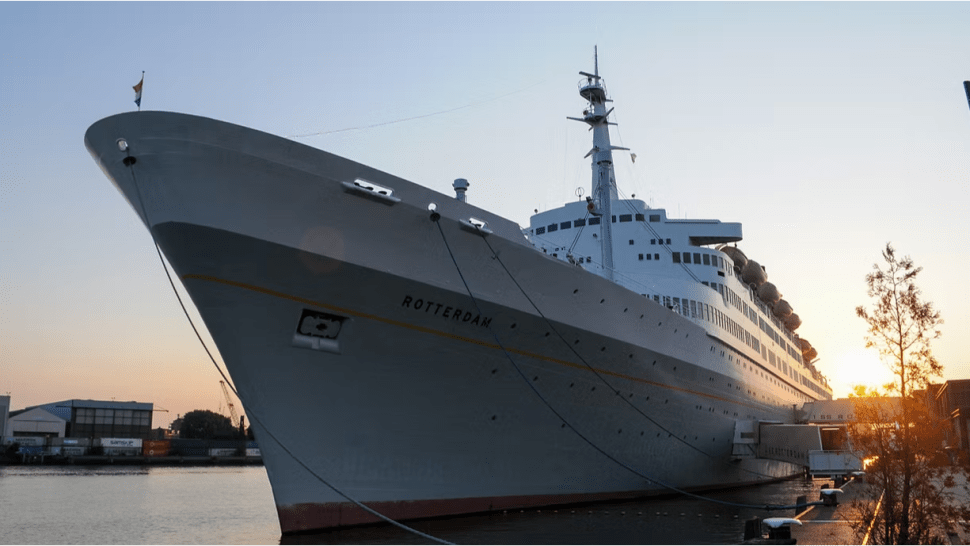
Aircraft carriers and submarines have been using it for years, so why not fuel merchant ships with nuclear power?
The U.S. Department of Transportation and the Maritime Administration has launched an initiative to develop Small Modular Nuclear Reactors (SMRs) for commercial shipping.
The Maritime Administration (Marad)’s Request for Information (RFI) seeks to develop a practicable SMR as part of the Trump administration’s plans to revitalize U.S. shipbuilding.
DOT Secretary Sean Duffy in a release said that innovative thinking is needed to secure the future of the American shipbuilding industry.
“To successfully introduce SMRs, we must view this through a system-transition lens rather than just as a technology demonstration,” said Marad Administrator Stephen Carmel, in the release. “We are seeking critical insights on how the government can help reduce systemic uncertainty, align regulatory structures, and enable the market conditions necessary for private capital and operators to scale these groundbreaking technologies.”
In the U.S., Kairos Energy is the only firm actively building an advanced small modular reactor, and it is constructing demonstration reactors in Tennessee. X-energy is planning reactors with partners such as Amazon and Energy Northwest in Washington state, with operations expected in the early 2030s.
The NS Savannah remains the only U.S. nuclear-powered civilian vessel. It was launched in 1959 under the Eisenhower administration’s postwar “Atoms for Peace” program, and is one of only four such ships ever built.
MARAD Administrator Stephen Carmel in the release re-emphasized a core tenet of the the administration’s Maritime Action Plan, that the U.S. sector must establish a new “system of systems”, with nuclear power serving as a transition agent in the process.
“To successfully introduce SMRs, we must view this through a system-transition lens rather than just as a technology demonstration,” Carmel said. “We are seeking critical insights on how the government can help reduce systemic uncertainty, align regulatory structures, and enable the market conditions necessary for private capital and operators to scale these groundbreaking technologies.”
The RFI highlights a number of ways nuclear power would advance the maritime agenda:
- Efficiency: Deploying reliable, high-power energy to allow commercial ships to travel farther and faster
- Affordability: Small modular reactors that will largely eliminate fuel costs and reduce maintenance requirements
- National Security: Reinforcing American supply chains and securing energy independence to bolster national defense
- Scalability: Identifying streamlined deployment methods to integrate nuclear power across entire fleets and logistical networks
- Shipbuilding & Workforce: Integrating SMNR production into U.S. shipyards to build strong robust workforce pipelines and new credentialing standards
- Regulatory Readiness: Establishing liability, insurance, and inspection frameworks to ensure seamless port access before construction begins.
“To secure this future for America’s shipbuilding industry, we need to innovate,” said Duffy. “By partnering with industry experts and outside-the-box thinkers to develop a strong SMR model, we will deliver a state-of-the-art energy source that cuts costs and bolsters national security.”
Marad is collaborating with the U.S. Coast Guard, the Nuclear Regulatory Commission, and the Department of Energy, and plans to collect additional input through public workshops, listening sessions, and technical exchanges.
Read more articles by Stuart Chirls here.
Related coverage:
Georgia Ports’ $5B bet: Rewriting supply chain logistics
Weaker ocean rates hit Maersk Q1 profit
Panama container terminal bidding stacked against U.S. companies: Source
Tradepoint Atlantic, MSC break ground on Baltimore container terminal
Brokerage Compliance Symposium
The day before F3. Every compliance issue you face - fraud exposure, carrier liability, FMCSA rules, cargo theft, insurance gaps - navigated by attorneys and operators defining best practices in a changing industry.
F3 Awards Dinner
The night before F3. FreightTech100 companies honored. FreightTech 25 and Shipper of Choice winners revealed live. Cocktail reception into dinner and live music - 300 industry leaders in one purpose-built room.
F3: Future of Freight Festival
Industry-defining keynotes, rapid-fire technology demos, and industry leaders networking in experiences across Chattanooga - plus the inaugural F3 Awards Dinner featuring the FreightTech and Shipper of Choice reveals.
The day before F3. Every compliance issue you face - fraud exposure, carrier liability, FMCSA rules, cargo theft, insurance gaps - navigated by attorneys and operators defining best practices in a changing industry.
The Signal at Chattanooga Choo Choo • Chattanooga, TN Register NowThe night before F3. FreightTech100 companies honored. FreightTech 25 and Shipper of Choice winners revealed live. Cocktail reception into dinner and live music - 300 industry leaders in one purpose-built room.
The Signal at Chattanooga Choo Choo • Chattanooga, TN Register NowIndustry-defining keynotes, rapid-fire technology demos, and industry leaders networking in experiences across Chattanooga - plus the inaugural F3 Awards Dinner featuring the FreightTech and Shipper of Choice reveals.
The Signal at Chattanooga Choo Choo • Chattanooga, TN Register Now