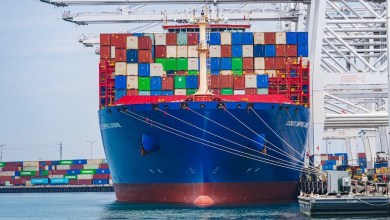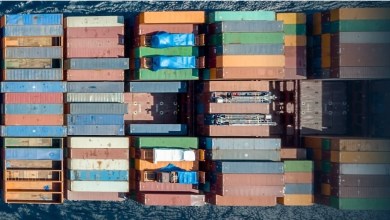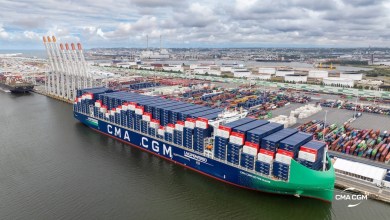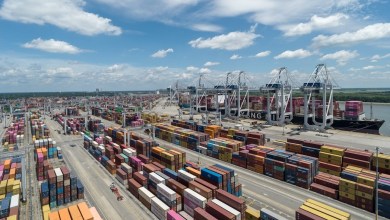
Maersk Asia-US voyage successfully tests Red Sea transit
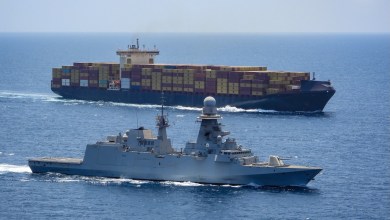
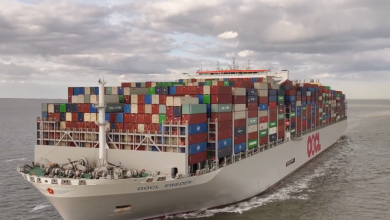
A Maersk vessel made a successful transit of the Red Sea, but the carrier said it is not ready to commit to a full return to the Suez Canal trade route.
The global shipping industry is constantly evolving, and the COVID-19 pandemic began a marked shift in how container shipping operates. Disruption caused by the pandemic has forced the industry to expand its capacity and reduce costs to remain profitable.
At the peak of the pandemic, containers essentially stopped moving. As manufacturers went into lockdown and closed factories, many of the containers used to ship those manufactured goods were left stranded at ports or storage depots, where they weren’t needed. Simultaneously, freight shippers were reducing the number of vessels in use due to the manufacturing slowdown. This limited global shipping capacity and disrupted the worldwide flow of containers and goods. As a result, some regions were left with an excess of stored containers, while other places were left with no containers at all.
As the pandemic slowed and the global economy began to rebound, labor shortages and congestion at ports have left many of these stored containers stuck where they aren’t needed. Now, instead of a shortage of shipping containers, the industry is dealing with too many. Many container storage depots are turning away new clients due to lack of space, and some shippers are even giving containers away to make room. Blank and cancelled sailings are increasing as well, as shippers decide to skip a port or cancel a trip altogether in order to manage changes in demand and capacity.
Check back here for the latest news and insights on the state of the container shipping industry. You can also visit our maritime news archive to learn more about cargo shipping, or our American Shipper archive for air cargo shipping industry news.
A Maersk vessel made a successful transit of the Red Sea, but the carrier said it is not ready to commit to a full return to the Suez Canal trade route.
Despite trade uncertainty, Port of Los Angeles volume nears 10 million TEUs in 2025, among the top three years in its history.
The top U.S. East Coast port adds more than three decades to lease with its busiest container terminal operator as it eyes long-term growth.
Ocean Network Express will return to the Red Sea in a slot charter agreement with Regional Container Lines of China
China is pushing for state-owned ship operator Cosco to acquire a controlling stake in a $22.8 billion deal for global ports that include two Panama Canal hubs.
Capacity reductions and additional blanked sailings by carriers struggle to maintain recent General Rate Increases on the trans-Pacific.
Nauta was founded just a year and a half ago on the premise that global supply chains run on unglamorous but essential work, and that this work is long overdue for a technological upgrade. Built by a team of technologists and logistics obsessives, the company set out to build an AI-native operating system for importers. […]
Maersk and Hapag-Lloyd said they are eliminating a U.S. East Coast call as the Gemini partners fine-tune North Europe-North America services.
Maersk has appointed a new CFO and shifted regional business leaders, including for North America, as rival carriers chip away at its dominant position in the global shipping business.
A supply and demand imbalance continues to weaken pricing on U.S. container trade routes as ocean carriers chase a softer market with more ships, particularly to the U.S. East Coast, Xeneta data shows.
DP World is rebranding its Unifeeder liner operator and two other divisions as it unifies its Marine Services units.
Mexico approved tariffs of up to 50% on Chinese and Asian imports, a move analysts say is aimed at placating the Trump administration.
A car accident claimed the life of a Florida port executive early Monday in Jacksonville.
Year-over-year declines in import cargo volume at major container ports are expected to continue in 2026 due to the impact of tariffs and ongoing trade policy uncertainty.
A recent uptick in eastbound container rates couldn’t offset trans-Pacific prices that are 20%-30% lower than a month ago.
The Alabama Port Authority has begun the $100 million reconstruction of Pier B South, while construction advances on the Montgomery Intermodal Container Transfer Facility.
Hapag-Lloyd wants to buy Israel’s Zim container line, but Arab investment in the German company could push a deal to another suitor.
A global ocean container index rose 7% amid rate adjustments on key trans-Pacific and Asia–Europe routes.
Port of Long Beach second-in-command Noel Hacegaba is moving up to chief executive as Mario Cordero departs.
Costco has sued the Trump administration to secure potential refunds on its import tariffs.
Container ships sailing through the Suez Canal marked the second-lowest weekly level amid talk of a return by the largest box carriers through the Mideast trade route.
U.S. ports urge strict evaluation by Surface Transportation Board of proposed transcontinental rail merger, cautioning on impact to the supply chain and economy.
Container rates on the benchmark Asia-U.S. container trade route fell due to overcapacity, while a Red Sea return may pressure rates, and congestion.
Maersk denied reports that it has set a timeline to resume services through the Red Sea-Suez Canal route.
CMA CGM has expanded barge service for containers moving from North Vietnam to the port of Haiphong and connections to the United States.
More than a hundred firefighters and emergency personnel were battling an electrical fire aboard a ONE container ship that shut four terminals at the Port of Los Angeles.
Port Houston showed strong October cargo gains, including an 18% jump in containers and a 21% surge in breakbulk.
Maersk is moving its North American headquarters to North Carolina after many years operating out of northern New Jersey.
Investigators said an improperly placed label on a wire caused a container ship to lose power and crash into the Francis Scott Key bridge in Baltimore in 2024.
Steady October volume has put the Port of Los Angeles within reach of 10 million TEUs for a record third consecutive year.
Now-paused port fees on Chinese ships were a misguided attempt to revitalize U.S. maritime fortunes at the expense of American exporters, a trade group leader says.
The Port of Oakland saw loaded containers improve 2.2% October from September as global shipping rebalanced.
The world’s third-largest container carrier said Q3 profits fall 72.6% on geopolitics and heightened trade tensions.
A Trailer Bridge barge that was looted after it grounded in the Bahamas is on the way back to Jacksonville.
Declining container volumes are aiding port and terminal operations, but trucking issues could impact the supply chain in 2026, a new report finds.
Hapag-Lloyd saw profits tumble as global trade uncertainty hurt container rates despite higher revenue.
Descartes: U.S. container imports in October posted only the second month-over-month decline in the past decade.
Yemen militia’s possible halt to Red Sea attacks may drastically cut shipping freight rates, but uncertainties persist.
Container lines are using rate hikes and blank sailings to manage capacity surplus and faltering demand.
Frontloading that fueled an early peak import shipping season helped keep Port of Long Beach container traffic ahead of 2024’s record pace despite a weaker October.
The U.S. Trade Representative officially suspended fees on cargo ships built in China, which whipsawed global shipping struggling to cope with the effects of tariffs and a realigning of trade.
The Suez Canal Authority held discussions with major ocean shipping lines to discuss a return to the strife-torn Red Sea route.
Container ports will see a more pronounced import slowdown to start 2026, the National Retail Federation predicts.
The Office of the U.S. Trade Representative is asking for public comment on the proposal to suspend port fees on Chinese ships.
A slate of China agreements clears some of the uncertainty around ocean shipping, but questions still surround demand in the U.S. and other markets.
Maersk adjusted a portion of its guidance upward for 2025 earnings after a quarter that saw higher volumes but lower profits.
Matson saw its shares gain as a positive outlook for China-related shipping outweighed weaker financial results in the third quarter.
Ocean Network Express said earnings fell in the recent quarter on weaker revenue per container, and revised its forecast lower for 2025.
The U.S. and China have agreed to a one-year trade truce that cuts tariffs, resumes U.S. soybean purchases and keeps rare earths exports flowing.
The United States and China have suspended their respective port fees on each other’s ships amid progress on a new trade agreement.
The Port of Baltimore welcomed the Neoliner Origin, the world’s first wind-powered, industrial-scale cargo ship to arrive in the United States.
Trans-Pacific container rates improved 15% to 20% last week as U.S. negotiators made progress on Asia trade deals.
Port Houston completed its portion of the Houston Ship Channel expansion, while residents press for offshore disposal of potentially contaminated dredge material.
U.S. container ports continue to author a strong comeback from the pandemic despite some current headwinds to trade conditions.
The U.S. maritime industry faces challenges and opportunities in global trade and shipbuilding, the former chairman of the Federal Maritime Commission tells F3: The Future of Freight Festival.
Asia-U.S. container rates rallied on carrier-imposed GRIs and tighter capacity, despite trade tensions.
MSC, the world’s largest ocean container line, may re-flag some vessels in India to align with new shipping rules.
Decrease in Oakland port volume reflects tariff uncertainty and shifting global trade flows, over seasonal trends.
Despite progress, the port of Los Angeles-Long Beach said hurdles remain to achieving their goal of zero-emissions drayage by 2035.
Dockworker unions in the U.S. and Europe are calling on labor to meet for a global anti-automation summit in November.
A proposal to tax ship emissions has been postponed after President Trump said the U.S. wouldn’t abide by any international agreement.
Strong Q1 for South Carolina inland, ro/ro as trade issues damped volumes at the Port of Charleston.
Container rates on key trans-Pacific routes accelerated their decline as China and the U.S. escalated their trade war.
The Port of Los Angeles, despite lower September imports, posted an all-time record quarter for container volume.
Labor criticizes California Governor Gavin Newsom after he vetoed a bill to limit public funding for port automation.
China won’t collect port fees on Chinese-built U.S. cargo vessels.
China announced sanctions on the U.S. units of a South Korean company aiding U.S. shipbuilding.
Global container traffic posted strong results in August, with North America a notable exception, according to newly-released data.
The United States is threatening penalties ranging from port fees to barring ships from entry on nations that back a controversial carbon tax on ships’ emissions.
The United States Trade Representative has added new tariffs of 100% on Chinese-made ship-to-shore container cranes and 150% on cranes used to move containers around terminals.
China will levy port fees on U.S.-flagged and -owned ships, the latest escalation in the trade war with the United States.
A Danish diplomat said shipping giant Maersk is closely following events in the Middle East as it eyes a return to the Suez Canal.
September import data shows resilient demand despite tariff effects that caused steep declines in a number of key goods categories.
Logistics leaders say shippers are turning to data visibility, transparency and nearshoring in Mexico to navigate rising supply chain costs and uncertainty.
Containerized imports are likely to take a hit from earlier-than-normal stocking up by retailers and expanding tariffs through the remainder of 2025, a trade group predicts.
Container rates on the eastbound trans-Pacific fall by double-digits as ocean shipping braces for new U.S. port fees.
Plans to end the war in Gaza should help global shipping return to the Suez Canal in 2025, the waterway’s chief said.
National Tree Co. CEO warns that tariffs and inflation are adding millions in costs and could tighten supplies of artificial trees and holiday décor.
While Israel and Hamas meet to discuss a U.S. proposal for ending the war in Gaza, it’s uncertain whether a peace deal will return major shipping lines to the Red Sea and Suez Canal.
Port of Long Beach CEO Mario Cordero is stepping down at the end of the year, capping off over two decades of service to the U.S. container trades.
The Port of Los Angeles wants to build an all-new container terminal to accommodate the biggest container ships on the planet.
August container traffic was 9% higher year-on-year in August at Georgia’s Port of Savannah.
Container rates on the trans-Pacific reached two-year lows as weak demand is expected to continue through the end of the year.
China sets new port fees, could bar U.S. ships in retaliation for charges on Chinese shipping set to take effect in October.
Customs and Border Protection will continue to fund cargo inspections and other essential services during a government shutdown.
Houston’s August volumes rose 1%, while Corpus Christi oil exports fell and New Orleans container traffic slid 8%.
CSX has officially opened the Howard Street Tunnel after a clearance project that will boost container volume at the Port of Baltimore.
Shifting political winds and a trade reset will limit global growth in containerized shipments to about 2% annually, according to a new United Nations forecast.
DHL is rapidly expanding its team of customs agents in the U.S. to help shippers comply with a proliferation of new Trump tariff rules even as it reports a slump in import volumes.
Containerized imports are set to dive in 2025, an analyst predicts, as President Trump’s tariffs take a toll on China-U.S. trade.
Maersk won’t levy a surcharge when U.S. fees on China-linked ships take effect in October.
Hawaii and other American territories called for changes to the Jones Act, citing unfair economic burdens outside the continental United States.
August was a strong month for the Port of Los Angeles, but that could be the end of the good news in 2025 for the busiest U.S import gateway.
The Ports of Los Angeles-Long Beach managed near-record cargo volumes while maintaining fluidity across marine terminals, as dwell times for truck and rail-bound containers fell in August.
Ocean rates climb as a deal for social media’s TikTok heralded an upbeat outlook for China-U.S. trade relations.
Amid fears that tariffs and frontloading would slow the peak shipping season, new data from a bellwether U.S. import gateway shows otherwise.
China’s move to cut U.S. soybean purchases in favor of South America could trigger widespread job losses and strain supply chains.
Container spot rates on the eastbound trans-Pacific reverse course as liner operators redeploy Chinese-built ships away from U.S. services ahead of punitive port fees.
Import cargo at U.S. container ports is expected to decline through the end of 2025 despite near-record summer volume.
Asia-U.S. container shipping rates moved up due to an upcoming Chinese holiday and carriers adjusting vessel schedules.