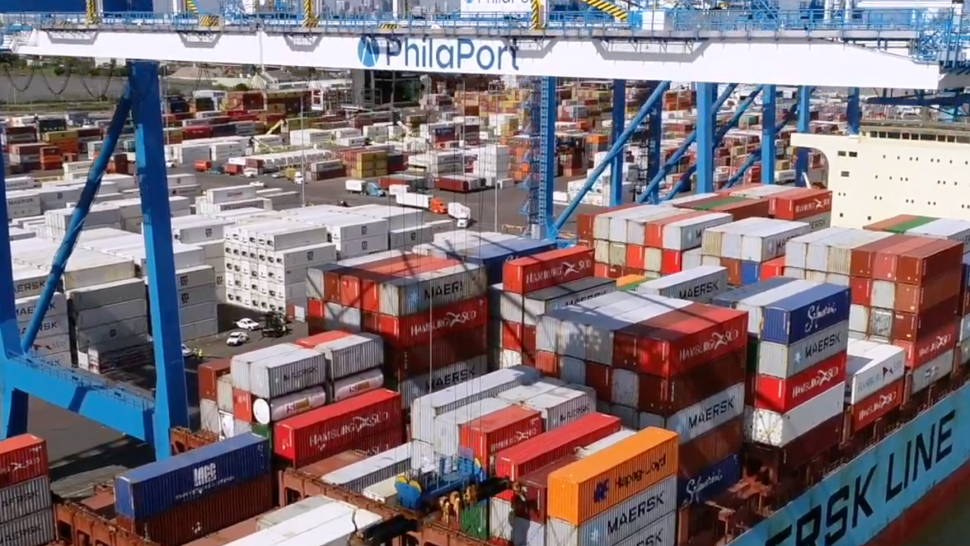
Maersk and Hapag-Lloyd are eliminating calls at the port of Baltimore, among several changes to their Gemini cooperation’s North Europe-North America services.
To better align with customer needs, Philadelphia will replace Baltimore on the TA3 service, Maersk (MAERSK-B.CO) said in a customer advisory Monday.
The new rotation is Southampton – Rotterdam – Hamburg – Wilhelmshaven – Newark – Norfolk – Philadelphia – St. John – Southampton. The new schedule kicks off with the sailing of the Maersk Fredericia from Southampton Jan. 4.
Hapag-Lloyd (HLAG.DE) in an update said its North Europe–North America AL1 service and Americas Service Northbound Service (USW) will omit Baltimore “for schedule recovery”.
The changes comes as the Maryland port continues to recover from the collapse of the Francis Scott Key Bridge in 2024, which is now expected to take longer and cost more than originally planned. At the same time, CSX recently restarted operations on the city’s Howard Street tunnel following construction to clear the century-old bore for doublestack trains along the I-95 corridor. That was projected to boost Baltimore volume by as much as 160,000 containers per year.
Baltimore has long been known as the leading Northeast ro-ro hub, with vehicle traffic compromising more than 50% of all cargo, according to some reports. In 2024 Baltimore handled approximately 750,000 cars and light trucks as well as 850,000 tons of farm and construction equipment, second to Brunswick, Ga., among U.S. gateways. Disruptions from the Key bridge collapse hurt container throughput, which fell 41% from a record 1.26 million TEUs in 2023 to an estimated 741,215 TEUs.
“There are always adjustments made by ocean carriers in regard to ports of call in this business,” said port spokesperson Richard Scher, in an email to FreightWaves. “The Port of Baltimore remains well served by Maersk and Hapag-Lloyd with two weekly services. Maersk remains a very valued partner of the Port of Baltimore. Additionally, we are well-covered in this particular North European trade lane by MSC, Atlantic Container Line, Evergreen, ZIM (NYSE: ZIM), and Yang Ming.
Scher said the port has had “a very good year” for container traffic, ahead of both 2024 and record volume in 2023. Weekly ocean services increased from 12 to 15, and the port expects to set a new annual record for container ship calls. He added that Baltimore benefits from being the closest East Coast port to Midwest markets, and called the Howard Street tunnel a “significant gamechanger” that will help boost container volumes.
Maersk said it has also added an inbound call at St. John in Canada on its TA2 service. The new rotation is Antwerp – Southampton – Rotterdam – Hamburg – Saint John – Charleston – Savannah – Norfolk – Antwerp. The first vessel on the new schedule is the Kiel Express departing Antwerp Dec. 29.
The original version of this story referenced a 2019 study by Texas A&M that cited transit time to the Port of Baltimore of several days for ships transiting the Chesapeake Bay. Current transit time is eight to 10 hours for vessels entering the Chesapeake Bay in Virginia, according to the port.
Find more articles by Stuart Chirls here
Related coverage:
Maersk tabs new CFO, North American chief in global leadership shakeup
Seamless integration behind DP World rebrand of ocean container line
Brokerage Compliance Symposium
The day before F3. Every compliance issue you face - fraud exposure, carrier liability, FMCSA rules, cargo theft, insurance gaps - navigated by attorneys and operators defining best practices in a changing industry.
F3 Awards Dinner
The night before F3. FreightTech100 companies honored. FreightTech 25 and Shipper of Choice winners revealed live. Cocktail reception into dinner and live music - 300 industry leaders in one purpose-built room.
F3: Future of Freight Festival
Industry-defining keynotes, rapid-fire technology demos, and industry leaders networking in experiences across Chattanooga - plus the inaugural F3 Awards Dinner featuring the FreightTech and Shipper of Choice reveals.
The day before F3. Every compliance issue you face - fraud exposure, carrier liability, FMCSA rules, cargo theft, insurance gaps - navigated by attorneys and operators defining best practices in a changing industry.
The Signal at Chattanooga Choo Choo • Chattanooga, TN Register NowThe night before F3. FreightTech100 companies honored. FreightTech 25 and Shipper of Choice winners revealed live. Cocktail reception into dinner and live music - 300 industry leaders in one purpose-built room.
The Signal at Chattanooga Choo Choo • Chattanooga, TN Register NowIndustry-defining keynotes, rapid-fire technology demos, and industry leaders networking in experiences across Chattanooga - plus the inaugural F3 Awards Dinner featuring the FreightTech and Shipper of Choice reveals.
The Signal at Chattanooga Choo Choo • Chattanooga, TN Register Now