The trans-Pacific container market continued its volatile Q4 trend last week, according to analyst Freightos, with West Coast prices rising 8%, or $200, to about $2,100 per forty foot equivalent unit (FEU) as carriers increased blanked sailings during the low-demand period, aiming to partially implement General Rate Increases (GRIs) on a bi-weekly basis.
East Coast rates dropped 3% to approximately $3,000 per FEU, although daily prices this week have risen by $300, and now exceed $3,350.
Freightos (NASDAQ: CRGO) research head Judah Levine in a note to clients said that while rates may experience short-term retreats, a more durable increase is expected as the Lunar New Year approaches. Despite the recent fluctuations, carriers have successfully sustained residual gains, keeping prices above the lows recorded in early October.
Levine said “more disciplined capacity management” on Asia-Europe lanes that have pushed up rates for much of Q4. But he cited reports of increasing demand as Europe’s importers get an early start on pre-Lunar New Year orders, when China factories shut down for several weeks, spurring volume strength supporting the latest GRIs, with some carriers even restoring some announced blankings.
Last week, Asia-North Europe prices increased by 11% to over $2,700 per FEU. Rates to the Mediterranean also saw a significant 15% rise to $3,850 per FEU, with daily prices now exceeding $4,000. Both trade lanes have returned to rate levels not seen since this past summer.
Like 2024, shippers are looking to build inventories now rather than wait until after Lunar New Year when continued diversions by carriers away from the Red Sea will mean longer waits for cargo.
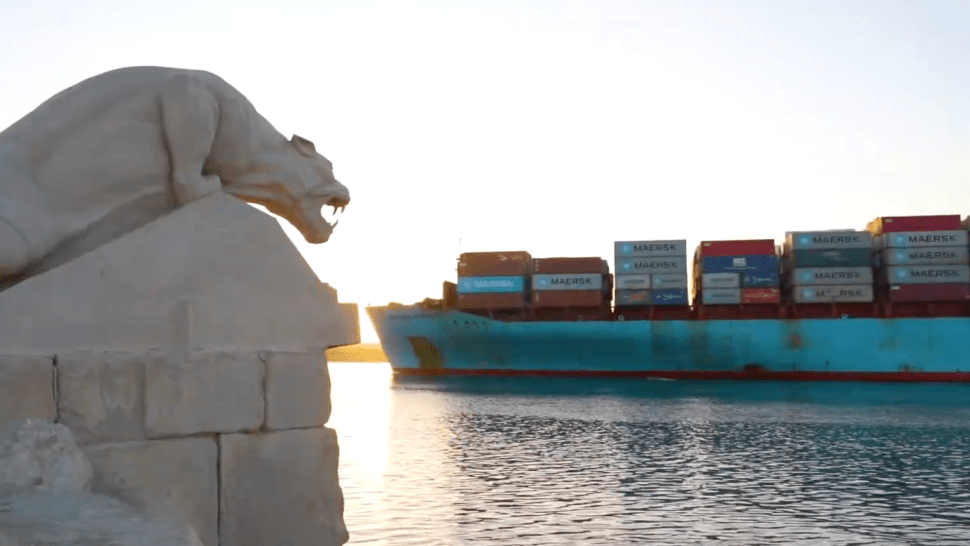
While Maersk (MAERSK-B.CO) recently tested its first Red Sea voyage in two years, and ONE also expands services there, barriers to a full-scale return remain. Yemen’s Houthi rebels this week in a statement noted the failure of U.S. military campaigns by the Trump and Biden administrations to break their blockade of shipping in support of Palestinians in Gaza. They warned of further action if the Gaza ceasefire fails to hold.
Analysts have said a full Red Sea re-opening could see a total of 2 million TEUs’ capacity released back into the market. This will lead to significant vessel bunching and congestion at European hubs, said Levine, and likely cause equipment shortages at Far East ports as carriers seek to shorten vessel time spent at berth.
“The shift back will be disruptive and cause delays and rate increases whenever it occurs,” he said, “though the effect would be weaker if the return is in the low demand, spring months post-LNY and pre-peak season, and stronger if it coincides with peak season demand increases.
“Once that congestion unwinds though, the Red Sea return will increase the amount of capacity available in an already oversupplied market. New vessel deliveries will decrease in 2026 compared to 2025, but the impact of the increase in supply on rates – even if Red Sea diversions continue – will likely be significant nonetheless, with higher levels of newbuild deliveries set for 2027 and 2028.”
Find more articles by Stuart Chirls here.
Related coverage:
Marad chief, FMC nominee confirmed
Philadelphia’s Theobald becomes fourth major port chief to exit this year
Port Houston November volumes dip, but exports up 8% year to date
Ocean rates: New Year promises a good ‘blanking’ for US East Coast
Brokerage Compliance Symposium
The day before F3. Every compliance issue you face - fraud exposure, carrier liability, FMCSA rules, cargo theft, insurance gaps - navigated by attorneys and operators defining best practices in a changing industry.
F3 Awards Dinner
The night before F3. FreightTech100 companies honored. FreightTech 25 and Shipper of Choice winners revealed live. Cocktail reception into dinner and live music - 300 industry leaders in one purpose-built room.
F3: Future of Freight Festival
Industry-defining keynotes, rapid-fire technology demos, and industry leaders networking in experiences across Chattanooga - plus the inaugural F3 Awards Dinner featuring the FreightTech and Shipper of Choice reveals.
The day before F3. Every compliance issue you face - fraud exposure, carrier liability, FMCSA rules, cargo theft, insurance gaps - navigated by attorneys and operators defining best practices in a changing industry.
The Signal at Chattanooga Choo Choo • Chattanooga, TN Register NowThe night before F3. FreightTech100 companies honored. FreightTech 25 and Shipper of Choice winners revealed live. Cocktail reception into dinner and live music - 300 industry leaders in one purpose-built room.
The Signal at Chattanooga Choo Choo • Chattanooga, TN Register NowIndustry-defining keynotes, rapid-fire technology demos, and industry leaders networking in experiences across Chattanooga - plus the inaugural F3 Awards Dinner featuring the FreightTech and Shipper of Choice reveals.
The Signal at Chattanooga Choo Choo • Chattanooga, TN Register Now