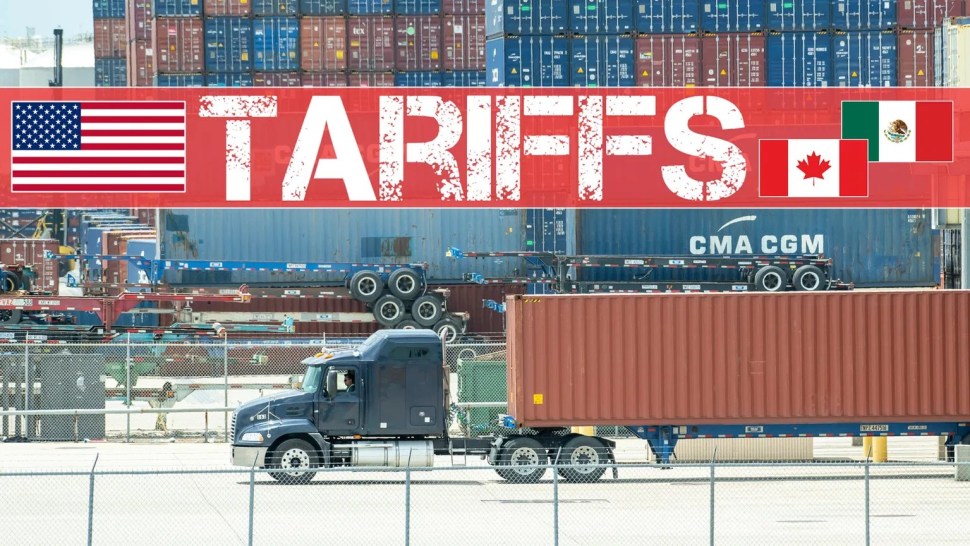
The Supreme Court delivered a major blow to President Donald Trump’s trade strategy Friday, ruling that he exceeded his authority by imposing sweeping tariffs under a national emergency statute.
In a 6-3 ruling, the justices held that Trump could not rely on the 1977 International Emergency Economic Powers Act (IEEPA) to levy broad “reciprocal” tariffs and country-specific duties tied to fentanyl enforcement.
The decision strikes down tariffs imposed using that emergency authority while leaving in place others enacted under separate trade laws, such as those covering steel and aluminum.
The invalidated tariffs included country-by-country “reciprocal” rates — ranging as high as 34% on Chinese imports — as well as 25% tariffs applied to certain goods from Canada, Mexico and China tied to drug trafficking concerns.
Small businesses demand refunds
Following the ruling, We Pay the Tariffs — a grassroots coalition of more than 800 small and micro businesses — called on the administration and Congress to implement what it described as “full, fast and automatic” tariff refunds.
“Today’s Supreme Court decision is a tremendous victory for America’s small businesses who have been bearing the crushing weight of these tariffs,” Executive Director Dan Anthony said in a news release. He added that members of the coalition “have paid billions in tariffs that never should have been imposed,” forcing some to freeze hiring, cancel expansion plans and take out loans to cover unexpected costs.
In December, Costco sued the Trump administration over its tariff policy, joining dozens of importers — including Revlon, Bumble Bee Foods, and Kawasaki — which filed similar lawsuits, hoping to receive refunds if the Supreme Court overruled the tariffs, according to NPR.
Retail and freight outlook
While the ruling removes a layer of tariff pressure, analysts caution that broader trade uncertainty remains.
“The Supreme Court’s ruling that President Trump lacks emergency authority to impose many of his administration’s tariffs removes one arrow from the administration’s quiver, but it doesn’t disarm it,” said Zak Stambor, principal analyst at eMarketer. “While the decision provides some near-term relief, it does not eliminate the broader trade policy uncertainty facing retailers and brands.”
Stambor said the firm expects the ruling to create a modest tailwind for retail sales beginning this year, projecting 2026 retail sales growth of 3.5% to $7.78 trillion — about $13 billion above its previous forecast.
The gains, he said, will likely be concentrated in import-heavy discretionary categories such as computers and consumer electronics, apparel and footwear, and furniture and home furnishings.
For freight markets, that suggests potential incremental volume upside in trans-Pacific container flows and domestic trucking tied to consumer goods distribution — though not a structural reset.
At the same time, Stambor noted that the administration could pursue tariffs under alternative trade statutes, including Sections 232 and 301.
“Those authorities come with stricter constraints and could face further legal challenges, but they reinforce that trade policy uncertainty isn’t going away anytime soon,” he said.
Supply chain ripple effects
IEEPA-related tariffs had generated roughly $130 billion in revenue as of mid-December, according to U.S. Customs and Border Protection data cited in court reporting
Companies, including major retailers and consumer brands, had already filed lawsuits seeking potential tariff refunds.
For North American supply chains — particularly U.S.-Mexico cross-border sectors including automotive, industrial goods and consumer products — the rollback of certain fentanyl-related tariffs could ease cost pressures in 2026.
However, the possibility of new tariffs under different legal authorities may limit long-term capital investment decisions and continue to cloud sourcing strategies.
Brokerage Compliance Symposium
The day before F3. Every compliance issue you face - fraud exposure, carrier liability, FMCSA rules, cargo theft, insurance gaps - navigated by attorneys and operators defining best practices in a changing industry.
F3 Awards Dinner
The night before F3. FreightTech100 companies honored. FreightTech 25 and Shipper of Choice winners revealed live. Cocktail reception into dinner and live music - 300 industry leaders in one purpose-built room.
F3: Future of Freight Festival
Industry-defining keynotes, rapid-fire technology demos, and industry leaders networking in experiences across Chattanooga - plus the inaugural F3 Awards Dinner featuring the FreightTech and Shipper of Choice reveals.
The day before F3. Every compliance issue you face - fraud exposure, carrier liability, FMCSA rules, cargo theft, insurance gaps - navigated by attorneys and operators defining best practices in a changing industry.
The Signal at Chattanooga Choo Choo • Chattanooga, TN Register NowThe night before F3. FreightTech100 companies honored. FreightTech 25 and Shipper of Choice winners revealed live. Cocktail reception into dinner and live music - 300 industry leaders in one purpose-built room.
The Signal at Chattanooga Choo Choo • Chattanooga, TN Register NowIndustry-defining keynotes, rapid-fire technology demos, and industry leaders networking in experiences across Chattanooga - plus the inaugural F3 Awards Dinner featuring the FreightTech and Shipper of Choice reveals.
The Signal at Chattanooga Choo Choo • Chattanooga, TN Register Now