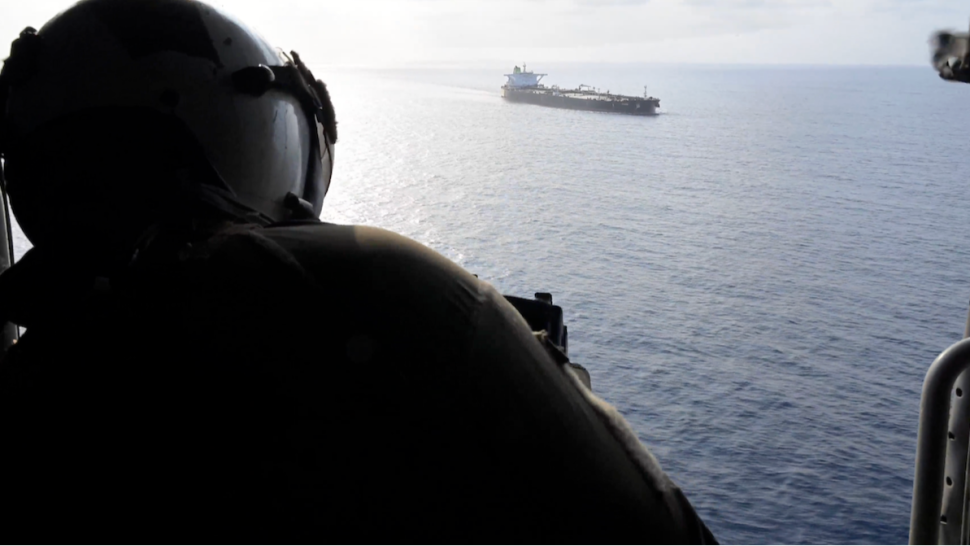
While the Strait of Hormuz remains a cynosure for global shipping, container rates on the benchmark Asia-U.S. trade lane continue their gradual rise.
“While the broader container market remains unaffected operationally by events surrounding the Iran war, fuel costs are still the main concern,” said Freightos (NASDAQ: CRGO) analyst Judah Levine, in a research note.
British security monitor UKMTO on Monday said it had received 33 reports of incidents affecting vessels operating in and around the Arabian Gulf, Strait of Hormuz, and Gulf of Oman. U.S. forces on Sunday fired on and disabled an Iranian container ship after it violated the blockade. Researcher Linerlytica reported that six MSC containerships made it through the strait Saturday after turning off their identification system. However, a number of CMA CGM vessels were turned back by Iranian forces, and an estimated 270,000 TEUs of capacity remain trapped in the Gulf.
Despite middling demand, the platform’s Baltic Index showed Asia-U.S. West Coast spot prices increased 7% to $2,653 per forty foot equivalent unit (FEU) this past week. Asia-U.S. East Coast prices rose 4% to $3,810 per FEU.
Prices are about $800 per FEU higher than before the start of the Iran but remain below levels prior to the Lunar New Year holiday in February.
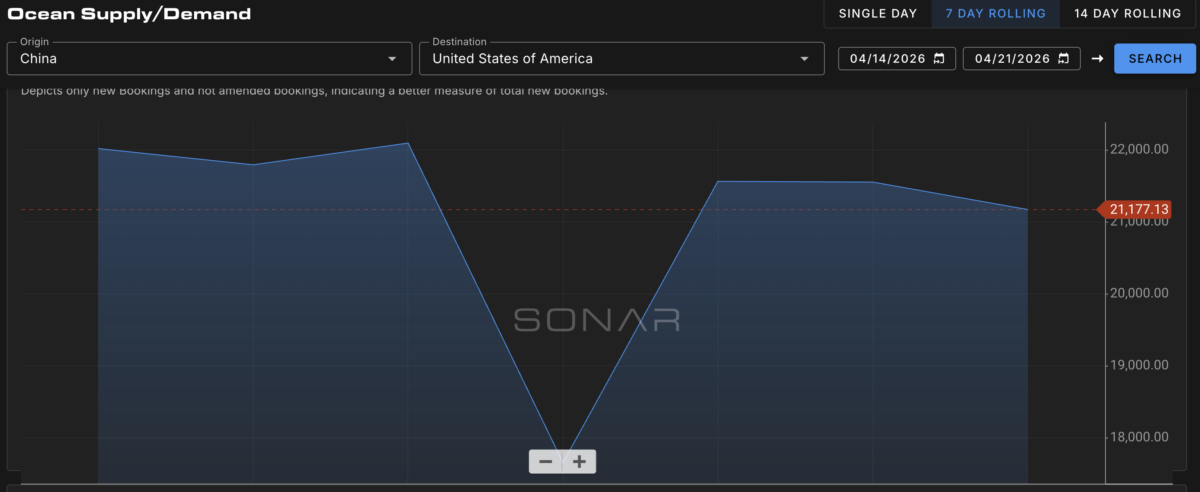
The SONAR Ocean Booking Index settled at 21,177.13 as of April 21, down from 22,025.36 a week ago.
Fuel and other surcharges have put upward pressure on rates during the March-April lull ahead of summer peak season. “But carriers have so far mostly not succeeded in pushing rates up to the full announced surcharge or general rate increase levels,” Levine said.
“Barring a significant spike in fuel prices or an actual shortage in fuel supply and availability, rate behavior since the start of the war may indicate that the chances of significant spot rate increases are slim until peak season,” he wrote. “And in the background is the possibility that the war and its impact on inflation rates could damp consumer demand and peak season container volumes with it.”
The Mideast hostilities have pushed up bunker fuel prices by 55% pre-war, but those have retreated 9% since the beginning of April. Reports of fuel shortages may have been overstated, “and in general terms there is still enough supply in the Far East – for now.”
Read more articles by Stuart Chirls here.
Related coverage:
US has lost its maritime focus, says FMC’s DiBella
FMC Chief: Ocean carriers knew war could increase fuel prices
Green light for Strait of Hormuz shipping could take six months after war’s end
Average March volume was actually good news for the Port of Los Angeles
Brokerage Compliance Symposium
The day before F3. Every compliance issue you face - fraud exposure, carrier liability, FMCSA rules, cargo theft, insurance gaps - navigated by attorneys and operators defining best practices in a changing industry.
F3 Awards Dinner
The night before F3. FreightTech100 companies honored. FreightTech 25 and Shipper of Choice winners revealed live. Cocktail reception into dinner and live music - 300 industry leaders in one purpose-built room.
F3: Future of Freight Festival
Industry-defining keynotes, rapid-fire technology demos, and industry leaders networking in experiences across Chattanooga - plus the inaugural F3 Awards Dinner featuring the FreightTech and Shipper of Choice reveals.
The day before F3. Every compliance issue you face - fraud exposure, carrier liability, FMCSA rules, cargo theft, insurance gaps - navigated by attorneys and operators defining best practices in a changing industry.
The Signal at Chattanooga Choo Choo • Chattanooga, TN Register NowThe night before F3. FreightTech100 companies honored. FreightTech 25 and Shipper of Choice winners revealed live. Cocktail reception into dinner and live music - 300 industry leaders in one purpose-built room.
The Signal at Chattanooga Choo Choo • Chattanooga, TN Register NowIndustry-defining keynotes, rapid-fire technology demos, and industry leaders networking in experiences across Chattanooga - plus the inaugural F3 Awards Dinner featuring the FreightTech and Shipper of Choice reveals.
The Signal at Chattanooga Choo Choo • Chattanooga, TN Register Now