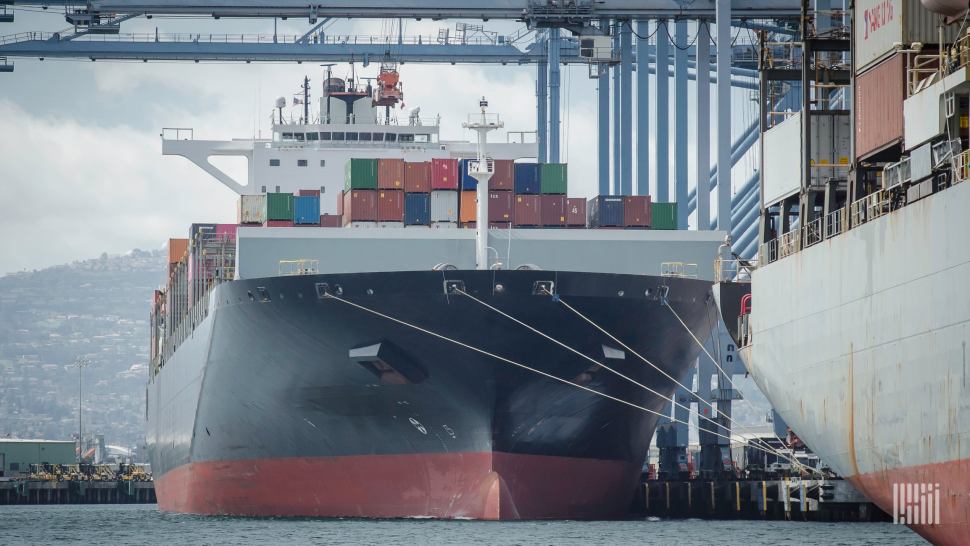
Trade, not bombs, is the fuel today that creates world powers, and it’s useful to remember that ocean shipping serves as the de facto “tip of the spear” for the majority of transnational business, so whatever disrupts maritime has a significant ripple effect through the rest of the supply chain, not to coin a pun.
Amid Iran’s closure of the Strait of Hormuz to most tanker traffic, it might come as a surprise that crude oil is no longer the chief threat to markets. That would be the 10-year U.S. Treasury bond, the same note that led President Donald Trump to back off his Liberation Day tariffs this past April after worried investors sent the yield above 4.60%. With the yield currently at 4.40% and no end to the war in sight, some analysts expect the 10-year bond to surge to 4.50% and likely 4.60%. Those numbers will again severely test market resiliency, and at the same time undercut Trump’s ability to take the fight to Tehran.
Nevertheless, the price of fuel is certain to influence transportation planning, and comes just as shippers lock in this year’s contracts with ocean carriers.
The war’s effect on global container shipping has yet to be fully felt, as only 2% to 3% of all volume moves through the Middle East. But put another way, that comes to approximately 6 million containers, which would make that total the second-largest carrier behind Mediterranean Shipping Co.’s 7.2 million containers.
But wait, there’s more!
While tens of thousands of mariners and hundreds of ships are trapped in the Persian Gulf, major liners haven’t operated scheduled services on the Red Sea-Suez Canal route since late 2023 – the first time the two busiest Mideast trade routes have been closed at the same time.
That’s because Houthi rebels in Yemen – backed by Iran – attacked merchant shipping in support of Palestinians in Gaza. Carriers saw windfall profits in the tens of billions of dollars in 2024 thanks to longer voyages as they diverted away from the Red Sea and around the tip of Africa.
The Houthis are now threatening to close the Bal-el-Mandeb Strait between the Red Sea and Gulf of Aden, but threats appear to be the
Houthi’s only effective weapon today. Extensive bombing campaigns by the Biden administration in 2024 and Trump in 2025 failed to eliminate the militia. But since Iran’s domestic issues worsened through 2025, their support seemed to wane and the Houthis aimed their attacks directly at Israel. But threats have been enough to send liners packing once again, just as they were making a tentative return to the Red Sea prior to the Iran war.
The tariff-influenced change in trade patterns has been seen across global markets. For the United States, more Asia imports have been diverted to Mexico and Canada, to increasingly make their way across the border by train and truck. That’s taken volume away from the Southern California import gateway, though resilient consumer spending has helped Los Angeles and Long Beach post solid results.
China’s push to grow its export sales in 2025 led to a flood of goods into Europe, where port congestion has become the norm.
But global economic uncertainty, shifting trade patterns and an influx of new tonnage turned profits to losses for some of the biggest lines in 2025. The industry’s cyclicality had made a post-pandemic return, again begging the fundamental question of whether it’s possible to consistently turn a profit in ocean shipping.
Some companies aren’t waiting to find out the answer.
This past week, MSC acquired 50% of Sinikor of South Korea, and that company’s fleet of 78 very large crude carriers (VLCCs), the largest vessel segment in oil shipping. That diversifies MSC away from the cyclicality of the container business, and likely less volatility in energy markets with a joint venture that looks less like a flyer and more like a long-term plan.
Maersk (MAERSK-B.CO), the world’s second-ranked container line, is making a push into delivery logistics with Maersk Parcel, to close the last gap between warehouse and customer. The single platform gives shippers one label, one invoice, one rate card and one tracking experience.
In another consolidation among top 10 container carriers, tenth-listed Zim in February agreed to be acquired by No. 5 Hapag-Lloyd for $4.2 billion. The deal won’t push the German company past the trio of Japanese lines in Ocean Network Express (ONE) at four in terms of capacity. But it boosts Hapag-Lloyd’s scale and reinforces its reach, particularly on trans-Pacific trade lanes between Asia and the United States, where its market share is expected to rise from 7% to 12%.
There is speculation about further consolidation among smaller container carriers that don’t have the capitalization necessary to survive in a changing market.
Read more articles by Stuart Chirls here.
Related coverage:
How Trump’s pause of shipping law could hurt U.S.-flag carriers, security
Largest container line makes major move into tanker market
From containers to doorsteps: Maersk’s push Into parcel logistics
Brokerage Compliance Symposium
The day before F3. Every compliance issue you face - fraud exposure, carrier liability, FMCSA rules, cargo theft, insurance gaps - navigated by attorneys and operators defining best practices in a changing industry.
F3 Awards Dinner
The night before F3. FreightTech100 companies honored. FreightTech 25 and Shipper of Choice winners revealed live. Cocktail reception into dinner and live music - 300 industry leaders in one purpose-built room.
F3: Future of Freight Festival
Industry-defining keynotes, rapid-fire technology demos, and industry leaders networking in experiences across Chattanooga - plus the inaugural F3 Awards Dinner featuring the FreightTech and Shipper of Choice reveals.
The day before F3. Every compliance issue you face - fraud exposure, carrier liability, FMCSA rules, cargo theft, insurance gaps - navigated by attorneys and operators defining best practices in a changing industry.
The Signal at Chattanooga Choo Choo • Chattanooga, TN Register NowThe night before F3. FreightTech100 companies honored. FreightTech 25 and Shipper of Choice winners revealed live. Cocktail reception into dinner and live music - 300 industry leaders in one purpose-built room.
The Signal at Chattanooga Choo Choo • Chattanooga, TN Register NowIndustry-defining keynotes, rapid-fire technology demos, and industry leaders networking in experiences across Chattanooga - plus the inaugural F3 Awards Dinner featuring the FreightTech and Shipper of Choice reveals.
The Signal at Chattanooga Choo Choo • Chattanooga, TN Register Now