




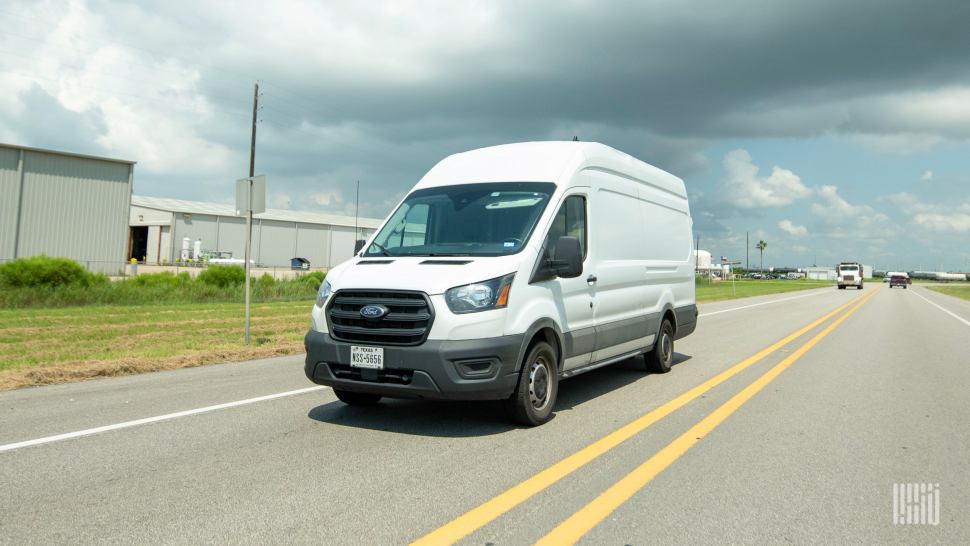
Ans Rana has sued Amazon, claiming that an Amazon Delivery Service Provider (DSP) driver working for Harper Logistics in Georgia ran into his vehicle, leaving him with serious brain and spinal cord injuries and facing an uncertain future.
The details of the 24-year-old’s case claim the van’s driver was rushing to meet unrealistic delivery timelines, but it goes deeper than that. Generally, Amazon, which is facing 119 lawsuits involving injuries sustained with Amazon or DSP vehicles filed just this year, according to Bloomberg, has been able to avoid responsibility since it uses third-party firms to handle last-mile deliveries, but Rana claims that since Amazon uses technology to monitor drivers, it is therefore responsible.
Amazon is not alone and is just one example of the risks shippers utilizing last-mile delivery providers face. The question, though, is whether conditions imposed by the shipper create a liability problem for that shipper.
“I don’t view the risk with vehicular accidents in the last mile much different than the over-the-road trucking world,” Jonathan Todd, a partner in the Benesch law firm, told Modern Shipper. “Anytime there is a vehicular accident … your plaintiff’s attorney is going to list everyone as a defendant.”
Todd, who was not speaking specifically about any Amazon-related suits but rather the general exposure associated with last-mile delivery, said the risk to shippers is not that great, but there is reputational harm that could be done simply by being named as a co-defendant.
“Legally, if you are merely the shipper, there is not a lot you could have done to impact the outcome of that accident,” he said. “You are not choosing the equipment, you are not choosing the driver. … You are only contracting with the driver or the platform to [facilitate that delivery].”
Still, there is risk, and Todd said there are some steps shippers can take to ensure they minimize that risk, whether it is from accident-related claims or damage or service claims.
“In this environment, there are so many new entrants [to delivery],” he said. “The conversation I have with folks around procurement is what is the exact service [the provider offers]. If you are going out and buying a carrier’s service, regardless about how it is presented, you have expectations of that service.”
The shipper needs to understand what services it needs and what services the provider or freight forwarder offers so it can align needs with capabilities. For instance, some shippers may contract with a technology provider that provides transparency into the delivery, but it is up to the tech provider to then contract with a delivery provider. If there is a claim, who is responsible in that case?
“For example, you have packages that get lost or a real service failure in a series of deliveries that lead to a bad customer experience. As a shipper you have a claim, but who do you have a claim against?” Todd asked. “If you are dealing with a carrier directly, that is real simple – you have the claim against the carrier.”
Todd said that when vetting a provider – be it a technology provider, a broker or the delivery service itself – shippers should look for red flags. For carriers, that means researching their U.S. Department of Transportation numbers, reviewing their safety ratings from federal databases, records of reportable crashes and more. He also noted that in today’s digital age, it is easy to research providers online through social media and online searches, although he has not seen many enterprises go to that level of granularity.
“From my perspective, a provider’s track record and user’s experience is what any good procurement team would want to know and it is the conversations that these procurement teams are [and should be] having,” he said.
When a shipper contracts with a broker or freight forwarding service, the level of risk is lower but does not disappear entirely. As a result, Todd recommended ensuring the contract spells out details such as requiring the broker/forwarder to use only carriers that have the necessary licenses and requisite safety record.
“If you knew they were unsafe or unlawful and you hired them anyway … then you can have responsibility because you used them,” he noted.
The risk increases if the shipper owns its own trailers.
Todd suggests shippers include clauses that require the last-mile delivery provider to defend the shipper in the case of litigation, and this may include any and all legal fees, in any contract. When writing the initial contract, it is also important to ensure termination language that protects the shipper should the provider become a liability.
“In general, it is not that difficult to terminate, but it is something that requires some thought at the front end,” he said.
An easy way to address this is to include tiered volume pricing. “If you don’t have a volume commitment, you could just throttle [back] your tender, providing you have a provider that can pick up those volumes,” Todd said.
While the risks for shippers are not great, they do exist, Todd noted, pointing to the greatest risk in most cases being reputational harm. Managing that risk starts with finding the right partners and vetting those partners correctly.
Click for more articles by Brian Straight.
You may also like:
Drones are flying into weather data deserts. Can they be stopped?
Navigating COVID-19 shipping chaos: Finding capacity and servicing the customer
Brokerage Compliance Symposium
The day before F3. Every compliance issue you face - fraud exposure, carrier liability, FMCSA rules, cargo theft, insurance gaps - navigated by attorneys and operators defining best practices in a changing industry.
F3 Awards Dinner
The night before F3. FreightTech100 companies honored. FreightTech 25 and Shipper of Choice winners revealed live. Cocktail reception into dinner and live music - 300 industry leaders in one purpose-built room.
F3: Future of Freight Festival
Industry-defining keynotes, rapid-fire technology demos, and industry leaders networking in experiences across Chattanooga - plus the inaugural F3 Awards Dinner featuring the FreightTech and Shipper of Choice reveals.
The day before F3. Every compliance issue you face - fraud exposure, carrier liability, FMCSA rules, cargo theft, insurance gaps - navigated by attorneys and operators defining best practices in a changing industry.
The Signal at Chattanooga Choo Choo • Chattanooga, TN Register NowThe night before F3. FreightTech100 companies honored. FreightTech 25 and Shipper of Choice winners revealed live. Cocktail reception into dinner and live music - 300 industry leaders in one purpose-built room.
The Signal at Chattanooga Choo Choo • Chattanooga, TN Register NowIndustry-defining keynotes, rapid-fire technology demos, and industry leaders networking in experiences across Chattanooga - plus the inaugural F3 Awards Dinner featuring the FreightTech and Shipper of Choice reveals.
The Signal at Chattanooga Choo Choo • Chattanooga, TN Register Now