




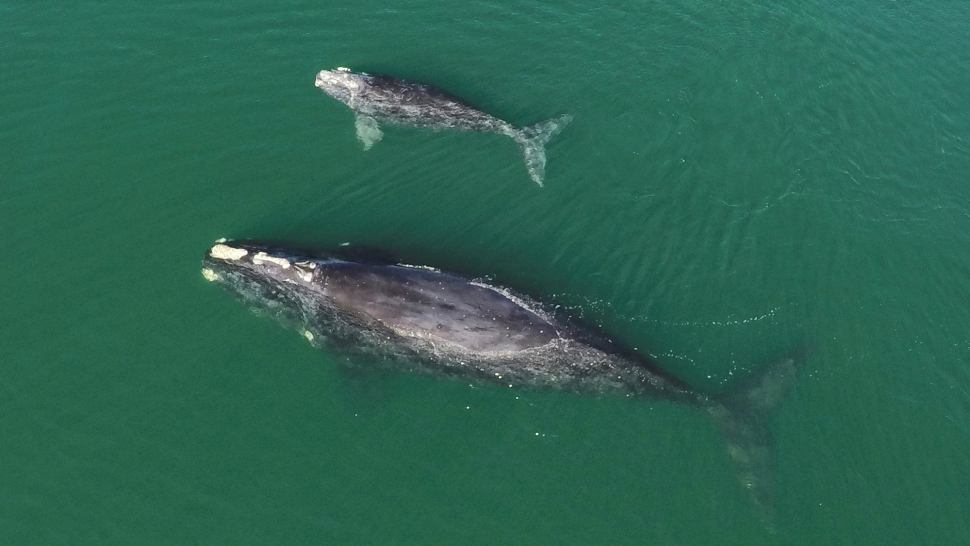
North Atlantic right whales are “one of the world’s most endangered large whale species,” according to the National Oceanic and Atmospheric Administration (NOAA). To protect the approximately 350 remaining, NOAA Fisheries proposed amendments to the current vessel speed regulations on the East Coast of the U.S.
The largest threats to whales are collisions with ships, entanglements with ropes and nets, and climate change, according to NOAA.
In speed zones, vessels are required to lower their acceleration to 10 knots or less. A whale’s risk of death from vessel strikes at this speed is reduced by 80% to 90%, according to ocean conservation nonprofit Oceana.
The amendments proposed last week would broaden the areas and timing of seasonal speed restricted zones. Outside of the seasonal speed zones, dynamic speed zones would be established in areas where right whales are detected and they would last 15 days after the last whale detection.
Read: How to fight the ‘silent massacre’ of whale-ship collisions
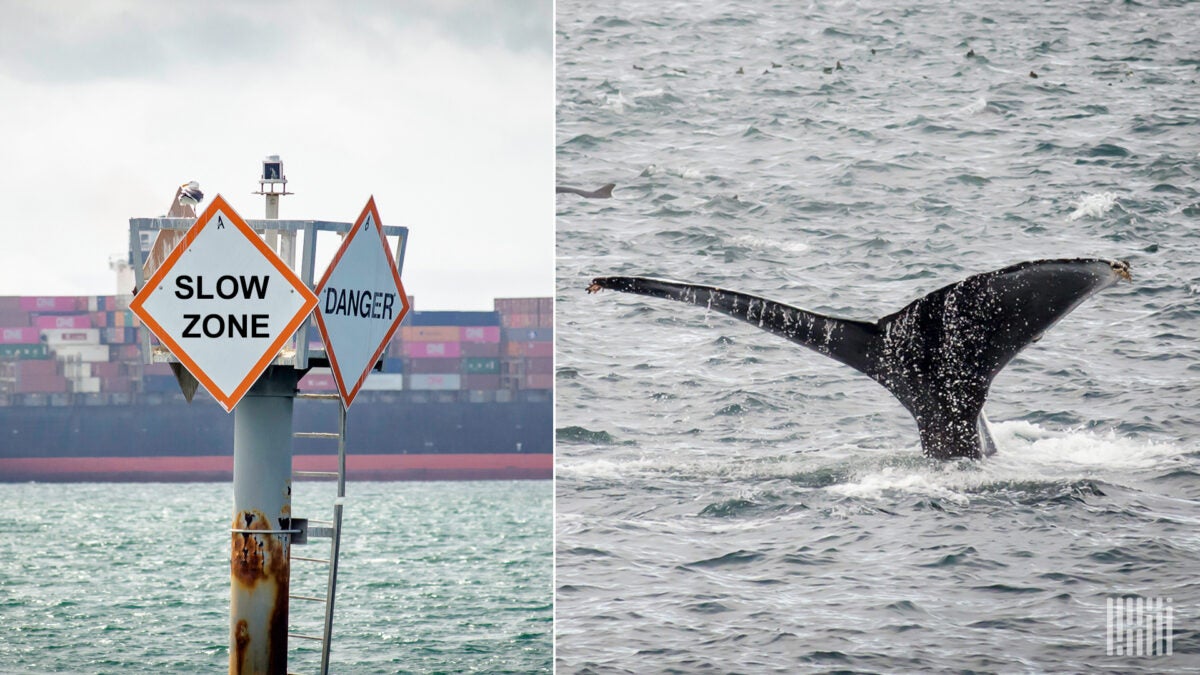
But many cargo vessels aren’t adhering to current speed limits in whale feeding and breeding zones, according to an Oceana study. It’s unclear if NOAA Fisheries’ proposed changes to the vessel speed restrictions would reduce whale strikes without greater enforcement efforts.
“If NOAA is serious about its mandate to save North Atlantic right whales from extinction, speed zones must be designated in the areas where whales currently are and they must be enforced,” Whitney Webber, campaign director at Oceana, said in a statement. “Until speed zone rules are mandatory and violators held accountable, North Atlantic right whales will continue to die on NOAA’s watch.”
Vessels aren’t complying with speed limits in whale zones
In one area along the South Carolina coast, nearly 90% of vessels exceeded the speed limits in place to reduce whale strikes, according to the study.
Cargo vessels were found to be the least compliant ship type in areas with speed limits, whether they were mandatory or voluntary.
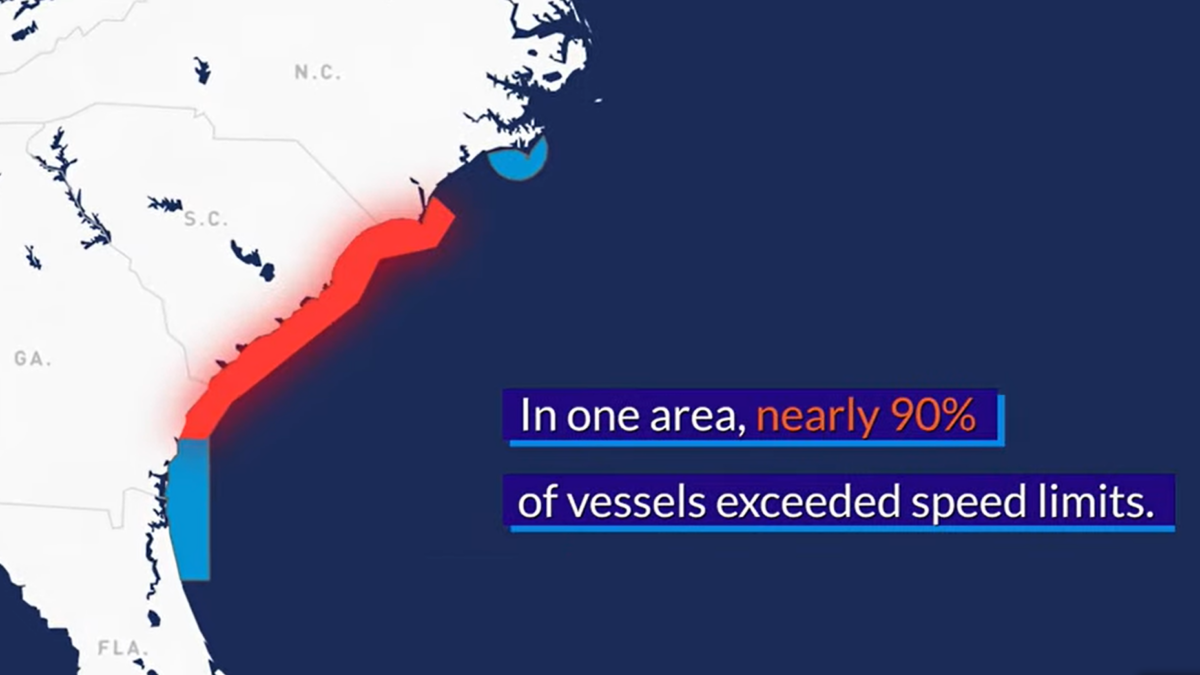
Seasonal management areas with mandated speed limits that saw the worst compliance from 2017-20 were:
- Wilmington, North Carolina, to Brunswick, Georgia (almost 90% noncompliance).
- Port of New York and New Jersey (almost 80% noncompliance).
- Calving and nursery grounds from Georgia to Florida (more than 70% noncompliance).
- Entrance to the Chesapeake Bay (almost 65% noncompliance).
- Entrance to the Delaware Bay (over 55% noncompliance).
Two-thirds of the vessels that exceeded 10-knot limits in speed reduction zones operated under foreign flags. The United States, Panama, Marshall Islands, Liberia, Germany and Singapore were the countries with the highest number of noncompliant vessels.
Shipping companies aim to protect whales
This level of noncompliance, especially among cargo vessels, is at odds with the message some shipping companies are sending about their whale safety efforts.
In March, CMA CGM announced it is partnering with Woods Hole Oceanographic Institution to assemble and deploy two acoustic monitoring buoys off the coasts of Norfolk, Virginia, and Savannah, Georgia, both considered critical habitats and breeding grounds for right whales. The buoys will transmit near real-time data to ship captains, giving them the opportunity to slow down their vessels or change course if they are near whales.
When vessels collide with whales, it is often fatal for the animals. About 90% of deaths from whale strikes may go unnoticed because they die and sink in the ocean, according to Friend of the Sea, a global marine conservation project that is part of a larger environmental group, World Sustainability Organization.
In February, Hapag-Lloyd received a whale safe award from Friend of the Sea for its speed slowdowns in areas of potential risk for whale-ship collisions.
“Hapag-Lloyd is aware of the impact that shipping has on whales and endangered species,” said Capt. Wolfram Guntermann, director of regulatory affairs at Hapag-Lloyd. “To protect them, we reduce our vessels’ speed in many high-risk regions and we strictly follow the established areas to be avoided, where many whales are found.”
There are fewer than 100 reproductively active female North Atlantic right whales left, NOAA said. Over the past two and a half years, NOAA Fisheries documented four lethal right whale vessel strike events in U.S. waters.
Along with the proposed amendments to the vessel speed regulations, NOAA Fisheries provided a road map for using ropeless fishing gear to prevent entanglements with whales. The agency is accepting public comments on the proposed changes until Sept. 30.
Click here for more FreightWaves articles by Alyssa Sporrer.
Related Stories:
CMA CGM aims to protect endangered whale species via monitoring buoys
Hapag-Lloyd recognized for whale safety practices
Brokerage Compliance Symposium
The day before F3. Every compliance issue you face - fraud exposure, carrier liability, FMCSA rules, cargo theft, insurance gaps - navigated by attorneys and operators defining best practices in a changing industry.
F3 Awards Dinner
The night before F3. FreightTech100 companies honored. FreightTech 25 and Shipper of Choice winners revealed live. Cocktail reception into dinner and live music - 300 industry leaders in one purpose-built room.
F3: Future of Freight Festival
Industry-defining keynotes, rapid-fire technology demos, and industry leaders networking in experiences across Chattanooga - plus the inaugural F3 Awards Dinner featuring the FreightTech and Shipper of Choice reveals.
The day before F3. Every compliance issue you face - fraud exposure, carrier liability, FMCSA rules, cargo theft, insurance gaps - navigated by attorneys and operators defining best practices in a changing industry.
The Signal at Chattanooga Choo Choo • Chattanooga, TN Register NowThe night before F3. FreightTech100 companies honored. FreightTech 25 and Shipper of Choice winners revealed live. Cocktail reception into dinner and live music - 300 industry leaders in one purpose-built room.
The Signal at Chattanooga Choo Choo • Chattanooga, TN Register NowIndustry-defining keynotes, rapid-fire technology demos, and industry leaders networking in experiences across Chattanooga - plus the inaugural F3 Awards Dinner featuring the FreightTech and Shipper of Choice reveals.
The Signal at Chattanooga Choo Choo • Chattanooga, TN Register Now