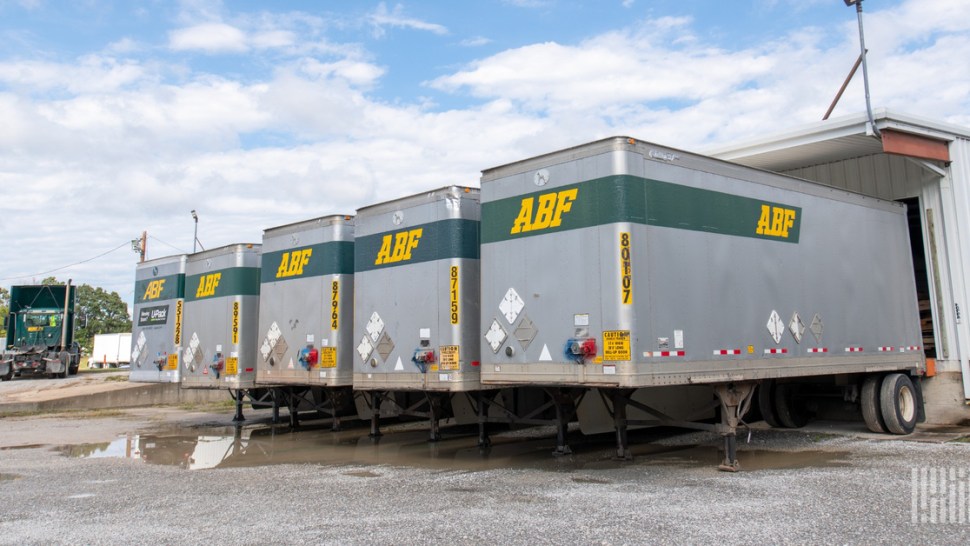
ABF Freight employees discovered suspected narcotics inside a shipment from Los Angeles to Dayton, Ohio. Workers opened a package addressed to Douglas Bennett and contacted law enforcement Feb. 2, 2026. The discovery triggered a federal investigation involving cocaine, fentanyl, methamphetamine and marijuana. Four men subsequently pleaded guilty in connection with the trafficking conspiracy.
Federal court records identify Commonwealth Freight as the listed shipper. The cargo arrived at an ABF Freight distribution center in Dayton before employees alerted authorities. Drug Enforcement Administration agents conducted preliminary testing and obtained a federal search warrant. The government’s sentencing memorandum does not explain why workers initially opened the package.
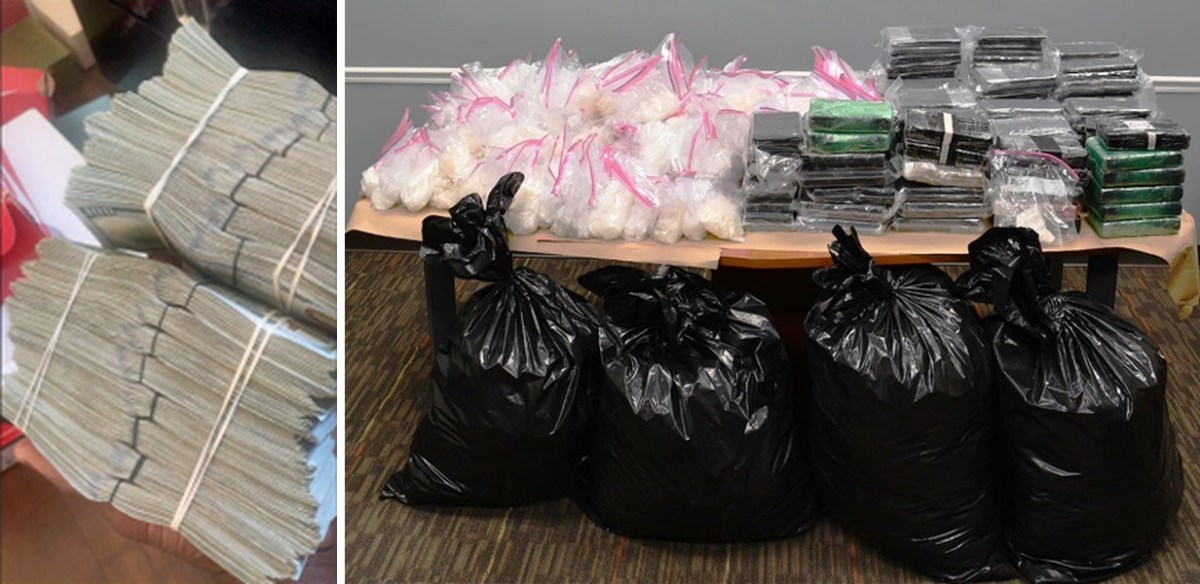
Investigators discovered 119 brick-shaped packages containing cocaine and fentanyl across two pallets of freight. Laboratory testing confirmed approximately 118 kilograms (260 pounds) of cocaine and 1 kilogram (2.2 pounds) of fentanyl. Agents also recovered about 170 pounds of methamphetamine and 80 pounds of marijuana. DEA agents estimated the shipment’s combined street value at approximately $1.5 million, according to a federal sentencing memorandum.
FreightWaves previously reported a separate trafficking case involving unsuspecting trucking companies transporting cocaine from California. That investigation also demonstrated how criminal organizations can exploit commercial transportation networks. In the Dayton case, workers discovered the suspected drugs before their scheduled collection. Federal agents subsequently removed the narcotics and monitored the pickup.
Suspects collect two pallets from distribution center
DEA agents obtained tracking warrants and established surveillance at the Dayton warehouse Feb. 3, 2026. Mark Lane and Roderic Searcy arrived in a white Mercedes van to collect the shipment. Searcy presented warehouse employees with a fraudulent identification card bearing the name Douglas Bennett. The pair collected two pallets before departing the distribution facility.
A gray Honda Civic followed the Mercedes van after the pickup. Jason Heath drove, with Craig Worthen occupying the passenger seat. Both vehicles traveled to a residence on Basore Road in Dayton. Investigators watched the four men gather behind the property and open the freight.
Shortly afterward, the suspects attempted to leave the residence in their respective vehicles. Heath tried maneuvering the Honda around law enforcement vehicles but became stuck in snow. Agents arrested all four defendants following the attempted departure. Subsequent searches uncovered additional Commonwealth Freight shipping labels inside the Honda Civic.
Investigators examined Worthen’s cellphone following his arrest. Records revealed searches for ABF Freight’s Dayton terminal dating to Jan. 31, 2026. Agents also discovered a photograph depicting stacks of cash, created Jan. 19, 2026. Federal authorities seized $5,140 in cash and three cellular devices from Worthen during his arrest.
FreightWaves previously reported a separate DEA investigation involving more than 2,000 pounds of methamphetamine concealed inside a commercial cabbage shipment in Texas. Both investigations involved substantial narcotics quantities moving through commercial freight operations. However, the Dayton case involved an attempted pickup using fraudulent identification. The court records provide no explanation for how the shipment originally entered the transportation network.
One defendant sentenced, three await punishment
A federal grand jury indicted Heath, Searcy, Worthen and Lane in February 2026. Prosecutors charged the defendants with conspiring to possess controlled substances with intent to distribute. The case proceeded in the U.S. District Court for the Southern District of Ohio. All four defendants eventually entered guilty pleas.
Worthen received an 11-year federal prison sentence in September, below the government’s requested 14-year term. His attorneys sought the mandatory minimum of 10 years, describing his involvement as an attempt to make quick money. The probation department recommended 11 years, matching the sentence the court ultimately imposed. Heath, Lane and Searcy also pleaded guilty and await sentencing.
The Justice Department announced Heath’s guilty plea Nov. 13. The announcement did not identify the freight carrier involved in the investigation. However, a September sentencing memorandum reviewed by FreightWaves identifies ABF Freight as the carrier. The filing provides additional details about the investigation that the Justice Department’s announcement omitted.
FreightWaves contacted ABF Freight, an ArcBest subsidiary, seeking clarification about the discovery. In a statement to FreightWaves, ArcBest responded, “ArcBest and ABF Freight prioritize the safety and security of our employees, our customers and their freight. We partner with law enforcement as appropriate and remain committed to operating responsibly and doing what’s right.” The company did not explain what prompted employees to open the shipment. Federal prosecutors did not respond to separate questions before publication.
Why It Matters
The case highlights the importance of employee vigilance in detecting criminal activity within commercial freight networks. Suspicious shipments can move through legitimate transportation operations without the carrier’s knowledge. Identifying irregularities before cargo reaches its intended recipients can give investigators an opportunity to intervene.
Click here for more articles on cargo theft and freight fraud by Phil Brink.
$760K fuel-card fraud scheme tied to impersonated Michigan trucking company – FreightWaves
$11.4 million in NVIDIA hardware vanishes during shipment from California to Texas – FreightWaves