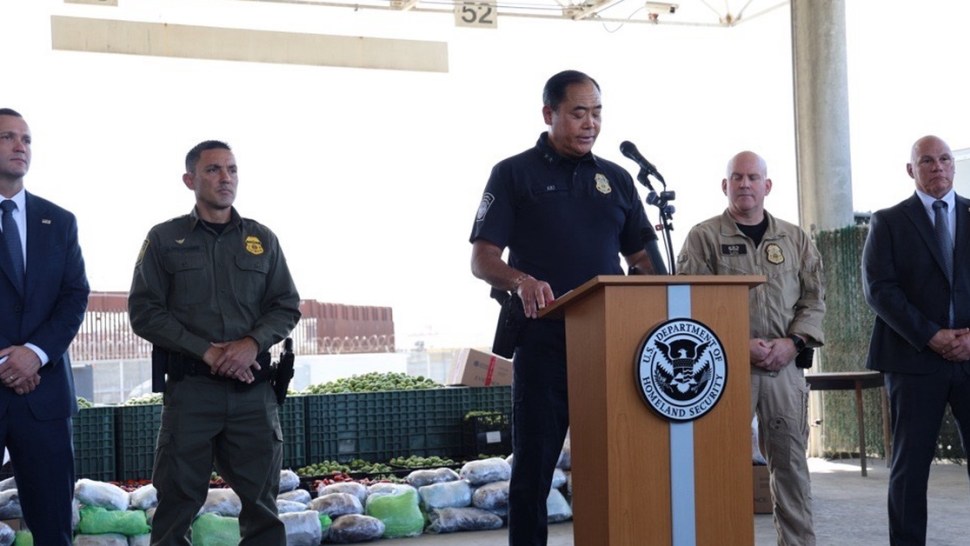

A tractor-trailer carrying fresh tomatillos arrived at California’s Otay Mesa port of entry from Mexico on October 14. The commercial shipment had a delivery destination in the United States. During an inspection, U.S. Customs and Border Protection officers discovered nearly 1,600 pounds of methamphetamine mixed with the produce. Authorities estimated the narcotics’ street value at approximately $2.5 million.
Federal officials also took immigration action against the truck driver. CBP confirmed that authorities served the motorist with a visa cancellation. The agency cited Section 212(a)(2)(C)(i) of the Immigration and Nationality Act as the legal basis. That provision concerns individuals whom authorities know or have reason to believe participated in illicit drug trafficking.
The statute also covers individuals who knowingly assisted, conspired in or colluded with traffickers. Immigration authorities can apply this provision without securing a criminal conviction. However, CBP has not disclosed what evidence supported the driver’s visa cancellation. Investigators have not publicly established whether the driver knowingly participated in transporting the narcotics.
Federal agencies announce $2.5 million seizure
CBP announced the discovery on October 16 during a news conference involving multiple federal law enforcement agencies. Participants included the Office of Field Operations, Border Patrol, Air and Marine Operations, and Homeland Security Investigations. The original announcement did not disclose any action against the driver.
Earlier this month, CBP reported another major methamphetamine seizure at Texas’ Laredo World Trade Bridge. Officers discovered approximately 3,396 pounds concealed within a commercial shipment of salt. Authorities valued those drugs at $30.4 million, roughly $8,900 per pound compared with $1,560 at Otay Mesa. CBP confirmed that California’s $2.5 million estimate reflected San Diego-area street values but did not fully explain the difference.
Following the announcement, FreightWaves contacted CBP for additional information about the inspection and trucking operation. The agency declined to explain what prompted officers to examine the shipment. Investigators also withheld details about the concealment method.
Investigation leaves carrier involvement unresolved
CBP has not identified the motor carrier or established publicly whether anyone involved knew about the narcotics. Authorities also declined to confirm whether officers arrested the driver or transferred him to Homeland Security Investigations. The agency declined to provide additional information about potential criminal charges, citing the ongoing investigation.
Why it matters
Commercial drug seizures raise important questions about cargo security, carrier accountability and shipment oversight. Consistent verification procedures and documented custody help transportation professionals identify discrepancies and establish responsibility when authorities uncover illegal freight.
Click here for more articles on cargo theft and freight fraud by Phil Brink.
California trucking owner pleads guilty in $2.1M identity theft scheme – FreightWaves