With qualified truck drivers difficult to replace and accident litigation increasingly expensive, private fleets are putting greater emphasis on developing the drivers already behind the wheel.
That was one of the central messages from “The Coaching Roadmap: Developing Your Driver Workforce,” a panel at the International Foodservice Distributors Association’s 2026 Solutions Conference, held Sept. 13-15 in San Antonio.
The discussion featured Hayden Cardiff, vice president of safety solutions at Descartes, and Tim Eckhardt, senior director of safety at Dot Foods Inc.
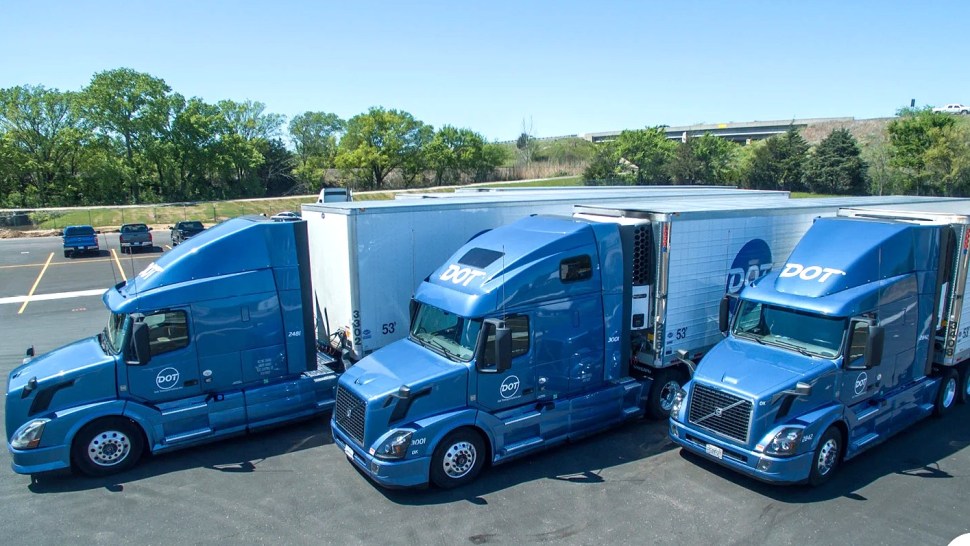
Eckhardt oversees safety for Dot Transportation, the transportation arm of Dot Foods, including driver safety, training, accidents, litigation and risk management. The company operates nearly 2,200 trucks across the U.S. and Canada.
Mount Sterling, Illinois-based Dot Foods is North America’s largest food industry redistributor and less-than-truckload consolidator, according to its website. The company operates around 2,900 multi-temperature trailers.
Cardiff said driver shortages, rising costs and the threat of so-called nuclear verdicts have changed how fleets must approach driver performance.
Fleets can no longer assume they can simply dismiss a struggling driver and replace that person with someone better, he said. Instead, carriers increasingly need to identify risk earlier and retain, train and engage existing drivers.
At Dot Foods, that has meant moving away from a largely reactive safety model toward one increasingly based on data, technology and patterns of driver behavior.
“In the past, you were digging through systems, digging through spreadsheets, digging through everything you could to find the data, and then you ended up basically going off a gut of which drivers were your highest risk or not,” Eckhardt said.
Dot Foods focuses particularly on issues such as distraction and speeding while directing more attention toward drivers showing the greatest risk.
Rather than attempting to coach every event generated by cameras, telematics or other safety systems, the strategy is to determine which drivers warrant the most attention.
Dot focuses heavily on roughly the bottom 10% to 20% of its driver population, although Eckhardt said that group is constantly changing as driver performance improves or deteriorates.
The company’s scoring system ranges from zero, representing the best performance, to 100. Drivers scoring above 70 are required to have a professional development plan and be monitored.
Eckhardt said that as of the week before the conference, only about 30 Dot drivers had scores above 70 — down substantially from when the program began.
The goal isn’t necessarily to remove those drivers.
Professional development plans can include coaching, additional training, ride-alongs and technology designed to address specific behaviors. Drivers who continually speed, for example, can have their trucks electronically governed to address the behavior.
“It’s not just to build a plan and coach till you turn blue,” Eckhardt said. “Find technology, find other resources you can to help change that behavior and help set them up for success.”
Some drivers ultimately may not improve enough to remain with the fleet. In those situations, Eckhardt said fleets need an “exit strategy” before a serious accident occurs.
Eckhardt said one of the most important elements of effective driver coaching is timeliness. Managers need to address risky behavior while an incident or pattern is still fresh rather than waiting weeks or months.
Coaching also needs to account for the individual driver.
A veteran who has been with a fleet for 20 years may respond to a short, direct conversation, while a newer driver may need more explanation about why a particular behavior is dangerous or why a policy exists.
Dot has become more transparent with drivers about accident costs, safety policies and the reasoning behind the technology being installed in trucks.
The company also tries to balance corrective coaching with recognition of safe driving. Managers use camera footage not only to identify problems but to recognize drivers for good decisions behind the wheel.
That approach can help distinguish driver development from discipline and strengthen relationships between managers and drivers.
“If you have a relationship around that driver, you’ve been able to build that relationship,” Eckhardt said. “But when your first conversation with that driver is to give them discipline or tell them what they did wrong, normally that relationship doesn’t recover after that.”
Relationships also become harder to maintain when managers oversee too many drivers. Eckhardt said managing 150 drivers makes effective coaching difficult, while keeping the ratio closer to 70 or 80 drivers per manager can make the process more manageable.
Technology was a recurring theme throughout the session, ranging from cameras and telematics to predictive analytics and vehicle controls.
Cardiff said fleets increasingly have the opposite problem from a lack of information: Trucks and back-office systems can generate so much data that safety departments struggle to determine what matters.
The challenge is separating “signal versus noise” and using the information to determine which drivers require intervention.
Dot has also tied driver performance to compensation. Eckhardt said its quarterly driver safety bonus has grown to nearly 10% of driver income, giving employees a financial incentive to meet certain safety metrics.
During an audience question about calculating the return on investment from safety technology, Eckhardt said Dot compares the expense against the potential cost of crashes.
A $250,000 technology investment, for example, could pay for itself if it prevents a single accident of comparable cost, he said.
The fleet is also examining additional technologies. Eckhardt said Dot recently revisited the possibility of testing technology aimed at limiting drivers’ cellphone use, although the company has not made a decision and continues to consider practical and legal questions surrounding such systems.
Dot currently permits drivers to use cellphones because its over-the-road drivers need to be able to communicate with family while away from home.
Dot has about 200 over-the-road driver trainers and aims for a ratio of roughly 12 drivers per trainer. Depending on a driver’s experience and skills, over-the-road training can last four, eight or 12 weeks.
For Eckhardt, one of the biggest lessons from Dot’s safety evolution isn’t necessarily technological, it’s transparency.
When drivers understand why a policy exists, why a camera was installed or why a particular technology is operating inside the cab, Eckhardt said fleets can generate greater buy-in.
“One of the biggest things we have done is just transparency and open books and share the why behind everything out there,” he said.
Why it matters: Driver shortages and rising accident litigation costs are pushing private fleets toward proactive safety programs designed to identify and correct risky behavior before it results in a crash.
Brokerage Compliance Symposium
The day before F3. Every compliance issue you face - fraud exposure, carrier liability, FMCSA rules, cargo theft, insurance gaps - navigated by attorneys and operators defining best practices in a changing industry.
F3 Awards Dinner
The night before F3. FreightTech100 companies honored. FreightTech 25 and Shipper of Choice winners revealed live. Cocktail reception into dinner and live music - 300 industry leaders in one purpose-built room.
F3: Future of Freight Festival
Industry-defining keynotes, rapid-fire technology demos, and industry leaders networking in experiences across Chattanooga - plus the inaugural F3 Awards Dinner featuring the FreightTech and Shipper of Choice reveals.
The day before F3. Every compliance issue you face - fraud exposure, carrier liability, FMCSA rules, cargo theft, insurance gaps - navigated by attorneys and operators defining best practices in a changing industry.
The Signal at Chattanooga Choo Choo • Chattanooga, TN Register NowThe night before F3. FreightTech100 companies honored. FreightTech 25 and Shipper of Choice winners revealed live. Cocktail reception into dinner and live music - 300 industry leaders in one purpose-built room.
The Signal at Chattanooga Choo Choo • Chattanooga, TN Register NowIndustry-defining keynotes, rapid-fire technology demos, and industry leaders networking in experiences across Chattanooga - plus the inaugural F3 Awards Dinner featuring the FreightTech and Shipper of Choice reveals.
The Signal at Chattanooga Choo Choo • Chattanooga, TN Register Now