




Despite repeated efforts and renewed FMCSA guidance on the subject, confusion still reigns when it comes to hours-of-service (HOS) compliance and utilizing personal conveyance and the agriculture exemptions to better manage under the hard enforcement of the electronic logging device (ELD) rule.
Continuing an effort to educate the industry, FMCSA’s Joe DeLorenzo, director of enforcement and compliance, joined Soona Lee, director of regulatory compliance, on an EROAD webinar Tuesday afternoon to clarify what the rules say and how personal conveyance and the ag exemption can be best utilized.
“It does cause some confusion for people,” DeLorenzo told the audience. “Personal conveyance is an off-duty status … Drivers must be off-duty and that is when the consideration starts.”
What DeLorenzo talked about in the webinar is not new but based on social media postings and questions received by FMCSA, is still an area that is not well understood. DeLorenzo reiterated FMCSA’s stance on personal conveyance, including its most recent guidance which softened the interpretation of the rule, and explained a few examples of when it is and is not acceptable to use.
The purpose of personal conveyance, he said, remains focused on allowing drivers to reach safe places to park, or to grab a meal or to complete other personal tasks. It is not, he repeated several times, to be used to improve the location of the load closer to its final destination. Even that, though, is open to some interpretation.
According to FMCSA’s guidance issued in May, personal conveyance does not have a mileage limit, but it also doesn’t preclude the driver or carrier from operating the vehicle safely.
“This guidance will have a positive impact….by giving drivers the flexibility to locate and obtain adequate rest as this would be off-duty time in personal conveyance status,” FMCSA said in May. “If the driver proceeds to the nearest reasonable and safe location and takes the required rest, this would qualify as personal conveyance.”
The ultimate question, DeLorenzo said, is why is personal conveyance being utilized? For instance, personal conveyance would be acceptable when a driver is looking for a safe place to park for the night. This includes traveling closer to the final load destination if that location is the closest, most reasonable safe location.
“If a shipper says you can’t stay here … you have to go to a safe location to get some rest,” he said. “You may be traveling closer to your next load, and that is okay as long as it is the closest safe location to get rest.”
Traveling to a restaurant or store to pick up supplies is another acceptable use. Also commuting to a terminal under certain conditions, between trailer drop lots and a driver’s residence, or between work sites and a driver’s residence.
“If you are purely driving to work to figure out what you are going to do that day, that would be considered personal conveyance,” DeLorenzo said. “It would be no different than me driving to work in the morning.”
He added that if a driver returns to his house empty and then wakes up in the morning and drives an hour to a location to pick up a load, that would not be acceptable use of personal conveyance because that load was already dispatched, so therefore the driver is under dispatch when they leave their house. The driver must be driving to a terminal location to get their assignments for that day.
Also, if you have to move your vehicle at the request of law enforcement, that would be considered personal conveyance, DeLorenzo said. This situation also should not result in a stoppage or violation of your 10 hours of rest.
Finally, personal conveyance would count as part of a driver’s 10-hour break if they were looking for a safe place to park. “That is considered off-duty, so yes, it would be considered part of the 10-hour break,” DeLorenzo said.
Drivers can’t use personal conveyance to:
- Move a load closer to where it needs to be by bypassing available locations to park
- Bobtail or operate an empty trailer to retrieve another load
- Reposition a CMV or transport it to a maintenance facility
Recording personal conveyance can be done a couple of ways by either logging it on the ELD or adding annotations to unidentified driving time. The important point, DeLorenzo said, is to document personal conveyance so law enforcement can correctly calculate your hours of service compliance. Undocumented personal conveyance simply looks like an HOS violation.
Personal conveyance can also by taken when the vehicle is laden or unladed. This was an important change FMCSA announced earlier this year. “Because we were focused on the movement of the vehicle, it doesn’t matter if it is loaded or unloaded,” DeLorenzo said.
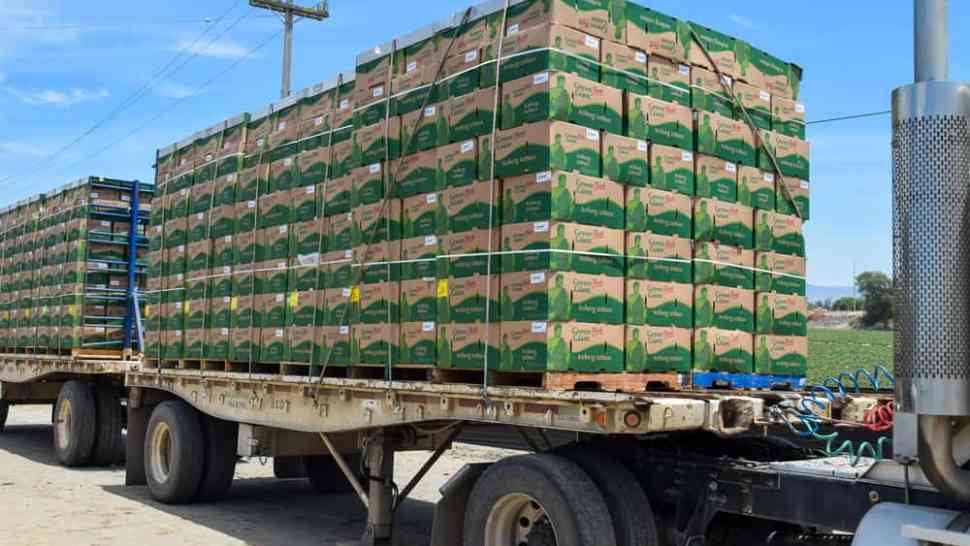
As the conversation turned to the agricultural 150 air-mile exemption, DeLorenzo highlighted the importance of the goods being carried qualifying as “agricultural products.” And, it turns out, some items can be agricultural products in some instances and not in others. Strawberries are one example of this, he said. According to DeLorenzo, strawberries that are picked, washed and packaged still qualify as an agricultural product, but if they are canned, they do not, negating the 150 air-mile exemption.
To qualify for the air-mile exemption, a driver must be hauling an ag product from a “source.”
“The source doesn’t always have to be the original source. You can have a secondary location such as a grain elevator … as long as what is being loaded at that location still meets the definition of an agricultural commodity,” DeLorenzo said, adding that there can only be one source.
Once the source is set, a 150 air-mile radius (172.6 statutory miles) is developed and within that radius, a driver does not have to record driving hours nor turn on an ELD. Once the driver leaves that radius, the 11-hour and 14-hour clocks start ticking, but upon returning to the radius, the clocks again stop, allowing the driver to drive within that 150 air-mile radius without the pressure of a clock.
DeLorenzo then walked through several scenarios of when the exemption applies and when it does not. Harping back again to the one-source rule, he noted that if a driver loads some product at one location and then drives to a second location – still within the 150 air-mile radius – to load additional commodity, the 150 miles does not reset to the new location.
There are additional HOS exemptions during “harvest season” and “planting season,” which vary by state and commodities. DeLorenzo said carriers can find that information with state agricultural departments but that FMCSA is working to develop a comprehensive list of those.
The EROAD webinar was another step in the process to help FMCSA communicate these important exemptions to drivers, DeLorenzo noted, as they provide “flexibility” in dealing with the ELD and HOS regulations. The education process, he said, will likely continue as long as drivers continue to have questions.
Brokerage Compliance Symposium
The day before F3. Every compliance issue you face - fraud exposure, carrier liability, FMCSA rules, cargo theft, insurance gaps - navigated by attorneys and operators defining best practices in a changing industry.
F3 Awards Dinner
The night before F3. FreightTech100 companies honored. FreightTech 25 and Shipper of Choice winners revealed live. Cocktail reception into dinner and live music - 300 industry leaders in one purpose-built room.
F3: Future of Freight Festival
Industry-defining keynotes, rapid-fire technology demos, and industry leaders networking in experiences across Chattanooga - plus the inaugural F3 Awards Dinner featuring the FreightTech and Shipper of Choice reveals.
The day before F3. Every compliance issue you face - fraud exposure, carrier liability, FMCSA rules, cargo theft, insurance gaps - navigated by attorneys and operators defining best practices in a changing industry.
The Signal at Chattanooga Choo Choo • Chattanooga, TN Register NowThe night before F3. FreightTech100 companies honored. FreightTech 25 and Shipper of Choice winners revealed live. Cocktail reception into dinner and live music - 300 industry leaders in one purpose-built room.
The Signal at Chattanooga Choo Choo • Chattanooga, TN Register NowIndustry-defining keynotes, rapid-fire technology demos, and industry leaders networking in experiences across Chattanooga - plus the inaugural F3 Awards Dinner featuring the FreightTech and Shipper of Choice reveals.
The Signal at Chattanooga Choo Choo • Chattanooga, TN Register Now