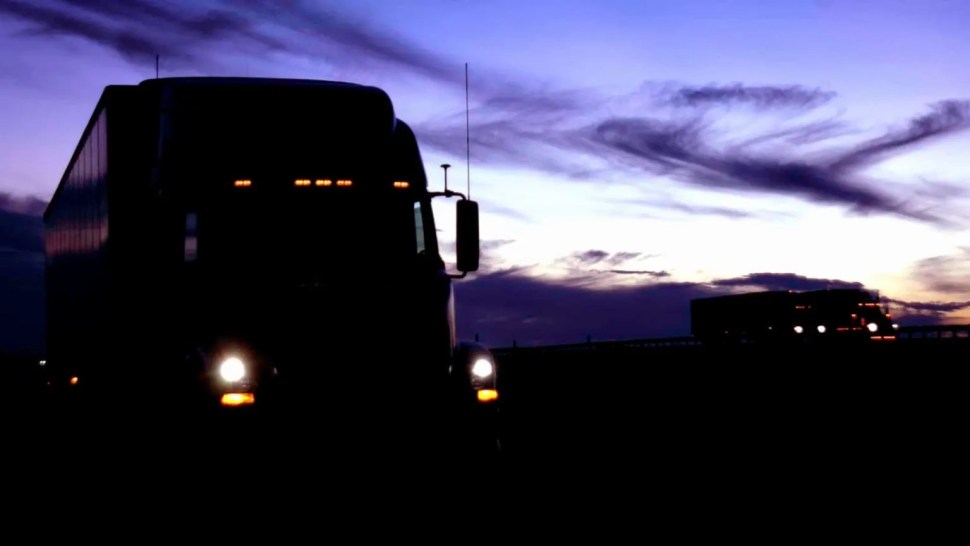
Cargo thieves in Mexico are increasingly targeting parked trucks, shifting operations toward the country’s industrial heartland and exploiting nighttime security vulnerabilities.
“Now, in Mexico, you can’t move loads without a plan,” Luis Enrique Villatoro, president of the Mexico-based National Association of Vehicle Tracking and Protection Companies (ANERPV).
Supply chain risk management company Overhaul’s third-quarter 2026 cargo theft analysis found that thefts involving parked commercial vehicles accounted for 42.2% of reported incidents, up 9 percentage points from the same period last year.
“There are some [parking lots] that are more insecure than others. And the status of safe havens is changing,” said Guadalajara, Mexico-based Ricardo Malacara, sales director at Overhaul.
Thefts involving trucks intercepted while traveling declined 8.6 percentage points to 55.4% of incidents, signaling a significant shift in how criminal groups are targeting freight.
The changing tactics present new challenges for trucking companies, manufacturers and logistics providers operating in Mexico, particularly those transporting goods through industrial corridors connecting central Mexico to the U.S. border.
Luis Enrique Villatoro, president of the National Association of Vehicle Tracking and Protection Companies (ANERPV), discussed the findings during an Overhaul webinar examining cargo theft trends and organized criminal activity.
Villatoro said carriers must increasingly focus on identifying secure parking locations, monitoring routes and adjusting operating schedules to avoid areas where organized criminal groups are active.
Overhaul’s findings indicate that thefts involving parked vehicles frequently occur at high-risk roadside locations, including informal truck stops and areas associated with illicit fuel sales.
The growing share of thefts at parking locations has narrowed the gap between thefts involving moving and stationary trucks to approximately 13 percentage points.
Cargo theft shifts across Mexico’s industrial corridors
Overhaul found that 76% of cargo theft incidents during the third quarter occurred in central Mexico and the Bajío manufacturing region.
Central Mexico accounted for 48% of incidents, while the Bajío represented 28%.
The northeastern region’s share increased from 6% to 12% compared with the third quarter of 2025, while the southeastern region’s share climbed from 6% to approximately 11.5%.
The State of Mexico remained the country’s largest cargo theft hotspot, accounting for 22.5% of incidents, followed by Puebla at 15% and Guanajuato at 9.6%.

Together, those three states accounted for 47% of all cargo theft incidents recorded in Overhaul’s analysis.
“What is happening at this moment is that they are mutating,” Villatoro said.
Other major hotspots included Veracruz, San Luis Potosí, Jalisco, Michoacán, Hidalgo, Querétaro and Tlaxcala.
Villatoro highlighted San Luis Potosí as an increasingly important area of concern because of its location along freight corridors linking manufacturing centers in the Bajío to northeastern Mexico.
During the webinar, Villatoro described criminal groups operating along highways connecting Lagos de Moreno, Jalisco, with San Luis Potosí.
He said some groups use multiple vehicles, including tractor-trailers, to obstruct highways and intercept commercial trucks.
Villatoro also described how criminal organizations change operating locations when authorities increase enforcement along particular highways.
He cited criminal activity shifting from the Querétaro-Celaya corridor toward San Luis de la Paz, Guanajuato, near the San Luis Potosí state border.
The changes suggest that enforcement operations may displace criminal activity to neighboring highways rather than eliminate the threat altogether.
Nighttime thefts account for most incidents
Overhaul’s report found that 61% of cargo thefts occurred between 6 p.m. and 6 a.m., underscoring the risks associated with overnight freight operations.
The period between midnight and 6 a.m. accounted for 31% of incidents, up from 22% during the third quarter of 2025.
Another 30% occurred between 6 p.m. and midnight.
Weekdays remained the primary period for cargo theft, accounting for 82% of incidents. However, Saturday’s share increased from 7% to 11%, suggesting that criminal activity is becoming more widely distributed across the week.
The findings highlight the importance of monitoring not only where shipments travel but also when vehicles move or stop.
Food and beverage shipments remain top targets
Food and beverage products continued to account for the largest share of cargo theft in Mexico, representing 32.6% of incidents during the quarter.
That was an increase of 7.3 percentage points compared with the same period in 2025.
Miscellaneous merchandise accounted for 8.7% of thefts, followed by construction and industrial goods at 6.4%.
Electronics, alcohol and home and garden products each represented 6.1% of incidents.
Theft of electronic goods increased 1.4 percentage points year over year, with televisions, computers, audio and video equipment, and electronic components among the most frequently targeted products.
The growing threat to electronics shipments is particularly significant for Mexico’s manufacturing and export industries, which rely on major trucking corridors connecting factories and distribution centers to U.S. markets.
Overhaul found that 94% of electronics cargo theft incidents occurred in central Mexico, the Bajío and northeastern Mexico.
Five major highways accounted for 73% of electronics theft incidents, led by the Mexico City-Saltillo corridor along Federal Highway 57D, which represented 23%.
The Querétaro-Zacatecas corridor along Highway 45D accounted for 18%, followed by the Chamapa-Guadalajara corridor at 16%.
Unlike the broader cargo theft pattern, electronics shipments were more frequently targeted during daylight hours.
Overhaul found that 42% of electronics thefts occurred between noon and 6 p.m., while 31% happened between 6 a.m. and noon.
In addition, 85% of electronics thefts involved trucks intercepted while traveling, compared with 15% involving parked vehicles.
Holiday shipping season could bring additional risks
Villatoro also warned that increased freight activity surrounding Mexico’s Buen Fin shopping event, Black Friday and Cyber Monday could create additional opportunities for organized cargo theft.
The seasonal surge in retail replenishment, e-commerce fulfillment and last-mile deliveries is expected to increase the movement of electronics, clothing, footwear, household goods and personal care products.
During the webinar, Villatoro projected that cargo theft could increase between 9% and 11% during November, with delivery vehicle theft potentially rising as holiday shipments accelerate.
Those figures represent projections discussed during the webinar rather than confirmed fourth-quarter results.
Overhaul highlights cold-chain monitoring risks
Malacara also discussed how real-time shipment monitoring can help logistics companies address risks beyond cargo theft, particularly temperature-sensitive freight.
Malacara said pharmaceutical and food shipments can face quality risks when cargo is exposed to temperatures outside acceptable ranges during transportation, customs processing or final delivery.
He explained that traditional temperature-recording devices may identify problems only after shipments reach their destinations.
Real-time monitoring, by contrast, can alert logistics providers when temperatures begin approaching critical thresholds, allowing them to intervene before products are damaged.
The same approach used to identify cargo theft risks — combining location information, operating conditions and real-time alerts — can also help shippers protect product integrity.
For companies moving freight through Mexico, the broader message from Overhaul’s report is that shipment visibility alone may no longer be sufficient.
“That’s why we need to be doing analysis constantly, and changing the strategy. It can’t be a static plan,” Malacara said.
As criminal groups adjust their tactics and target new locations, carriers and shippers face growing pressure to integrate route intelligence, secure parking practices and continuous monitoring into their transportation operations.
“Remember that it is not just putting a device on a load, it is establishing a security program,” Villatoro said.
Why it matters: The changing tactics are forcing carriers and shippers moving goods through Mexico to rethink parking security, delivery schedules and route planning.