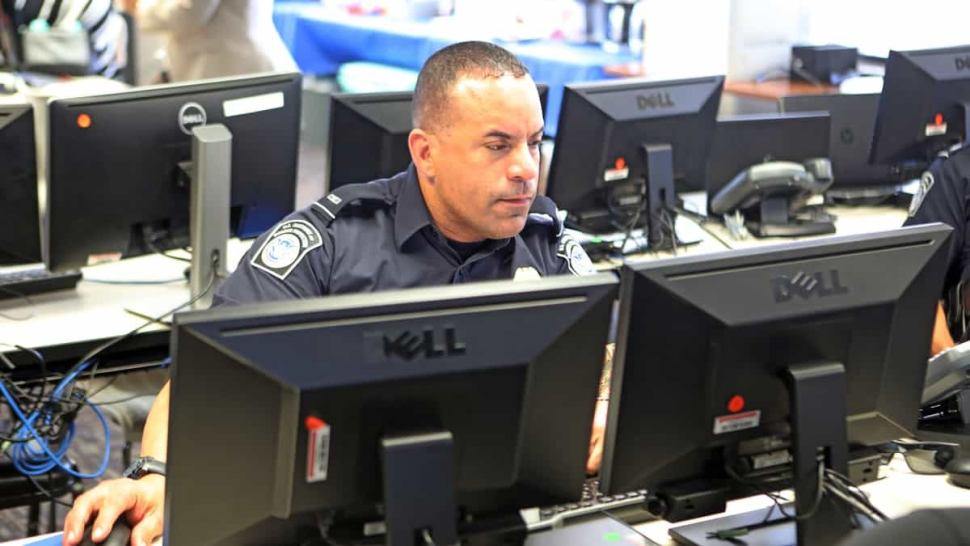
U.S. Customs and Border Protection announced Monday it has opened the USMCA Center in Washington, D.C., to work with the private sector to coordinate implementation of the United States-Mexico-Canada Agreement (USMCA), which enters into force on July 1.
“We’re going to be gathering together all of CBP’s experts on the USMCA in a coordinated center,” said John Leonard, U.S. Customs and Border Protection’s executive director for trade policies and programs. “It will be a group of about 10 individuals, people from our trade policy, from our operational sections, our import specialist from the field, our legal staff and our auditors.”
Leonard, who was speaking on a conference call with reporters on Monday, said the center will help USMCA countries and their partners.
“They will have a one-stop shop to be able to go to for all their questions and concerns as we implement and enforce this landmark trade agreement,” Leonard said.
The center will cover issues such as regulatory changes, automation changes that will occur within cargo systems, rules-of-origin changes, as well as new labor laws enacted by USMCA.
While the Trump administration has stood firm amid calls to delay the USMCA from its July 1 implementation, some lawmakers and trade industry groups have said the coronavirus pandemic has made it difficult to implement the agreement.
During Monday’s conference call, Brenda Smith, executive assistant commissioner of CBP’s Office of Trade, said, “the three countries see this implementation of the USMCA agreement as pretty important for the economy. We’re all pretty focused on making sure that implementation happens on schedule.”
Smith also said the bulk of the USMCA’s implementing rules were issued on April 21.
“We are working now with the trade community to make sure that we’ve identified any gaps in implementation and can address those. Our target is to do the final update on the implementing instructions by June 15,” Smith said.
Smith added that U.S. trade officials are working to finish the uniform regulations by June 1.
Uniform automotive rules of origin, which all three countries must agree to, have been one of the more contentious issues for USMCA implementation, because it involves specific documents auto manufacturers will need to understand and apply to production.
Smith said U.S. trade officials probably will not allow for an informed compliance period for most importers, which would have allowed USMCA partners more time after July 1 to implement each administration’s regulatory and automation requirements.
“At this point, because most of the rules-of-origin regulations have remained essentially the same as they were under [NAFTA], if there has not been a substantive change in the nature of those [rules of origin] claims, we will look to honor those claims, but we’d also expect the industry to maintain the underlying information that supports the previous claims,” Smith said.
Smith added, “clearly with the automotive industry, there has been a substantial amount of change. We are working now with the Office of the U.S. Trade Representative to structure that transition period.”
Brokerage Compliance Symposium
The day before F3. Every compliance issue you face - fraud exposure, carrier liability, FMCSA rules, cargo theft, insurance gaps - navigated by attorneys and operators defining best practices in a changing industry.
F3 Awards Dinner
The night before F3. FreightTech100 companies honored. FreightTech 25 and Shipper of Choice winners revealed live. Cocktail reception into dinner and live music - 300 industry leaders in one purpose-built room.
F3: Future of Freight Festival
Industry-defining keynotes, rapid-fire technology demos, and industry leaders networking in experiences across Chattanooga - plus the inaugural F3 Awards Dinner featuring the FreightTech and Shipper of Choice reveals.
The day before F3. Every compliance issue you face - fraud exposure, carrier liability, FMCSA rules, cargo theft, insurance gaps - navigated by attorneys and operators defining best practices in a changing industry.
The Signal at Chattanooga Choo Choo • Chattanooga, TN Register NowThe night before F3. FreightTech100 companies honored. FreightTech 25 and Shipper of Choice winners revealed live. Cocktail reception into dinner and live music - 300 industry leaders in one purpose-built room.
The Signal at Chattanooga Choo Choo • Chattanooga, TN Register NowIndustry-defining keynotes, rapid-fire technology demos, and industry leaders networking in experiences across Chattanooga - plus the inaugural F3 Awards Dinner featuring the FreightTech and Shipper of Choice reveals.
The Signal at Chattanooga Choo Choo • Chattanooga, TN Register Now