

Interstate 35 has long been the connective tissue of the Texas Triangle, the artery that carries freight from the Mexican border through San Antonio and Austin on its way to Dallas-Fort Worth, the Midwest and beyond. As freight volumes climb and population growth adds more drivers to an already strained I-35 route, fleets are increasingly looking for an alternative and finding one in SH 130.
The 91-mile toll corridor has become one of the busiest bypass routes in the state. SH 130 Concession Company operates its southern 41-mile stretch between Austin and San Antonio. Heavy truck traffic on that southern section has climbed by nearly 130% since 2019, according to Ryan Sethness, the company’s Head of Freight Business Development. Even so, the road still has room to grow.
“Even with recent growth, the road remains reliably congestion-free with plenty of capacity to accommodate additional traffic,” Sethness said.
That capacity is becoming more valuable by the day. Major construction projects are underway along I-35 between Austin and San Antonio, work that Sethness said will disrupt traffic flow along the corridor for the next decade. If you’re trying to plan reliable delivery windows through the region, SH 130 is a lot more than a convenience.
Ask Sethness why fleets are making the switch, though, and the conversation starts with safety before it ever gets to time or cost.
“First and foremost, fleets pick SH 130 for safer routing through Central Texas,” he said. “SH 130 is one of the safest major highways in Texas.”
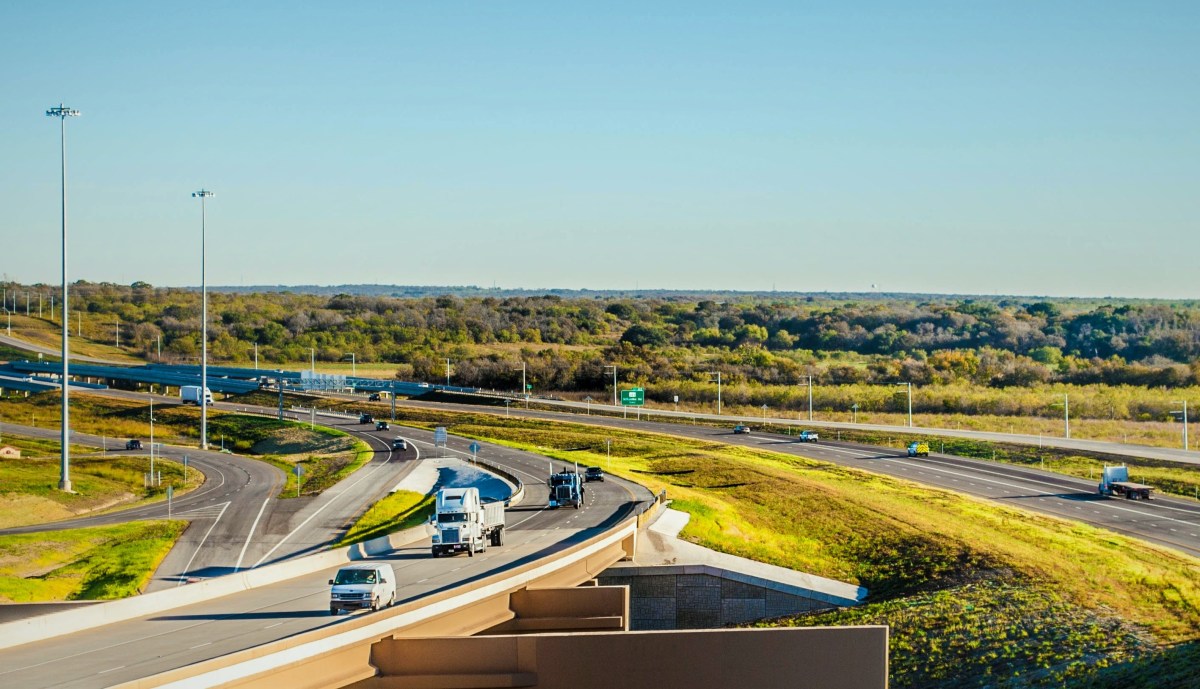
Drivers on SH 130 are 80% less likely to experience a crash than those on I-35, and five times less likely to have an accident than drivers on other Texas highways, according to Sethness. That translates directly into risk management for carriers. Fewer crashes mean fewer liability claims, fewer disrupted schedules, and a better shot at getting freight where it needs to be, when it needs to be there.
Safety and reliability, Sethness explained, are two sides of the same coin.
“Time is money for commercial drivers, and companies want to know that they can reliably get their materials and goods delivered on schedule,” Sethness said. That’s true for domestic freight, but Sethness noted it matters even more for cross-border loads, which face additional variables that make on-time delivery harder to guarantee.
The predictability gap between the two routes is stark. The southern section of SH 130 gets drivers to their destination within 15 minutes of their expected drive time 99% of the time, compared to less than 20% of the time on I-35, Sethness said. When fleets weigh that reliability against the toll cost, the math tends to favor SH 130.
“The cost of time spent sitting in I-35 congestion — including increased fuel consumption, lost revenue and late fees for freight carriers — can be two to three times the cost of the SH 130 toll,” Sethness said.
Safety and speed only solve part of the equation for over-the-road drivers. Finding a safe place to park and rest remains one of the most persistent pain points in trucking nationally, and SH 130 Concession Company has made corridor-wide parking expansion a priority.
“Truck drivers have a real challenge finding safe places to park and rest, and that’s true across the country,” Sethness said. “We are working hard to increase parking and other amenities all along the SH 130 corridor through partnerships with local municipalities and private travel center operators.”
The effort to do so is already visible on the ground. A new truck parking area under construction near the intersection of SH 21 and SH 130 in Mustang Ridge will add 30 spaces when it opens later this year. Looking further out, the company is developing a state-of-the-art travel plaza at SH 80 and SH 130 in southern Caldwell County between San Antonio and Austin. Sethness said the project will include more than 150 truck parking spaces, along with a convenience store, dog parks, restaurants, and other driver amenities.
The parking push isn’t just infrastructure for infrastructure’s sake, though.
“Truck drivers have a hard job,” Sethness said. “We want to do what we can to improve their quality of life on the road and address one of their biggest pain points while also helping to keep freight safely moving through Central Texas.”
Aside from safety and amenities, SH 130 has built a financial incentive to draw fleets off I-35. The company runs a freight rebate program that puts money back in carriers’ pockets simply for increasing their usage of the corridor.
“Over the past few years, SH 130 has implemented freight rebate programs designed to give fleets cash back on tolls by choosing SH 130 more often over I-35,” Sethness said.
The mechanics are straightforward. Eligibility is tied to usage growth, and fleets can earn a cash rebate on any toll spend above their existing baseline on the San Antonio-to-Austin section of the corridor. The program is administered directly through PrePass and BestPass account management teams for fleets that already work with those aggregators, while carriers outside that ecosystem can enroll directly with SH 130.
The results have been substantial.
“Over the past 12 months, we have distributed over $700,000 in rebates to trucking companies,” Sethness said. “It’s been a successful program that is appreciated by fleets and drivers, and helps get more trucks off of I-35 through San Antonio and Austin.”
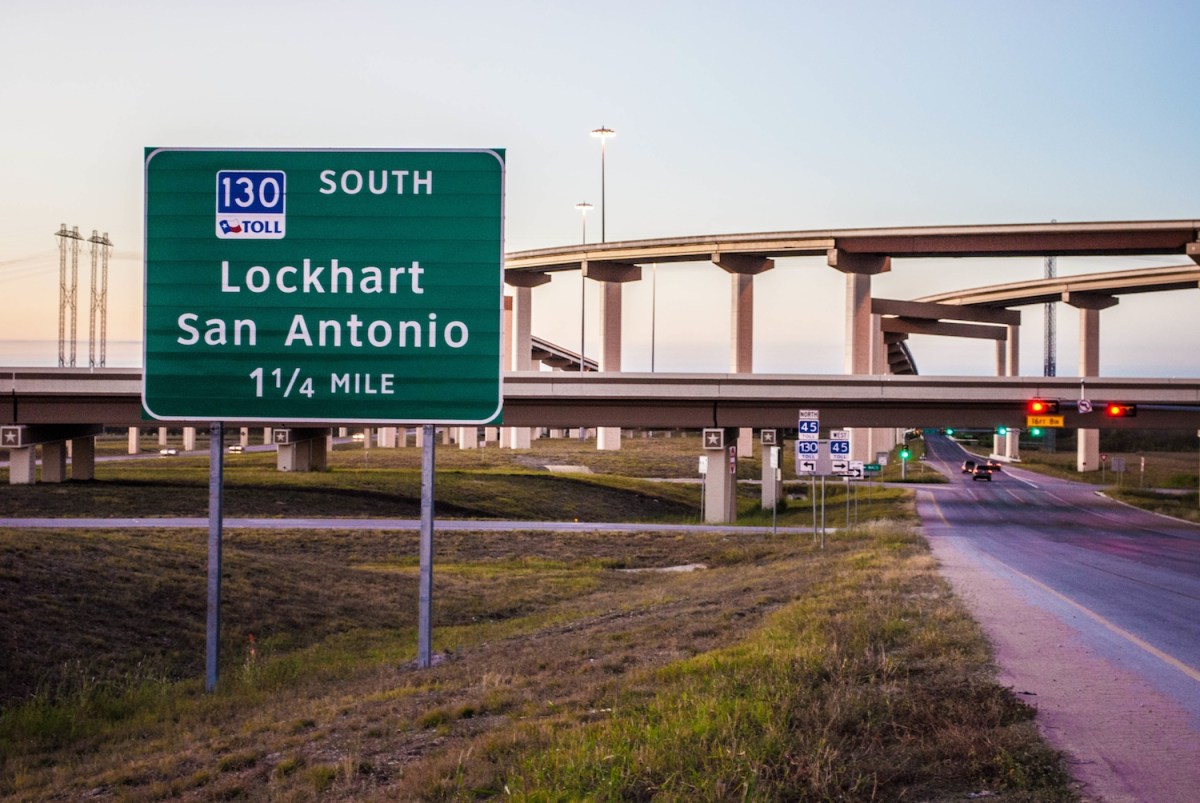
If safety, parking and rebates address today’s freight challenges, SH 130’s technology investments are aimed squarely at tomorrow’s. The company is layering AI and data tools into its operations, including systems that monitor pavement conditions and an upgraded traffic management center designed for faster debris removal and incident response.
Earlier this year, SH 130 Concession Company entered into a partnership with Swedish autonomous trucking company Einride to explore building an infrastructure-ready testbed for autonomous freight vehicles. The company has also signed a memorandum of understanding with SmarTrack of UT Austin and the Texas Department of Transportation to participate in a Level 3 test corridor, where emerging pavement, intelligent transportation systems and autonomous technologies will be evaluated in real-world conditions once they clear controlled and semi-controlled testing.
“These collaborations allow SH 130 to accelerate and advance emerging transportation technologies that make the system safer, reliable and future-ready,” Sethness said.
The corridor has room to absorb this testing without disrupting traffic. The southern section of SH 130 currently runs at roughly one-third of capacity during peak daytime hours, according to Sethness, and any autonomous testing will be scheduled during off-peak periods in less-traveled segments, which minimizes interaction with routine freight movement.
Sethness sees the next decade defined by two converging forces: I-35’s mounting construction and congestion, and a wave of industrial investment reshaping Central Texas. I-35 remains the primary artery for freight moving from Mexico through the U.S. and into Canada, but Sethness said that artery is becoming increasingly clogged as freight volumes and population growth compound each other.
Meanwhile, major economic development projects continue to land in the region. Sethness pointed to Toyota’s $3.6 billion investment to double the size of its San Antonio plant by 2030, KTH Texas’ planned $100 million automotive components plant in Seguin (expected to open in 2028), and Amazon’s announced multibillion-dollar advanced robotics manufacturing facility in Austin.
“As these facilities come online, the movement of people and goods through Central Texas and the SH 130 corridor will increase,” Sethness said.

With Laredo serving as the busiest cross-border transportation hub to the south and DFW anchoring one of the largest freight markets in the country to the north, Sethness said SH 130’s position between the two will only become more strategic. To help carriers navigate that growth, the company is investing in real-time alert systems for congestion, closures, and roadwork, giving drivers the information they need at key decision points along the route.
Asked what “the highway of the future” looks like in practice, Sethness framed it as a combination of technology, infrastructure, and people.
“To us, ‘the highway of the future’ means a smarter, safer and more connected freight corridor — one that uses technology and innovative infrastructure to move goods and people more efficiently while supporting the people who keep our supply chains moving,” Sethness said.
The vision extends beyond any single project.
“Our company is advancing a variety of innovative initiatives to make SH 130 the premier smart freight corridor in the state, while exploring opportunities to expand amenities available to commercial drivers,” Sethness said. “We’re actively working with freight customers, industry partners, and TxDOT to implement new technology solutions and infrastructure with an eye toward the future of freight logistics.”
Fleets are navigating an increasingly congested I-35, but SH 130 is betting that safety, reliability, driver amenities, and forward-looking technology will keep pulling more trucks onto its 91 miles of pavement and keep the region’s freight moving as Central Texas continues to grow.
Learn more about SH 130 Concession Company and how the corridor keeps freight moving through Central Texas at mysh130.com.
Brokerage Compliance Symposium
The day before F3. Every compliance issue you face - fraud exposure, carrier liability, FMCSA rules, cargo theft, insurance gaps - navigated by attorneys and operators defining best practices in a changing industry.
F3 Awards Dinner
The night before F3. FreightTech100 companies honored. FreightTech 25 and Shipper of Choice winners revealed live. Cocktail reception into dinner and live music - 300 industry leaders in one purpose-built room.
F3: Future of Freight Festival
Industry-defining keynotes, rapid-fire technology demos, and industry leaders networking in experiences across Chattanooga - plus the inaugural F3 Awards Dinner featuring the FreightTech and Shipper of Choice reveals.
The day before F3. Every compliance issue you face - fraud exposure, carrier liability, FMCSA rules, cargo theft, insurance gaps - navigated by attorneys and operators defining best practices in a changing industry.
The Signal at Chattanooga Choo Choo • Chattanooga, TN Register NowThe night before F3. FreightTech100 companies honored. FreightTech 25 and Shipper of Choice winners revealed live. Cocktail reception into dinner and live music - 300 industry leaders in one purpose-built room.
The Signal at Chattanooga Choo Choo • Chattanooga, TN Register NowIndustry-defining keynotes, rapid-fire technology demos, and industry leaders networking in experiences across Chattanooga - plus the inaugural F3 Awards Dinner featuring the FreightTech and Shipper of Choice reveals.
The Signal at Chattanooga Choo Choo • Chattanooga, TN Register Now