State, local government officials push Senate to take up rail safety bill
Three groups representing state and local governments have asked Senate leaders to move forward with debate on the rail safety bill.
CPKC seeks to extend or make permanent a waiver that allows the railway to dispatch trains for three locations at its Calgary office.
The Federal Railroad Administration is planning to expand its assessment of safety culture to include all of the Class I railroads, the agency’s head said recently.
A federal court in Canada sided with union members and determined that Canadian Pacific had failed to adequately limit the number of hours that train crews worked in a number of instances in 2018 and 2019.
How industry stakeholders are responding to efforts to legislate rail safety reforms was one of the themes percolating at the recent North American Rail Shippers annual conference.
Two regulations proposed by the Federal Railroad Administration call for freight railroads to create programs to certify train dispatchers and signal employees.
NS employees received a letter signed by President and CEO Alan Shaw and the presidents of 12 unions pledging collaboration to improve rail safety.
The Transportation Trades Department of the AFL-CIO wants Congress to pass a rail safety bill that addresses train crew sizes, train lengths and inspection times.
The Senate Commerce Committee passed the Railway Safety Act, sending the bill to the Senate floor for a vote. But will it have smooth sailing?
FRA has issued a safety advisory asking freight railroads to be aware of the operational adjustments that must be made when they deploy longer trains.
An industry trade group advisory questioning the safety of wheel sets manufactured by National Steel Car has been canceled, National Steel Car said.
The way that trains are configured might have factored into the derailments of six Class I trains over the past two years, according to the Federal Railroad Administration.
Democratic lawmakers from Pennsylvania and Ohio have introduced a second piece of legislation, the Railway Accountability Act.
Norfolk Southern and SMART-TD are tabling discussions about how to handle conductor redeployments as congressional lawmakers want more information about what rail safety initiatives should become law.
Transportation secretary takes on lawmakers’ concerns on truck and rail issues while defending his department’s $145 billion fiscal year 2024 budget request.
Two congressional representatives from Ohio have introduced a rail safety bill that they say would build off of NTSB’s findings into the cause of the Feb. 3 derailment of a Norfolk Southern train.
A Senate hearing Thursday provided Congressional leaders a chance to grill Norfolk Southern President and CEO Alan Shaw not just on the Feb. 3 train derailment in Ohio but also on the industry’s views on rail safety.
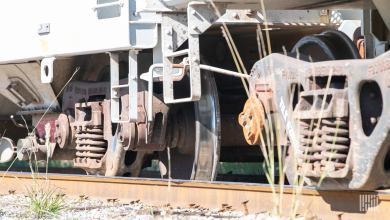
Norfolk Southern notified federal officials about loose wheels, and the Association of American Railroads put out an advisory to halt the use of rail cars that might have this issue.
The Association of American Railroads has laid out initiatives the freight rail industry expects to take up to boost safety amid calls from federal officials in the wake of the Feb. 3 Ohio train derailment.
“While the Railway Safety Act of 2023 has potential, railroad workers are concerned with what is glaringly left out of the bill and what aspects are left to the DOT and FRA to draft, implement, and administer,” said Matt Weaver of Railroad Workers United.