Norfolk Southern aims to slash emissions with greater use of biofuels
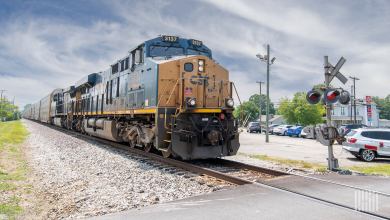
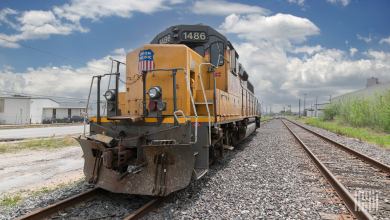
Increasing biofuel consumption will be a key way for Norfolk Southern to reduce greenhouse gas emissions, according to its inaugural climate transition plan.
In this fireside chat, FreightWaves’ chief economist Anthony Smith talks with Union Pacific’s Matt Gloeb about how collaboration between the railroad and truck carriers in the intermodal space can help customers reach sustainability goals.
The U.S. and Canada plan to form a joint task force aimed at developing and integrating zero-emissions technologies for locomotives at a wider and accelerated scale.
Rail electrification and locomotives powered by green hydrogen are two goals that the rail industry and federal and state leaders should adopt, according to the Sierra Club’s revised statement on how to encourage clean transportation for the railroads.
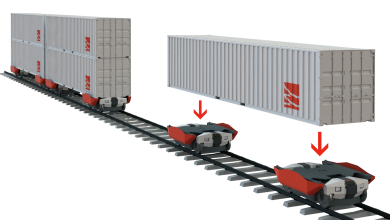
Two Genesee & Wyoming subsidiaries are seeking a permit from the Federal Railroad Administration to conduct a pilot project that would involve deploying Parallel Systems’ autonomous rail vehicle technology on limited portions of their networks in Georgia.
Researchers at the University of California at Berkeley and the Lawrence Berkeley National Laboratory are looking at the idea of using the battery systems of battery-electric locomotives as a way to back up the U.S. power grid.
Class I railroads CPKC and CSX are working together on developing CPKC’s conversion kits that can retrofit diesel locomotives into hydrogen locomotives.
The Association of American Railroads has outlined eight ways that the freight rail industry and the federal government can work together to reduce greenhouse gas emissions.
CPKC and Canadian coal producer Teck Resources’ new service agreement includes a pilot program in which CPKC will test out its hydrogen locomotives to transport Teck’s coal.
The California Air Resources Board has passed a regulation that compels freight and locomotive operators in California to adopt technologies to reduce locomotive emissions and phase out diesel locomotives.
The California Air Resources Board is expected to discuss this week a proposed regulation calling for zero-emissions locomotives by 2030 and 2035.
Parallel Systems is proceeding with the next step in its development of autonomous rail vehicles, which is to test having multiple vehicles strung together and see how these vehicles can integrate into the existing freight rail network.
FreightWaves chatted with Wabtec’s Philip Moslener, who leads Wabtec’s advanced technologies team, about why companies should conduct research in hydrogen in locomotives.
Oak Ridge National Laboratory, Argonne National Laboratory and Wabtec are in the middle of a four-year project aimed at developing a locomotive engine that can incorporate both diesel and hydrogen.
Union Pacific has been recognized for sustainability practices. Commtrex and Railinc are working together to develop a product aimed at using data to simplify rail movements.
Class I railroads CSX, CN, CP and KCS tout recognition for their sustainability efforts, while rail technology provider Wabtec gets a nod for its battery-electric locomotive.
CN and Norfolk Southern announce leadership changes. Transport Canada looks to fund projects aimed at promoting climate resiliency for rail infrastructure.
AskWaves looks at what carbon calculators are and why potential and existing customers of freight rail might benefit from them.
Thanks to a federal grant, the Mineta Transportation Institute at San Jose State University will be working with four other colleges to develop climate-resiliency strategies and tools for U.S. freight and passenger railroads.
The two eastern U.S. Class I railroads say they’re well on their way to meeting greenhouse gas emissions reduction goals.