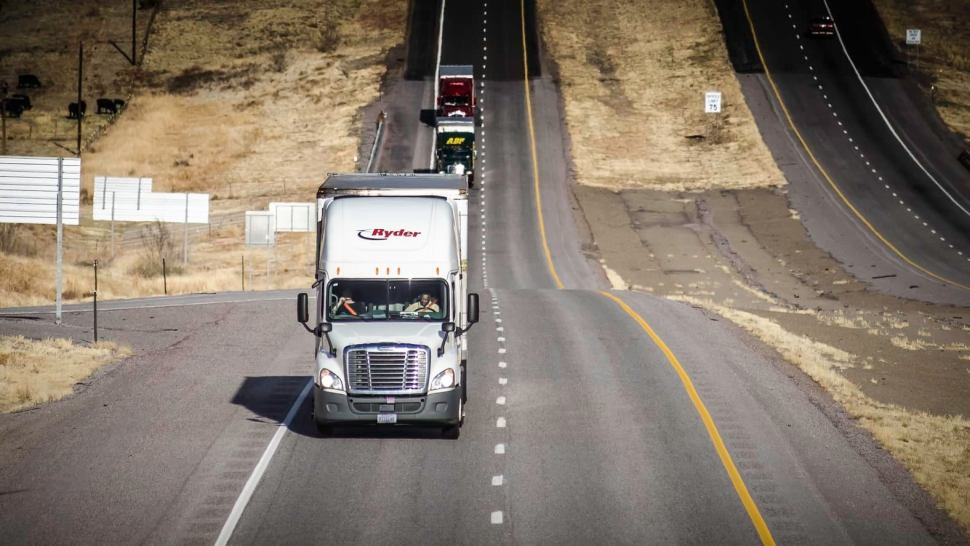
Ryder System, Inc. (NYSE:R) expanded its truck asset-sharing platform, “COOP by Ryder,” into south Florida as part of a plan to develop a connected marketplace with neighboring Georgia, where the peer-to-peer model debuted last March, said Rich Mohr, COOP’s general manager, in an interview with FreightWaves today.
The initiative, which launched in Atlanta and which was broadened today to cover Florida’s southern half, matches businesses needing commercial vehicle equipment with fleet owners and operators with idle assets. Following the same general model as Airbnb, in which property owners list space for rent to a global marketplace, COOP gives asset owners the chance to generate revenue from underutilized equipment. A 26-foot straight truck operating 100 miles a day can generate $3,300 a month for its owners, based on Ryder’s estimates.
According to Miami-based Ryder’s data, equipment in Georgia from Class 2 vans to Class 8 big rigs sat idle, on average, two days out of a five-day workweek. Ryder data indicates that one-quarter of the more than eight million commercial vehicles operating nationwide are unused for more than one day a week, excluding weekends.
The south Florida territory, which connects the Florida Keys to West Palm Beach to the north and Fort Myers to the west, was chosen because it has different characteristics than the Atlanta market, according to Mohr. The south Florida market is seasonal, whereas the Atlanta market is not, Mohr explained. There is a wider assortment of equipment types in south Florida, while the Atlanta equipment market is dominated by heavy-duty tractor-trailers, Mohr added. Atlanta is a regional and, increasingly, a national hub for truck traffic. South Florida, because of its location, is not.
One of the expansion’s key objectives will be to “see how the markets are behaving against each other,” Mohr said in the interview. Through 2019, Ryder will broaden the program to cover all of Florida with the goal of establishing a two-state market encompassing a wide range of equipment, he said. Mohr did not comment on future expansion plans beyond that.
South Florida is currently in its peak season cycle, especially for cut flower traffic originating in Latin America and coming into Miami International Airport before heading out by truck. The shipping cycle typically runs strong through March, slows in the spring and summer months, and picks up again in the fall ahead of the holidays.
Through the COOP platform, an asset owner lists the available equipment and the proposed rental agreement’s timeframe. Businesses seeking capacity will contact the asset owner to arrange a transaction and pick up the equipment. The parties negotiate pricing terms on their own, or ask Ryder for guidance. The asset owners get paid immediately upon the asset’s return, with Ryder charging a per-transaction fee. Ryder vets the assets to ensure compliance with federal and state laws, and with applicable insurance requirements. Each transaction is covered by physical damage insurance and a $1 million liability policy.
The parties are responsible for finding drivers. Mohr said he’s been queried by asset owners and renters about expanding into driver recruitment, but there are no plans to do so at this time.
Ryder has touted the COOP model as the first tool that allows asset owners to put idle equipment to work. The company sees it as a way to offset seasonal, cyclical, and even secular equipment shortages. It is also an acknowledgment that no one company can physically manage such a program, and that the marketplace is a more efficient implementation agent.
Based on the experience in Atlanta, the average rental duration was between seven and 10.5 days, Mohr said. In some cases, such as in the high-demand peak season, rental windows could run as long as 20 to 30 days, he indicated. Rental transactions of up to eight days are not subject to Electronic Logging Device (ELD) compliance, though the parties still must keep records. For transactions that required ELD compliance, renters would bring their own devices, he added.
Ryder used the Atlanta launch as a way to work out kinks in the platform. For example, many renters wanted to get access to equipment on the same day that the transaction was consummated, or at latest the following day. However, Ryder’s on-boarding process was initially not able to meet those windows. With some tinkering, the problem was resolved, Mohr said.In addition, Ryder needed to add a chat function to the platform so the parties could communicate in real-time about specific characteristics of the transaction, such as whether a truck was permitted to operate just within Georgia or could cross state lines.
On the other hand, Mohr said he was pleased with the robust level of communication between asset owners and renters, and how responsible renters were in returning the equipment in the condition they found it.
As a result of the takeaways from its Georgia experience, the south Florida launch was made “15 times easier,” Mohr said.
Brokerage Compliance Symposium
The day before F3. Every compliance issue you face - fraud exposure, carrier liability, FMCSA rules, cargo theft, insurance gaps - navigated by attorneys and operators defining best practices in a changing industry.
F3 Awards Dinner
The night before F3. FreightTech100 companies honored. FreightTech 25 and Shipper of Choice winners revealed live. Cocktail reception into dinner and live music - 300 industry leaders in one purpose-built room.
F3: Future of Freight Festival
Industry-defining keynotes, rapid-fire technology demos, and industry leaders networking in experiences across Chattanooga - plus the inaugural F3 Awards Dinner featuring the FreightTech and Shipper of Choice reveals.
The day before F3. Every compliance issue you face - fraud exposure, carrier liability, FMCSA rules, cargo theft, insurance gaps - navigated by attorneys and operators defining best practices in a changing industry.
The Signal at Chattanooga Choo Choo • Chattanooga, TN Register NowThe night before F3. FreightTech100 companies honored. FreightTech 25 and Shipper of Choice winners revealed live. Cocktail reception into dinner and live music - 300 industry leaders in one purpose-built room.
The Signal at Chattanooga Choo Choo • Chattanooga, TN Register NowIndustry-defining keynotes, rapid-fire technology demos, and industry leaders networking in experiences across Chattanooga - plus the inaugural F3 Awards Dinner featuring the FreightTech and Shipper of Choice reveals.
The Signal at Chattanooga Choo Choo • Chattanooga, TN Register Now