Good day,
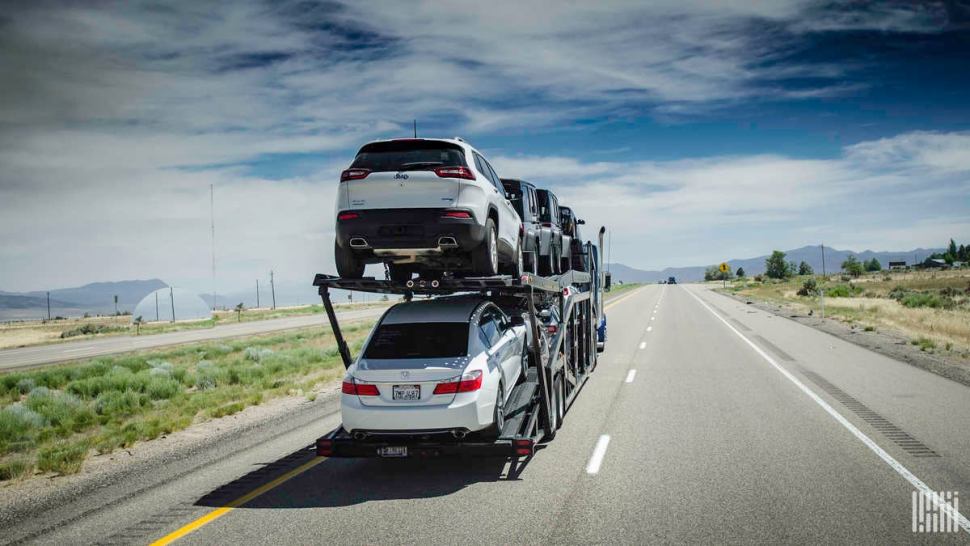
Car haulers are some of the most highly skilled and well-paid drivers on the road. The reasons are simple: Each unit is typically valued in the low five figures and usually much more, and drivers need to do much more than simply transport the commodity. Yet while car hauling isn’t experiencing the same tight supply as dry van, reefer or flatbed, the segment is not immune to the challenges facing all of trucking in recruiting new drivers and keeping the incumbents from jumping. What’s more, the high pay differential between car haulers and everyone else is no longer that high. “While our niche of the trucking industry has grown with increased car sales, the freight rates and driver pay have remained relatively stagnant. The driver pay advantage once held by auto transporter drivers has diminished,” Steve Hansen, executive vice president of Hansen & Adkins Auto Transport, said in an article in Automotive Logistics. Hansen added that the “process and effort of loading and delivering new vehicles carries a high degree of risk and requires more work than simply driving a truck. Our drivers should be paid more for the increased time and effort and (the) rates needed to support it.”
Did you know?:
It would cost $73 trillion to revamp power grids, transportation, manufacturing and other systems to run on wind, solar and hydro power, including enough storage capacity to keep the lights on overnight, Mark Jacobson, a Stanford University professor, said in a study published Dec. 20 in the journal One Earth and cited by an online platform called “Mishtalk.” The site called the idea that going 100% green can pay for itself in seven years the “lie of the day.”
Quotable:
“As it should be.”
— Elon Musk tweeting that he will go bankrupt if the firms he founded, Tesla and SpaceX, also do.
In other news:
JD.Com’s logistics unit eyes possible 2020 IPO
The unit is in “early discussions” to raise $8 billion to $10 billion and is targeting a $30 billion valuation, unidentified people told Reuters. (Bloomberg)
Study says ports can see massive savings from IT
Global ports could realize 10% to 35% more productivity and a 25% to 55% reduction in operating expenses through the use of readily available automation, according to a McKinsey study. (Gulf News)
From the sea: A car battery
Using three as-yet-unidentified ingredients from seawater, IBM Corp. said it can make a car battery that could charge at 80% power in five minutes and is safer to make and use than batteries built with cobalt and lithium. (Robb Report)
He came, he created, he dumped
Uber Technologies founder and former CEO Travis Kalanick has sold more than $2.5 billion of his Uber shares since a lockup period expired in November. He is selling at a pace that indicates he will be out of the stock within days. (CNBC)
The end of the air road
The closest thing to a milk run in the Australasia-North America trade lane ends Feb. 9 when Qantas Airways makes its final Boeing 747 flight from Sydney to Los Angeles. (The Points Guy)
Final thoughts:
One of the biggest questions heading into the new decade is if Amazon.com Inc. will launch a freestanding shipping and logistics service that courts customers not using its website. Some observers, like Morgan Stanley & Co., said it’s a slam dunk and a natural extension of the company’s current shipping platform, which is focused on supporting retail customers. However, we are not sure about the wisdom of such a move. Parcel shipping in today’s day and age is a low-margin business, and logistics is a labor-intensive service. Amazon may be better off staying with its current model and building value by integrating retail and distribution rather than going off into the netherworld of stand-alone shipping. As for rolling out a separate service with the goal
Brokerage Compliance Symposium
The day before F3. Every compliance issue you face - fraud exposure, carrier liability, FMCSA rules, cargo theft, insurance gaps - navigated by attorneys and operators defining best practices in a changing industry.
F3 Awards Dinner
The night before F3. FreightTech100 companies honored. FreightTech 25 and Shipper of Choice winners revealed live. Cocktail reception into dinner and live music - 300 industry leaders in one purpose-built room.
F3: Future of Freight Festival
Industry-defining keynotes, rapid-fire technology demos, and industry leaders networking in experiences across Chattanooga - plus the inaugural F3 Awards Dinner featuring the FreightTech and Shipper of Choice reveals.
The day before F3. Every compliance issue you face - fraud exposure, carrier liability, FMCSA rules, cargo theft, insurance gaps - navigated by attorneys and operators defining best practices in a changing industry.
The Signal at Chattanooga Choo Choo • Chattanooga, TN Register NowThe night before F3. FreightTech100 companies honored. FreightTech 25 and Shipper of Choice winners revealed live. Cocktail reception into dinner and live music - 300 industry leaders in one purpose-built room.
The Signal at Chattanooga Choo Choo • Chattanooga, TN Register NowIndustry-defining keynotes, rapid-fire technology demos, and industry leaders networking in experiences across Chattanooga - plus the inaugural F3 Awards Dinner featuring the FreightTech and Shipper of Choice reveals.
The Signal at Chattanooga Choo Choo • Chattanooga, TN Register Now