




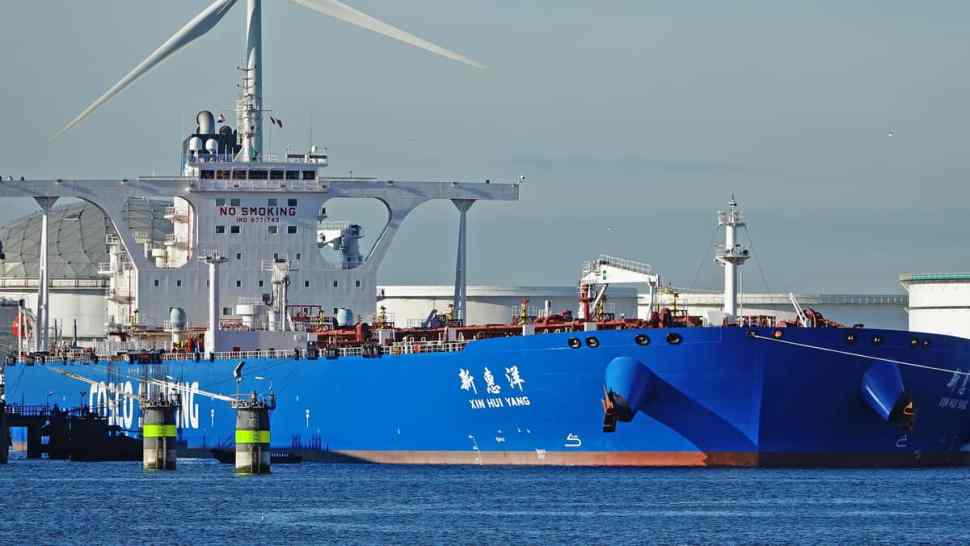
The U.S. Treasury Department’s Office of Foreign Assets Control (OFAC) announced Friday it has lifted economic sanctions against COSCO Shipping’s oil tanker operations.
The department did not explain the reasons for lifting the sanctions. OFAC imposed sanctions against the Chinese tanker operation on Sept. 25 for transporting Iranian oil in violation of U.S. and UN sanctions. However, the Trump administration signed a phase one trade deal with China on Jan. 15, signaling improved relations between the two economic powers.
Specifically, OFAC added COSCO Shipping Tanker (Dalian) Co. Ltd. and its affiliates, including Dalian Ocean Shipping Co. Ltd. and Dalian Yuanyang Yunshu Gongsi, to its Specially Designated Nationals and Blocked Persons (SDN) List.
The agency also added a handful of Chinese executives and other Chinese tanker operations, including China Concord Petroleum Co. Ltd., Kunlun Holding Company Ltd., Kunlun Shipping Company Limited and Pegasus 88 Limited.
U.S. persons and companies are generally prohibited from conducting business with individuals or entities on the SDN List. Additionally, any entities owned 50% or more in the aggregate by these listed individuals are blocked.
However, the sanctions did not apply to COSCO Shipping Tanker’s parent, COSCO Shipping Corp. Ltd., or its other nontanker corporate affiliates.
The lifting of the sanctions against COSCO Shipping Tanker was good news for the oil transport sector.
“The effect of the sanctions was a reduction in supply, and as a result, tanker rates were still reasonably high,” wrote Ben Nolan, Stifel Maritime analyst, in a note on Friday. “With the lifting of sanctions, about 2-3% of the global crude tanker fleet (particularly the VLCCs) will immediately rejoin the global trading fleet and drive tanker rates down.”
Nolan estimated that 20-25 VLCCs (very large crude carriers) of an estimated global fleet of about 800 were idled or “underutilized” after OFAC imposed the sanctions against the Chinese tanker operators.
Meanwhile, crude tanker rates currently face a “negative headwind,” Nolan said.
“Crude tanker rates have already been falling this year, with VLCC rates down from about $100,000/day to closer to $50,000/day currently,” he said.
The U.S. continues to strengthen its use of sanctions against Iran’s oil supply since leaving the international Iran nuclear treaty in 2018. Numerous Iranian and foreign entities and individuals, as well as vessels, have since been placed on the SDN List for their alleged role in transporting Iranian oil, which the U.S. said helps finance the activities of the Islamic Revolutionary Guard Corps-Qods (IRGC-QF).
Brokerage Compliance Symposium
The day before F3. Every compliance issue you face - fraud exposure, carrier liability, FMCSA rules, cargo theft, insurance gaps - navigated by attorneys and operators defining best practices in a changing industry.
F3 Awards Dinner
The night before F3. FreightTech100 companies honored. FreightTech 25 and Shipper of Choice winners revealed live. Cocktail reception into dinner and live music - 300 industry leaders in one purpose-built room.
F3: Future of Freight Festival
Industry-defining keynotes, rapid-fire technology demos, and industry leaders networking in experiences across Chattanooga - plus the inaugural F3 Awards Dinner featuring the FreightTech and Shipper of Choice reveals.
The day before F3. Every compliance issue you face - fraud exposure, carrier liability, FMCSA rules, cargo theft, insurance gaps - navigated by attorneys and operators defining best practices in a changing industry.
The Signal at Chattanooga Choo Choo • Chattanooga, TN Register NowThe night before F3. FreightTech100 companies honored. FreightTech 25 and Shipper of Choice winners revealed live. Cocktail reception into dinner and live music - 300 industry leaders in one purpose-built room.
The Signal at Chattanooga Choo Choo • Chattanooga, TN Register NowIndustry-defining keynotes, rapid-fire technology demos, and industry leaders networking in experiences across Chattanooga - plus the inaugural F3 Awards Dinner featuring the FreightTech and Shipper of Choice reveals.
The Signal at Chattanooga Choo Choo • Chattanooga, TN Register Now