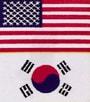
Obama commits to U.S.-Korea trade deal
President Obama said over the weekend he will seek congressional approval before the end of the year of the now three-year-old free trade agreement negotiated between the United States and South Korea.
 |
| Obama |
U.S. Trade Representative Ron Kirk will be tasked with negotiating with his Korean counterpart to work out the details by the next G-20 meeting, to be held in Seoul in November.
The president's commitment to the agreement received immediate praise from pro-U.S. trade groups.
 |
| Kirk |
'We commend the president of stating his commitment to negotiating a way forward on issues that stand in the way of approval of the FTA, including the auto issue, and we applaud his plan to submit the agreement to Congress this year,' said Bill Reinsch, president of the National Foreign Trade Council, in a statement on Monday.
 |
| Reinsch |
More than a quarter of U.S. exports to South Korea come from small and mid-sized shippers. South Korea is also the seventh-largest U.S. trading partner. 'We need to protect and expand that relationship,' said UPS Chairman and Chief Executive Officer Scott Davis.
 |
| Davis |
UPS noted that the U.S.-South Korea FTA contains important provisions for the express delivery industry, including enhanced market access and improved customs clearance times that allow companies such as UPS to better serve its customers.
Agricultural commodity shippers also voiced their support for ratification of the U.S.-South Korea FTA.
 |
| Joslin |
“ASA supports negotiation of trade agreements that significantly improve access to foreign markets for U.S. soy and livestock products,” said Rob Joslin, president of the American Soybean Association (ASA). “U.S. soybean farmers benefit from free trade because more than half the value of the U.S. soybean crop is exported annually.”
The agreement offers immediate duty-free access to U.S. soybeans for crushing and to U.S. soybean meal. And for the first time, producers of U.S. food-grade soybeans would have access to the South Korean market outside of the import monopoly created by the Korean State Trading Enterprise. Tariffs on refined soybean oil would be eliminated over five years, and tariffs on crude soybean oil would be eliminated over 10 years.
The ASA noted in 2009 that South Korea imported $449 million worth of soybeans, soybean meal and soybean oil from the United States. South Korea is now the fifth-largest for U.S. agricultural exports, valued at $3.9 billion in 2009.
According to economic analysis by the American Farm Bureau Federation, the U.S.-South Korea trade agreement would expand those exports in a wide range of commodities and result in $1.8 billion in additional sales — a 46 percent increase.
' Chris Gillis