




By Chris Gillis
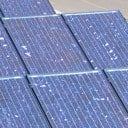
Solar panels, while rich in electrical energy output, are basically large pieces of framed glass, which if mishandled easily shatter.
'We've seen them damaged in transit,' said Jonah Liebes, general manager for Murrieta, Calif.-based HelioPower, a solar technology integration firm. 'When that occurs, the panels are totally destroyed. There's nothing you can do about it.'
Photovoltaic (PV) panels are also expensive. A typical three-by-five-foot solar panel costs about $1,000 apiece. They are generally stacked flat, 20 high to a pallet. A forklift through the side of the load or a piece of metal dropped on top could easily destroy the entire pallet load of panels.
In addition, there are the delicate sensory equipment and aluminum parts that go along with panel installations, which easily suffer damage from haphazard transportation.
| Related News • Logistics bright spots • Cutting the cardboard |
Schott Solar, a Roseville, Calif.-based developer of solar energy systems, has spent the past 15 years in the U.S. market sharpening its transportation and logistics management of PV panels, eliminating what it believes to be most of the potential points for damage. 'Anytime you transport glass, you better know who's handling it,' said Stuart Schonfield, the company's director of marketing and sales operations.
| | |
| 'Anytime you transport glass, you better know who's handling it.' | |
| Stuart Schonfield director of marketing and sales operations, Schott Solar | |
Rapid Growth. The U.S. solar industry has been experiencing an unprecedented surge in business. PV solar power generation was once considered cost prohibitive to use, but with more efficient manufacturing techniques, the price tag for the technology has dropped as much as 35 percent during the past three years.
The Washington-based Solar Energy Industries Association (SEIA) said in 2008 that 1,265 megawatts of solar power of all types were installed, raising the total U.S. solar power capacity by 17 percent to 8,775 megawatts. The 2008 figure included 342 megawatts of solar PV, 139 megawatts (thermal equivalent) of solar water heating, 762 megawatts (thermal equivalent) of pool heating, and an estimated 21 megawatts of solar space heating and cooling.
No new concentrating solar power plants came online in the United States in 2008, but projects in the developmental stages add up to more than 6 gigawatts (or 6,000 megawatts). Among these are projects planned for California's Mojave Desert, Arizona and Florida. Four gigawatts of solar energy can power up to a million households.
According to the association, states that led the grid-fed PV installation in 2008 were California (178.6 megawatts), New Jersey (22.4 megawatts), Colorado (21.6 megawatts), Nevada (13.9 megawatts), and Hawaii (11.3 megawatts). The Mid-Atlantic states, an important emerging region for solar, installed 7 percent of solar water heating systems, the association said.
Last year, the United States ranked third globally in terms of PV installations, following Spain (2,281 megawatts) and Germany (1,500 megawatts). However, the country remains fourth for overall PV installations to date, following Germany (5,308 megawatts), Spain (2,973 megawatts), and Japan (2,173 megawatts).
| Elmar Niewerth chief executive officer ThinkSolar |  |
| 'We have to try to be as cheap in this business as possible because there's still no big payback.' | |
The solar industry is expected to further benefit from the 2008 Emergency Economic Stabilization Act, which included an eight-year extension of the federal solar investment tax credit. 'This long-term extension will facilitate the long-term planning and investment necessary for the U.S. solar industry to reach its full potential,' SEIA said.
In addition, the 2009 American Recovery and Reinvestment Act included several provisions that should support continued growth in solar deployment, including a 30-percent grant program for commercial and utility-scale solar installations to be administered by the Treasury Department, an Energy Department loan guarantee program, and a 30 percent manufacturing investment tax credit to attract investors to the U.S. market, SEIA explained.
In-Market. While Asia ' specifically China, Taiwan and Japan ' remains the dominant source of PV panels to the United States, more companies are building plants and distribution centers as close as possible to residential and commercial markets to shorten delivery distances and reduce transportation costs.
Schott Solar opened a new plant in Albuquerque, N.M. in April to add to its existing manufacturing operation in Massachusetts. The new plant is expected to initially produce about 70 megawatts of crystalline modules a year.
The SEIA estimated a 60 percent increase in U.S. production in 2008, compared to the previous year. In addition to Schott Solar, other companies that started to expand their domestic operations last year were First Solar, Hemlock Semiconductors, SolarWorld and United Solar Ovonic.
In late March, the Energy Department offered a $535 million loan guarantee to Fremont, Calif.-based Solyndra to support the company's construction of a manufacturing plant for its cylindrical solar PV panels. The plant will employ more than 1,000 people once fully operational.
 |
| Chu |
'The DOE Loan Guarantee Program funding will enable Solyndra to achieve the economies of scale needed to deliver solar electricity at prices that are competitive with utility rates,' said Chris Gronet, the company's chief executive officer and founder, in a statement. Solyndra's rooftop panels are fully certified for U.S. and international use and have been commercially shipped since July 2008.
Elmar Niewerth, CEO of Oakland, Calif.-based solar equipment distributor ThinkSolar, said proximity of solar technology manufacturing to residential and commercial job sites plays a major role in his company's sourcing decisions.
For example, to send one pallet from Canada to San Diego would be cost prohibitive. 'I need a truckload,' he said. 'You cannot order just one pallet from a manufacturer. It just doesn't make sense.'
For a solar technology distributor, the cost of transportation is a big concern, especially when profit margins on a shipment are generally well below 10 percent. 'We have to try to be as cheap in this business as possible because there's still no big payback,' Niewerth said.
Due to rapid industry expansion, the solar industry has struggled internally to keep up with new and expanded logistics requirements.
Manufacturers, for example, will use inadequate packaging for their products. Niewerth said it's not uncommon for shipments to arrive at his facility on flimsy wood pallets with broken feet, preventing the use of a forklift to move the loads and resulting in additional handling of the fragile products. 'The manufacturers have to learn that we need better pallets,' he said.
Another significant and costly problem pointed out by Niewerth is the mishandling of the 20-foot aluminum rails that are used to support solar PV panel installations. They're shipped in large bundles and it's not uncommon for the straps holding them together to break while loading into trailers. When these loads arrive at the distribution centers or job sites, workers must manually remove the rails from the trailers, risking damage or losses.
'All of these companies are growing extremely fast, and there are no formerly established supply chains,' said August Felker, an account executive with Horizon Logistics, a subsidiary of liner carrier Horizon Lines, in an interview. 'They're mostly inventing it as they go.'
With its history in handling high-tech materials, Horizon has made a concerted effort to expand its presence in the solar power industry.
 |
| Taylor |
Horizon has already overseen the transportation and logistics for both large and small solar projects.
In 2007, Horizon was a major logistics services provider for North America's largest solar PV system at Nellis Air Force Base near Las Vegas. The facility, which includes 72,000 solar panels installed across 140 acres at the western end of the base, generates more than 30 million kilowatt hours of electricity a year and supplies about 25 percent of the base's total power where 12,000 people live and work.
Horizon Logistics has also benefited from its parent container shipping operation when recently moving large solar projects from the U.S. West Coast to Hawaii and Guam.
In between planning and carrying out large solar projects, Horizon Logistics handles numerous pallet-loads of solar equipment for residential and small business installations.
To transport these sensitive loads, the company uses trucks with air-ride equipment to reduce sudden motions and bumps from the road, and enforces a 'one-hub rule' to minimize handling en route to the job site.
'We're asset-light, but we're part of an asset-intensive company,' Felker said. 'We have the ability to choose trucks and equipment, and routes for our customers that make sense. We'll also call ahead to the customer 24 to 48 hours before the shipment arrives to ensure they're ready at the job site.'
However, there are times when damage is simply out of the hands of both the shippers and transporters. Last winter, Schott Solar was shipping a load of 530 PV modules to a site when the truck flipped on an icy road. The driver wasn't injured, but the company feared for the worst in terms of its load. A full trailer of the company's equipment is insured for up to $400,000.
'We never had this happen to us before,' Schonfield said. 'We had to go through one panel at a time, and to our surprise, only one was broken.'
Brokerage Compliance Symposium
The day before F3. Every compliance issue you face - fraud exposure, carrier liability, FMCSA rules, cargo theft, insurance gaps - navigated by attorneys and operators defining best practices in a changing industry.
F3 Awards Dinner
The night before F3. FreightTech100 companies honored. FreightTech 25 and Shipper of Choice winners revealed live. Cocktail reception into dinner and live music - 300 industry leaders in one purpose-built room.
F3: Future of Freight Festival
Industry-defining keynotes, rapid-fire technology demos, and industry leaders networking in experiences across Chattanooga - plus the inaugural F3 Awards Dinner featuring the FreightTech and Shipper of Choice reveals.
The day before F3. Every compliance issue you face - fraud exposure, carrier liability, FMCSA rules, cargo theft, insurance gaps - navigated by attorneys and operators defining best practices in a changing industry.
The Signal at Chattanooga Choo Choo • Chattanooga, TN Register NowThe night before F3. FreightTech100 companies honored. FreightTech 25 and Shipper of Choice winners revealed live. Cocktail reception into dinner and live music - 300 industry leaders in one purpose-built room.
The Signal at Chattanooga Choo Choo • Chattanooga, TN Register NowIndustry-defining keynotes, rapid-fire technology demos, and industry leaders networking in experiences across Chattanooga - plus the inaugural F3 Awards Dinner featuring the FreightTech and Shipper of Choice reveals.
The Signal at Chattanooga Choo Choo • Chattanooga, TN Register Now