




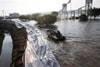
“Agricultural producers, processors and exporters rely on the entire Mississippi River system and share concern about the impact recent floods in the Midwest will have on the river system,” said Steve Wellman, American Soybean Association first vice president, in a statement Friday. “More than 60 percent of U.S. soybean exports moved to world markets through the Port of South Louisiana via the Mississippi River and its tributaries.
“With the current record flooding extending from South Dakota through Iowa and Nebraska, the Corps (U.S. Army Corps of Engineers) is also going to need funds for repairs due to flooding on the Missouri River,” Wellman added. “Commerce has already been slowed by the high currents that are accumulating silt on the river bottoms, and river pilots continue to impose draft restrictions, one-way traffic, and daytime only hours as a result of the high current situation.'
 |
The grain groups want Congress to ensure the Corps of Engineers has the resources it needs to maintain and modernize navigation on the Mississippi River and tributary system, Wellman said.
The flooding compounds existing inland waterways problems associated with low barge drafts and deteriorating locks and dams. Grain groups, such as the ASA and National Grain and Feed Association, warned U.S. lawmakers that other agricultural countries are starting to take advantage of this crumbling infrastructure by improving their own and becoming more competitive on the world market.
