




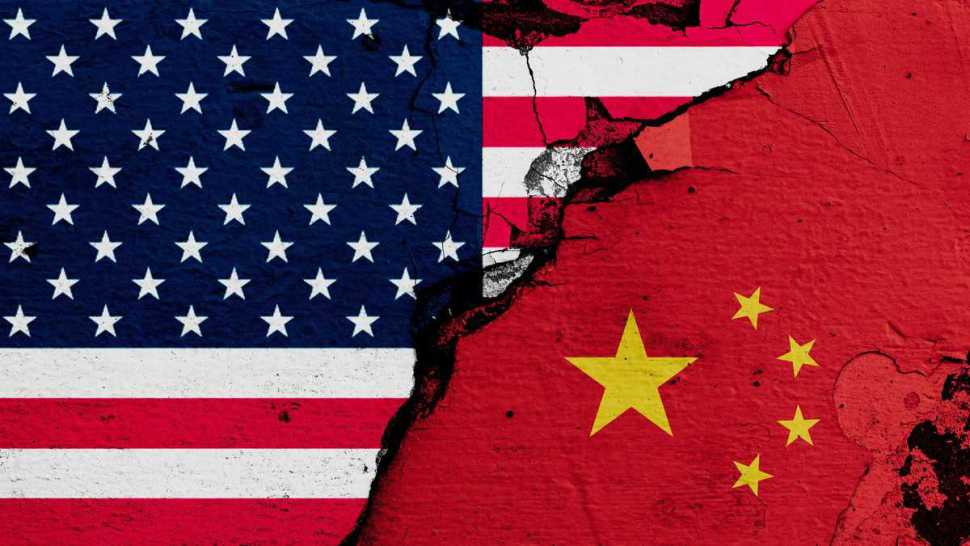
U.S. companies operating in China should develop exit plans in case political tensions escalate or they are forced to make ethical compromises that anger employees, shareholders or customers, former U.S. officials said last week.
The rivalry between the two superpowers is escalating across many fronts — military, technological, economic and human rights — as China views its model of state and Communist Party control over the economy and society as ascendant while U.S. power and influence wanes. The economic conflict is crystallized in China’s focus on technologies of the future that it is determined to lead in, such as value-added manufacturing, robotics, electric vehicles and batteries, and artificial intelligence.
The trade war under the Trump administration led many companies to consider diversifying more production away from China in a so-called China+1 strategy. Supply chain disruptions during the pandemic forced a deeper reexamination of their reliance on China for export manufacturing.
But the challenges don’t end there.
Multinational companies need to carefully monitor the political situation in China and have contingency plans to move people and operations to other countries if they can’t navigate between Chinese demands and U.S. expectations, said Stephen Hadley, who was the national security adviser under President George W. Bush, at a virtual event on global economic recovery hosted by the U.S. Chamber of Commerce.
“They’ve got to be in a position to be able to do that because the uncertainties are so high,” he added.
Companies are under pressure to take stands on ideological issues such as the new national security law in Hong Kong or treatment of Muslim minorities in western Xinjiang Province while trying to operate without interference from Chinese authorities.
Speaking out on political issues is a “lose-lose proposition” for U.S. companies because any comments will either alienate China or the U.S. government and American people and CEOs will be brought up to Capitol Hill to explain why they minimized China’s behavior against its own people, said Hadley, who is a principal at RiceHadleyGates LLC.
The Chinese government also is harnessing the resources of U.S. companies for its own purposes. Apple is now storing the data of Chinese customers in servers managed by a state-owned cloud service, which gives the government potential access to Apple’s user data in China. And Tesla, in response to rules requiring personal data from automotive sensors be stored on Chinese soil, recently said it is developing data centers in China to allow for localization of data storage.
“This is anathema to what the U.S. government thinks companies should be doing. So there are enormous operational choices that companies are being asked to make in how they conduct business in China and they’ve got to try to find a way to thread the needle to see if they can comply with both Chinese and American law, and sensitivities,” Hadley said.
If companies are unable to thread the needle, they will need to implement mitigation plans so they can “pivot rapidly so diversion without disruption possible,” said Charlene Barshefsky, who was the U.S. trade representative under President Bill Clinton and one of the main architects of the agreement allowing China into the World Trade Organization.
Companies may need to spread out production “even if there is a bit of redundancy that has to be built in or some increases in cost,” she said, because there is nothing more harmful to a company than reputational risk. It’s hard to regain trust once you’ve lost it, so companies need to be prepared in advance in a way that would have been unthinkable even five years ago.”
The former officials said the best way to ensure peaceful coexistence with China is for the U.S. to strengthen itself domestically. Having the modern infrastructure, educated workforce, financial health and political will to address challenges will signal to China that it needs to compromise more, they suggested.
Click here for more FreightWaves articles by Eric Kulisch.
RECOMMENDED READING:
Brokerage Compliance Symposium
The day before F3. Every compliance issue you face - fraud exposure, carrier liability, FMCSA rules, cargo theft, insurance gaps - navigated by attorneys and operators defining best practices in a changing industry.
F3 Awards Dinner
The night before F3. FreightTech100 companies honored. FreightTech 25 and Shipper of Choice winners revealed live. Cocktail reception into dinner and live music - 300 industry leaders in one purpose-built room.
F3: Future of Freight Festival
Industry-defining keynotes, rapid-fire technology demos, and industry leaders networking in experiences across Chattanooga - plus the inaugural F3 Awards Dinner featuring the FreightTech and Shipper of Choice reveals.
The day before F3. Every compliance issue you face - fraud exposure, carrier liability, FMCSA rules, cargo theft, insurance gaps - navigated by attorneys and operators defining best practices in a changing industry.
The Signal at Chattanooga Choo Choo • Chattanooga, TN Register NowThe night before F3. FreightTech100 companies honored. FreightTech 25 and Shipper of Choice winners revealed live. Cocktail reception into dinner and live music - 300 industry leaders in one purpose-built room.
The Signal at Chattanooga Choo Choo • Chattanooga, TN Register NowIndustry-defining keynotes, rapid-fire technology demos, and industry leaders networking in experiences across Chattanooga - plus the inaugural F3 Awards Dinner featuring the FreightTech and Shipper of Choice reveals.
The Signal at Chattanooga Choo Choo • Chattanooga, TN Register Now