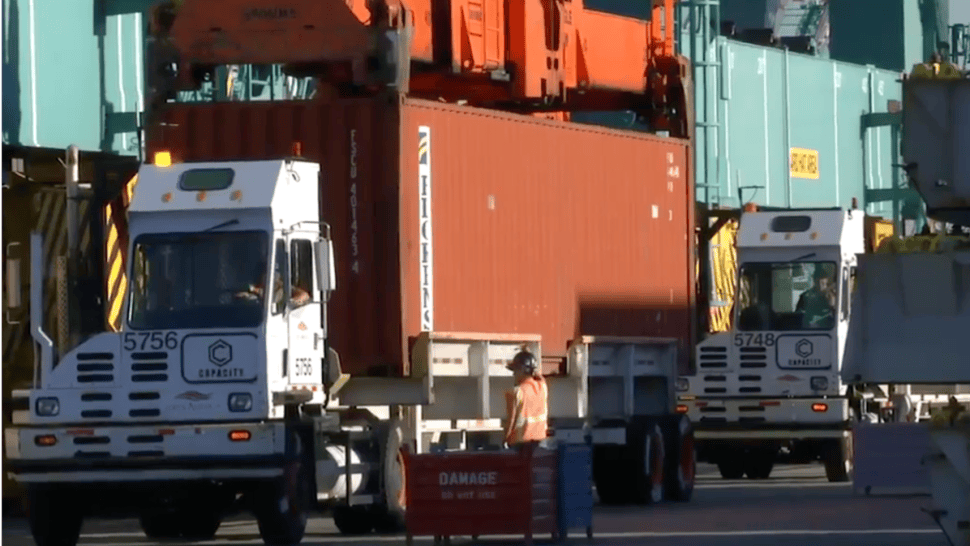
A contract dispute involving about 250 union watchmen could disrupt cargo movement at the ports of Los Angeles and Long Beach as early as this Saturday, with the Pacific Maritime Association reporting little progress in the latest negotiations with International Longshore and Warehouse Union Local 26.
According to a statement Wednesday from the PMA, talks ended Tuesday with little to no movement from the union on the employer association’s proposals. The ILWU has already held a strike vote and has indicated it is unwilling to extend its contract beyond its expiration at 12:01 a.m. Saturday, PMA said.
The two sides are scheduled to return to the bargaining table Friday, leaving a narrow window to reach an agreement before the deadline.
Concerns are heightened that ILWU dockworkers would honor pickets set up by the watchmen, all but shutting down some cargo operations.
Employers said its offer includes a one-time $3,200 bonus for each local member and a wage proposal that would increase average annual earnings for full-time watchmen from more than $170,000 to $198,000.
The proposal would also maintain fully employer-paid healthcare for active workers and retirees, which PMA values at more than $62,000 annually, and increase annual pension benefits to as much as $93,200 for workers with the longest tenure.
PMA said negotiations have continued for more than a year, most recently with assistance from the Federal Mediation and Conciliation Service. The association said it secured a several-week contract extension to allow further negotiations, but that the union participated in bargaining on only three days during that extension.
The association also said Local 26’s demands have not materially changed since negotiations began.
FreightWaves has reached out to the union for comment.
Local 26 represents unarmed watchmen who perform security duties at six container terminals across the two ports. Their work includes checking identification and credentials at terminal entrances, conducting routine patrols and reporting security or safety concerns.
Although the watchmen account for about 2% of the ports’ ILWU workforce, PMA said the terminals where they work handle more than half of the two ports’ combined cargo, including roughly 85% of cargo at Long Beach and 33% at Los Angeles.
PMA expects thousands of longshore workers, marine clerks and foremen who are not involved in the contract dispute to honor a Local 26 picket line. That could significantly expand the effects of a watchmen’s strike, interrupting cargo handling well beyond the bargaining unit itself.
Potential consequences include idle truck drivers, disrupted rail shipments and reduced hours for warehouse workers. Exporters, including farmers and manufacturers, could face shipping delays, while retailers and small businesses preparing for the holidays could encounter delayed deliveries and higher costs.
Employers quoted data from maritime and aviation analyst Martin Associates that found the six terminals where Local 26 members work handled about 6.2 million containers in 2025, generating 50,000 direct jobs and supporting nearly 4.2 million jobs nationwide.
The analysis linked that cargo volume to $885 billion in national economic activity, $48 billion in federal taxes and $190 billion in personal income.
Martin warned that losses would grow exponentially the longer a strike continued, as vessels could not be unloaded and containers already inside terminals could not be cleared.
Why it matters: The dispute’s potential impact extends far beyond the roughly 250 watchmen negotiating a contract. If other dockworkers honor picket lines, a strike could interrupt terminals handling a substantial share of cargo at the nation’s busiest port complex, with effects cascading through the supply chain.
Read more articles by Stuart Chirls here.
Read more:
Maersk and Hapag-Lloyd restore Asia-Europe Suez routes as U.S. shippers watch capacity and costs
Red Sea overcapacity looms as ocean container spot rates still 50% above year-ago
U.S. container imports hit record 2.67 million TEUs in October as port delays rise