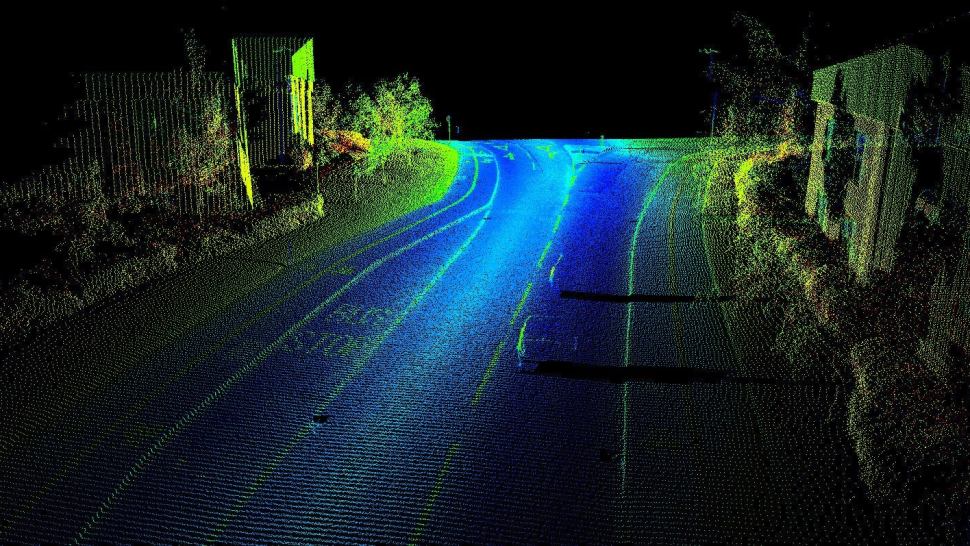
Technology is the basis for most autonomous driving systems
One of 2017’s biggest stories in the emerging autonomous vehicles industry—Waymo’s $2.6B lawsuit against Uber over stolen trade secrets—revolves around a single piece of technology that is currently fueling a frenzied global competition for investment dollars, engineering expertise, and manufacturing capacity.
When engineer Anthony Levandowski left Waymo to found Otto, a self-driving truck company, he allegedly took 14,000 documents relating to autonomous vehicle technology with him. Otto was quickly snatched up by Uber, and now Waymo says that Uber has been trying to hide a LiDAR sensor based on Waymo’s design from Judge William Alsup, who is presiding over the case in federal court. On May 15, Alsup banned Levandowski from further work on Otto’s Lidar technology on the basis of having breached the confidentiality of former employer Waymo. Two weeks later, Uber fired Levandowski for failing to cooperate with investigators.
The Waymo-Uber kerfuffle is only the most recent flare-up in the multi-sided battle over the future of LiDAR (Light Detection and Ranging) technology, a key component in enabling driverless vehicles to navigate roadways safely. Just as sonar uses echolocation, and radar bounces radio waves off surfaces to find range and bearing, LiDAR uses lasers to generate high resolution 3D maps of an autonomous vehicle’s surroundings. LiDAR was first developed in the late 1960s when the National Center for Atmospheric Research used it to measure clouds, and it became famous in 1971 when Apollo 15 astronauts used a laser altimeter to map the surface of the moon.
Several electronics revolutions later, LiDAR units are smaller, cheaper, and smarter: the technology has gone from being a delicate, specialized tool for long-range surveying to a networked sensor array that can provide a 360-degree map in real-time, refreshed hundreds of times a second. There are now a number of different approaches to LiDAR’s application to autonomous vehicles, including mechanical-mirror, 3D flash, optical phase array, and solid-state.
A technology firm spun off from Canada’s National Optics Institute is currently making a play to lead the global race to perfect LiDAR systems for driverless vehicles. Last month, LeddarTech, Inc., based in Quebec City, completed a $101M Series C financing round led by Osram Licht and Delphi Automotive.
LeddarTech specializes in solid-state LiDAR sensors, which have no moving parts and are substantially less expensive, more reliable, and smaller than previous generations of ‘spinning KFC bucket’ mechanical-mirror LiDARs. The firm’s new LeddarVu8 Sensor, for example, detects targets at distances of 215m and only weighs 107 grams (about four ounces). Costs for solid-state LiDAR sensors have already dropped to the hundreds of dollars—Quanergy, out of Sunnyside, CA, has priced its S3 sensor at $250—compared to the $70,000 rotating-mirror sensors mounted on the roofs of Waymo’s driverless cars.
According to analysts at Frost & Sullivan, over 90% of all driverless cars in development have solid-state LiDARs. One important exception is Tesla, which is relying on a combination of sonar, radar, and visual cameras to guide its autonomous vehicles. Despite Elon Musk’s 2015 press conference where he admitted “I’m not a big fan of LiDAR,” spy shots of Tesla driverless cars with LiDAR sensors have been circulating on the internet.
LeddarTech’s funding comes as LiDAR manufacturers across the world are struggling to meet the rapidly accelerating demand for their sensors. In 2017, leading LiDAR makers including LeddarTech, Quanergy, and Velodyne are struggling to deliver to tier-one suppliers such as Continental, Denso, and Ibeo. Earlier this year, in court documents filed in Waymo’s lawsuit against Uber for intellectual stolen property, Uber’s lawyers wrote that Uber’s “primary supplier for the cars currently on the road cannot meet the demand for its LiDARs.” This manufacturing vacuum has led to a torrent of cash flowing into LiDAR development.
A year ago, Velodyne LiDAR, based in San Jose, CA, raised $150M from Ford Motor Company and Baidu, China’s largest search-engine company. At the same time, Quanergy raised $90M in Series B funding from Sensata Technologies, Delphi, Samsung Ventures, Motus Ventures, and GP Capital, at a valuation of over $1B. Continental and Valeo are working on their own solid-state LiDAR sensors but will not be able to bring them to market for another two to three years.
Stay up-to-date with the latest commentary and insights on FreightTech and the impact to the markets by subscribing.
Brokerage Compliance Symposium
The day before F3. Every compliance issue you face - fraud exposure, carrier liability, FMCSA rules, cargo theft, insurance gaps - navigated by attorneys and operators defining best practices in a changing industry.
F3 Awards Dinner
The night before F3. FreightTech100 companies honored. FreightTech 25 and Shipper of Choice winners revealed live. Cocktail reception into dinner and live music - 300 industry leaders in one purpose-built room.
F3: Future of Freight Festival
Industry-defining keynotes, rapid-fire technology demos, and industry leaders networking in experiences across Chattanooga - plus the inaugural F3 Awards Dinner featuring the FreightTech and Shipper of Choice reveals.
The day before F3. Every compliance issue you face - fraud exposure, carrier liability, FMCSA rules, cargo theft, insurance gaps - navigated by attorneys and operators defining best practices in a changing industry.
The Signal at Chattanooga Choo Choo • Chattanooga, TN Register NowThe night before F3. FreightTech100 companies honored. FreightTech 25 and Shipper of Choice winners revealed live. Cocktail reception into dinner and live music - 300 industry leaders in one purpose-built room.
The Signal at Chattanooga Choo Choo • Chattanooga, TN Register NowIndustry-defining keynotes, rapid-fire technology demos, and industry leaders networking in experiences across Chattanooga - plus the inaugural F3 Awards Dinner featuring the FreightTech and Shipper of Choice reveals.
The Signal at Chattanooga Choo Choo • Chattanooga, TN Register Now