3PLs make big margins returning unwanted gifts
American consumers will return about $90B worth of unwanted gifts this year, according to Optoro, a firm specializing in the retail returns business. Last week on a call with investors, Raj Subramaniam, EVP of Global Strategy and Marketing and Communications for FedEx, said that about 15% of all goods are returned, and clothing is returned at about double that rate. January, the peak month for the retail returns business, sees 51% of the returns in a given year.
In the age of the ‘Amazon effect’, when customers expect fast and free delivery of their goods, painless returns have emerged as the next logistical challenge for retailers. Easy, free returns and expedited refunds are now a competitive tool that businesses use to attract and retain customers. “It’s been a friction-filled part of e-commerce that has held back online shopping,” said David Sobie, CEO of Happy Returns.
E-commerce shoe company Zappos—purchased by Amazon for $1.2B in 2009—became famous for their return policy and saw exponential growth in the 2000s. In 2001, Zappos did $8.6M in sales; by 2004, they sold $184M worth of goods; in 2008 Zappos hit the $1B sales mark.
Mainstream big box retailers like Target and Walmart have long offered free in-store returns, and now their customers can print a free shipping label online and drop off merchandise at a designated location in order to complete their return. Kohl’s has started offering in-store returns for items purchased on Amazon and sees a benefit to their added returns capability—customers sometimes make additional purchases after bringing back unwanted items.
Items returned in-store cost as little as $3 for a retailer to process and are available for resale within a day, but items shipped back to a distribution center or 3PL cost twice as much to process and take at least four days before they’re available for resale, according to AlixPartners. That’s if the returns aren’t damaged or opened, in which case they might be written off as a loss.
According to Jeff Burkett, director at Harris Williams & Co., before the item’s ultimate destination (back on the shelf, to a consignment shop, to the dumpster) and value can be determined, the item must be inspected or “triaged.” “This task has one goal—to drive the greatest value possible,” says Burkett. “To do so, it is imperative that the inspection team is highly trained with expansive product knowledge so that the right decisions can be made regarding how to process the item.” About a quarter of returns go back to the manufacturer, others go to secondary retailers, and still others are sold for pennies on the dollar to liquidators and discounters before ending up at regional wholesalers, who send the goods to pawn shops or overseas. About 5 billion pounds of returns will end up landfills.
As people get more comfortable buying clothes online and returning the ones that don’t fit, the volume of returns shoots up, creating additional transportation problems. “It’s good that consumers are taking more risks and buying goods, but it’s not the easiest problem for retailers to solve,” said Tobin Moore, the CEO of Optoro.
“Third parties such as FedEx Supply Chain [formerly Genco], OHL/Geodis, DHL Supply Chain and XPOhave become masters of reverse logistics,” said Evan Armstrong, president of 3PL consultancy firm Armstrong & Associates. “In third-party logistics, it’s often the ‘messy stuff’ that contributes greatly to bottom lines, and returns are messy.”
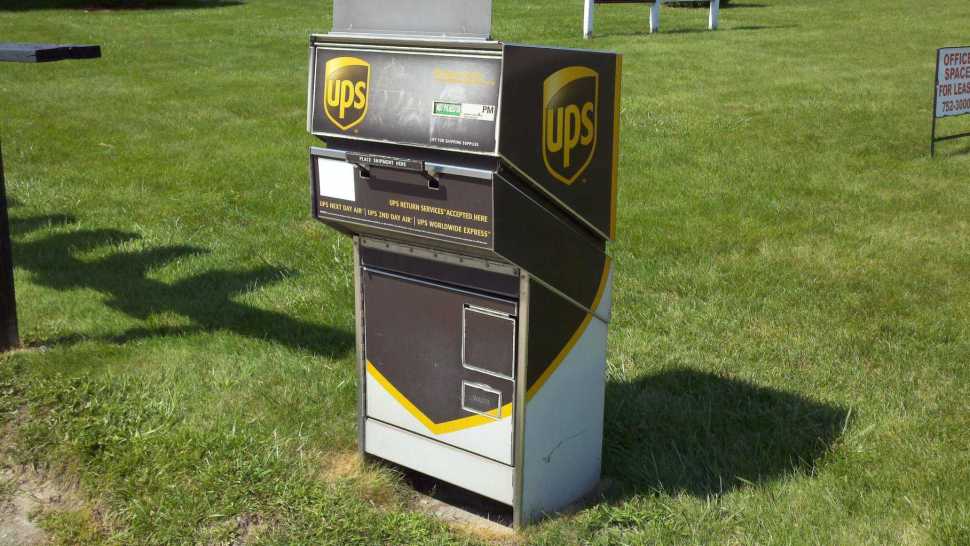
Parcel carriers like UPS and FedEx want a piece of that costly reverse logistics return business and have created vast networks of drop-off points to encourage customers to return unwanted gifts. It makes sense: the more trips an item takes back and forth between a seller and its customers, the more fees the carriers collect. FedEx said that it has 10,000 drop-off points distributed across the country in Walgreens stores, Kroger grocery stores, Albertsons, its own FedEx Office storefronts and other locations. UPS has 40,000 Drop Boxes nationwide where customers can leave their returns 24/7. Amazon has created a network of 2,000 drop-off ‘lockers’, including 400 in Whole Foods stores, in an attempt to improve the density of their return network and cut associated costs.
Stay up-to-date with the latest commentary and insights on FreightTech and the impact to the markets by subscribing.
Brokerage Compliance Symposium
The day before F3. Every compliance issue you face - fraud exposure, carrier liability, FMCSA rules, cargo theft, insurance gaps - navigated by attorneys and operators defining best practices in a changing industry.
F3 Awards Dinner
The night before F3. FreightTech100 companies honored. FreightTech 25 and Shipper of Choice winners revealed live. Cocktail reception into dinner and live music - 300 industry leaders in one purpose-built room.
F3: Future of Freight Festival
Industry-defining keynotes, rapid-fire technology demos, and industry leaders networking in experiences across Chattanooga - plus the inaugural F3 Awards Dinner featuring the FreightTech and Shipper of Choice reveals.
The day before F3. Every compliance issue you face - fraud exposure, carrier liability, FMCSA rules, cargo theft, insurance gaps - navigated by attorneys and operators defining best practices in a changing industry.
The Signal at Chattanooga Choo Choo • Chattanooga, TN Register NowThe night before F3. FreightTech100 companies honored. FreightTech 25 and Shipper of Choice winners revealed live. Cocktail reception into dinner and live music - 300 industry leaders in one purpose-built room.
The Signal at Chattanooga Choo Choo • Chattanooga, TN Register NowIndustry-defining keynotes, rapid-fire technology demos, and industry leaders networking in experiences across Chattanooga - plus the inaugural F3 Awards Dinner featuring the FreightTech and Shipper of Choice reveals.
The Signal at Chattanooga Choo Choo • Chattanooga, TN Register Now