




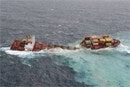
The Rena is reported to have had a capacity of 3,351 TEUs. In contrast, today there are 118 ships with capacities of more than 10,000 TEUs operating and 274 are expected to be in service by the end of 2015, according to the information service Alphaliner. The largest ships on order (by Maersk Line) will have a capacity of about 18,000 TEUs.
Andrew Chamberlain, a partner at Holman Fenwick Willan, told a London audience this week that the epic scale of an incident involving a very large ship would mean that the salvage industry would struggle to remove the containers and wreckage.
He warned the salvage industry had limited and aging resources, was increasingly risk averse, and consists of only four to five companies with a genuine global capability.
The legal environment for dealing with casualties is also increasingly demanding with rising claims, disproportionately high clean-up costs, the near impossibility to dispose or recycle a wreck thanks to the restrictive legal regime imposed by the 1996 Protocol to the London Dumping Convention and the OSPAR Convention for protection of the marine environment in the Northeast Atlantic, and absence of suitable recycling facilities.
“The industry is facing the perfect storm. We have a global recession, high cargo values (relative to ship values), ever larger and untested ships, environmental concerns and increasing public and government awareness of the impact of shipping incidents,” Chamberlain said. “Since the Napoli in 2007 any marine casualty is much more likely to be on the front page of every newspaper.”
