




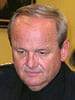
At a panel discussion hosted by the U.S.-Mexico Chamber of Commerce on Capitol Hill in March, Winkowski freely admitted that during his long career he had a narrow definition of what constitutes border security.
| Winkowski |
After Customs and Border Protection convened a conference on import safety in late October that included the leaders of 10 other agencies, Winkowski went on a tour of entry ports with his counterpart at the Food and Drug Administration, something that he'd never done before, Bersin recounted at the April National Customs Brokers and Forwarders Association of America conference in Phoenix.
At CBP's Trade Symposium a week later, Bersin spoke about the importance of executive attention when trying to institute major change within an organization.
'There are always 100 reasons why it can't be done,' he said. The attitude of bureaucrats can't be faulted because their job is to focus on details, not ignore things that are contrary to existing rules, he added.
'So what we need to do is not simply announce a vision, and think its just a technical assignment to make it happen, but to recognize the cultural changes, the prospective changes, that are necessary will require leadership at the highest level. Because absent that leadership energy, the best will always be the enemy of the good,' he said.
Francisco S'nchez, undersecretary for international trade at the Commerce Department, chimed in that 'many of these issues are not terribly sexy' and won't make the headlines. That makes it hard to get attention from top officials, who feel that solutions can be figured out at the working group level.
Bureaucracy isn't usually changed by issuing directives, Bersin noted in Phoenix, but by helping communities identify their common interests and how to work together to achieve them.
At Bersin's direction, CBP last summer pulled together many top managers and port directors to form a Trade Integration Planning and Coordination Cell. Its task was to identify strategic gaps in operations and align processes with the way modern businesses manage their enterprises.
Many CBP veterans were surprised by the charge Bersin gave them to think about how CBP could play a role in strengthening America's economic competitiveness, according to Brenda Brockman Smith, executive director of trade policy and programs.
'It took us a little while to get our heads around that' because business promotion 'is not something we think about usually. He challenged us to understand the impact we could have at the borders and the health of the importer and businesses engaged in the global supply chain,' she told the NCBFAA delegates.
His objective was to make CBP rules and actions more transparent, cheaper to comply with and predictable for shippers moving cargo through checkpoints on tight schedules.
'So we recognized that it was our job not just to enforce the law but to actually get cost out of the supply chain, while ensuring that the United States is protected from unsafe imports, counterfeit goods or unfair international competition,' Brockman Smith said.
The brainstorming exercise led to demonstration programs for account management and a Center for Excellence and Expertise geared to the pharmaceutical sector, as well as further study on how to simplify processes for filing entries and paying duties and fees.
By better understanding the systemic policies behind operational procedures CBP managers are able to question their assumptions to see if there are better ways to achieve those goals, she said.
A top goal is to identify where certified shippers are receiving trade exams and determine if there are other ways to obtain necessary information other than stopping the cargo or asking for additional information.
The Account Executive pilot, for example, has led CBP officials to realize that not every shipment valued above $5 million has to be examined unless there is a compelling reason.
The project has also shown the importance of having accurate importer-of-record numbers on profiles so that port inspectors don't target the shipments of companies in the Importer Self-Assessment program, even though members are considered to be in the top tier when it comes to customs compliance.
On other occasions, CBP analysts detained a shipment because they didn't know if the Cisco routers listed on the manifest were woodworking tools or computer devices.
Program manager Leon Hayward said at a recent Commercial Operations Advisory Committee (COAC) meeting in Washington that his team reached those conclusions by studying the companies' daily transactions to see if stop orders on cargo were for serious reasons or simply a clerical oversight that the companies, as members of C-TPAT and ISA, would voluntary take care of on their own without having to deal with an exam or requests for information.
Since March, the agency has gotten better at making product determinations and letting cargo move on to the consignee. The Account Executive office will soon put out formal direction to ports of entry to clarify how to classify certain electronic products so such shipments get treated uniformly around the country, Hayward said.
Meanwhile, Anne Maricich, head of the Center for Excellence and Expertise (CEE), discovered that Food and Drug Administration inspectors in Chicago stop every pharmaceutical import of a particular composition. Convincing FDA to remove the automatic holds will save hundreds of exams every quarter, saving industry money and allowing CBP to focus resources on high-risk shipments, according to Brockman Smith.
Chicago is the port of entry that handles the largest volume of pharmaceutical imports in the nation.
CEE is helping CBP develop a core group of experts who understand every aspect of the pharmaceutical industry from the types of products made, to the manufacturing process and origin of goods, to how its supply chains function.
'So if they the drug companies use a particular type of transaction or a particular combination of brokers, sureties, importers and freight forwarders they understand how those pieces fit together and when or not there is risk,' Brockman Smith said.
Raising the level of subject matter expertise within CBP is important, Maricich said at COAC, because a lot of knowledge eroded over the years through reorganizations, attrition and retirement.
The CEE team in Los Angeles analyzed data from ports of entry that process the majority of pharmaceutical shipments and found that 2 percent of the drug importers accounted for 90 percent of the total value of drug imports.
Maricich used the results to educate staff around the country that many exams, document reviews and requests for additional information are being conducted on relatively low-risk shipments, and that by changing their approach they could spend more time on the remaining shipments from smaller, less-known firms where the risk for counterfeit goods and other problems is potentially higher.
'For us, that's a best practice,' Brockman Smith said.
Pharmaceutical manufacturers have helped educate CEE staff about issues unique to their industry, Maricich said. In May, Pfizer will host a two-day workshop in New Jersey to teach the specialists about the industry's challenges, business processes and how companies make compliance decisions. Afterwards, the team will travel to the CBP airport office in Chicago to share the knowledge they gained.
From there, the CEE staff will visit CBP facilities in Philadelphia, Atlanta, and New York and the seaport in Charleston, S.C.
And three big companies provided training on intellectual property, which allowed the center to produce an enforcement guide to help ports of entry tell the difference between authentic medicine and counterfeits.
Pfizer is very optimistic that CEE will make a significant difference in reducing hassles, said Anthony Barone, director global logistics policy for Pfizer, said on the sidelines of the annual CBP Trade Symposium in Washington.
Having cargo officers at ports better understand the pharmaceutical industry is important so that they recognize the attributes of a consignment that may be worth $100 million and don't automatically stop it.
'We think the number of CF28s (the form Customs sends to importers when it wants more information about a shipment) will greatly diminish because CBP will have a place to get their questions answered,' he added.
CBP officials say port offices have been receptive so far to giving trusted companies less scrutiny. The two pilot programs work well together and if they are expanded nationwide the Account Executive would fit well within CEE, Hayward said.
The demonstration programs are scheduled to end on June 30. Brockman Smith said a lot more resources would be required to properly institute full-scale programs, noting that the pilots operated on a shoestring budget.
Addressing skepticism that CBP won't be able to scale up the two pilots to a national level, Bersin said the projects are 'the pointy end of the spear where the future is being built at CBP.'
Gone are the days of paralysis by analysis, he suggested.
'This is absolutely critical work. We just need to hammer it out, which means rather than debate endlessly abstractly what's to be preferred we should really make a decision and then be prepared to make mid-course corrections' as circumstances dictate, Bersin said at the COAC.
'But we can do this and we can do it at scale.'
Brokerage Compliance Symposium
The day before F3. Every compliance issue you face - fraud exposure, carrier liability, FMCSA rules, cargo theft, insurance gaps - navigated by attorneys and operators defining best practices in a changing industry.
F3 Awards Dinner
The night before F3. FreightTech100 companies honored. FreightTech 25 and Shipper of Choice winners revealed live. Cocktail reception into dinner and live music - 300 industry leaders in one purpose-built room.
F3: Future of Freight Festival
Industry-defining keynotes, rapid-fire technology demos, and industry leaders networking in experiences across Chattanooga - plus the inaugural F3 Awards Dinner featuring the FreightTech and Shipper of Choice reveals.
The day before F3. Every compliance issue you face - fraud exposure, carrier liability, FMCSA rules, cargo theft, insurance gaps - navigated by attorneys and operators defining best practices in a changing industry.
The Signal at Chattanooga Choo Choo • Chattanooga, TN Register NowThe night before F3. FreightTech100 companies honored. FreightTech 25 and Shipper of Choice winners revealed live. Cocktail reception into dinner and live music - 300 industry leaders in one purpose-built room.
The Signal at Chattanooga Choo Choo • Chattanooga, TN Register NowIndustry-defining keynotes, rapid-fire technology demos, and industry leaders networking in experiences across Chattanooga - plus the inaugural F3 Awards Dinner featuring the FreightTech and Shipper of Choice reveals.
The Signal at Chattanooga Choo Choo • Chattanooga, TN Register Now