




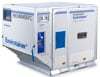
Envirotainer, pioneer of the world’s first active temperature-controlled container in 1995, has experienced significantly increased demand for its RKN e1 since it was first approved by the European Air Safety Agency (EASA) in June 2005. However, although it is regularly used on U.S. routes by international airlines, FAA approval required for U.S.-flag carriers to fly the container became held up in the E.U.-U.S aviation safety bilateral agreement.
“The FAA approval of our RKN e1 containers provides more options to the life science and health care manufacturers of temperature sensitive products,” said Niklas Prager, Envirotainer’s chief executive officer, in a statement. “They can now benefit from an expanded worldwide network through the use of already established codeshare and interline service points provided by airlines and forwarders worldwide.”
Envirotainer has invested significantly in its RKN e1 technology and fleet. It has about 725 RKN e1’s in service and a further 75 will be added by the end of 2011, boosted by this latest development and to meet growing demand in all parts of the world.
In February, following approval by EASA, Envirotainer launched the RAP e2, the next generation of e-technology air cargo containers for highly sensitive healthcare products. The RAP e2 provides greater volume capacity than the RKN e1 with its ability to accommodate five European or four U.S. pallets compared to the RKN e1’s capacity for one European or U.S. pallet. Envirotainer has also commenced the FAA certification process for the RAP e2.
