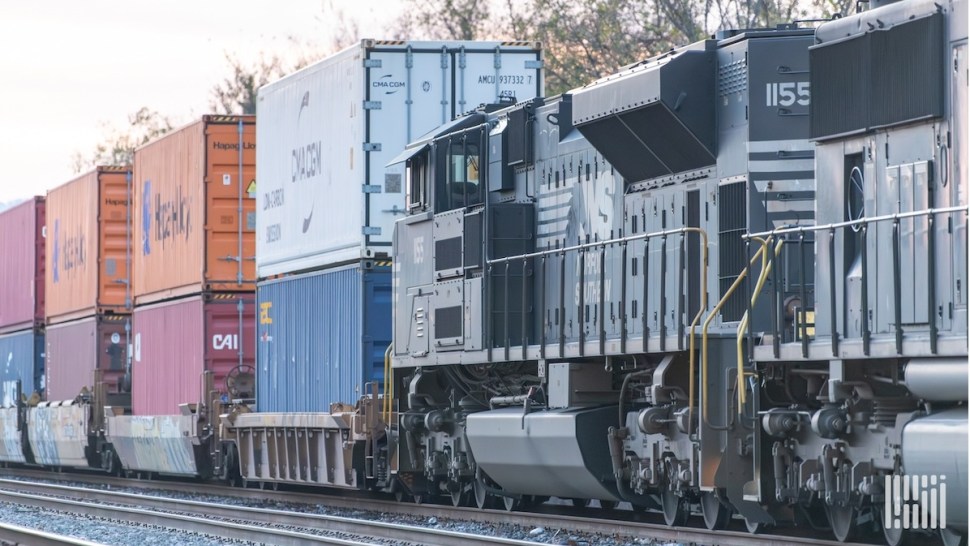
Rail traffic among U.S. carriers rose 6.6% in the week ending Nov. 7 compared with the same week a year ago, driven by an 11% increase in intermodal shipments, the Association of American Railroads said.
Carloads increased 1.3% from a year earlier. Seven of the 10 commodity groups recorded gains, led by motor vehicles and parts, up 10.4%, and forest products, up 10.1%. Metallic ores and metals followed with a 6.4% increase.
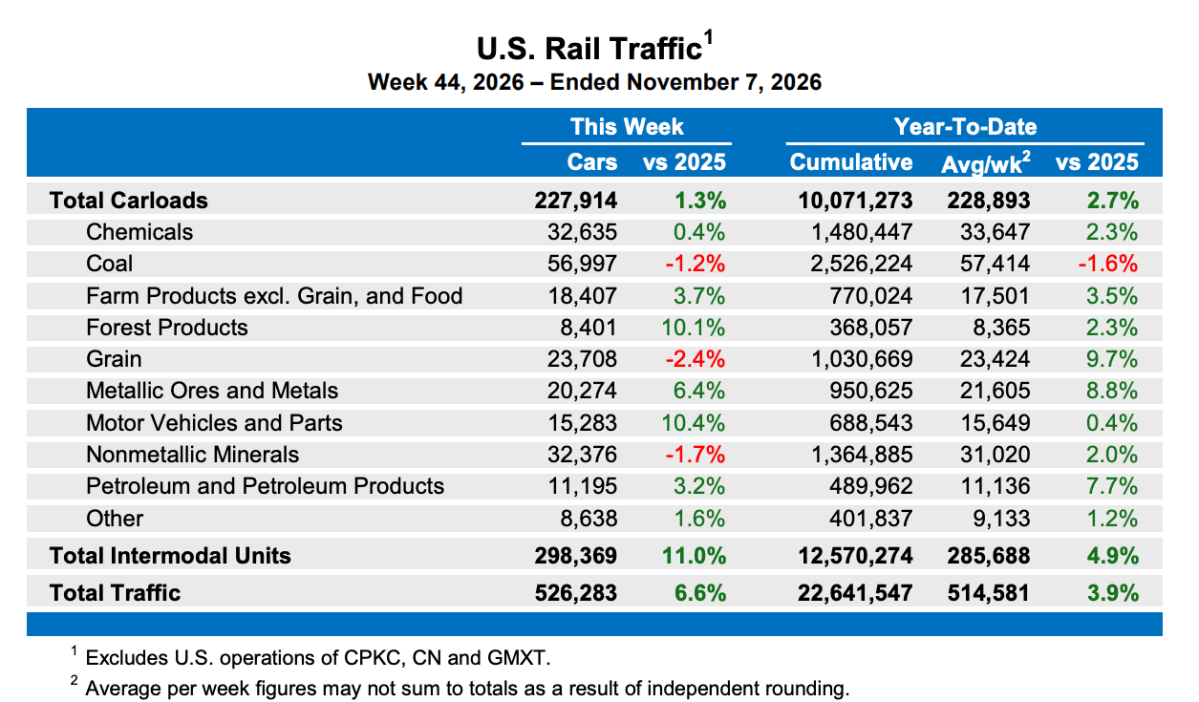
Grain shipments declined 2.4%, nonmetallic minerals fell 1.7%, and coal slipped 1.2% among weaker volumes.
Through the first 44 weeks of 2026, total U.S. rail traffic increased 3.9% compared with the same period in 2025. Intermodal volume rose 4.9%, carloads increased 2.7%.
Grain remained the strongest-growing freight category year to date, up 9.7%, despite its weekly decline. Metallic ores and metals increased 8.8%, and petroleum and petroleum products rose 7.7%. Coal was the only commodity group below its year-earlier cumulative level, down 1.6%.
Across the nine reporting U.S., Canadian and Mexican railroads, combined weekly traffic increased 6.7% year over year. Intermodal shipments rose 10.5%, while carload freight volume grew 2.7%. Total North American traffic was up 3.4% through the first 44 weeks.
Why It Matters: Overall traffic improvement led by intermodal shipments does not reflect uniform gains across goods moving by rail.
Subscribe to FreightWaves’ Rail e-newsletter and get the latest insights on rail freight right in your inbox.
Read more articles by Stuart Chirls here.
Read more:
BLET ends Wheeling & Lake Erie strike
Genesee & Wyoming prepares to split into three rail holding companies
US rail traffic hits intermodal record as October freight gains signal economic resilience, says AAR
Rising Q3 transportation costs squeeze manufacturers, reward railroads and reshape trade
BNSF Q3 earnings climb 19.3% as rail freight volumes rise