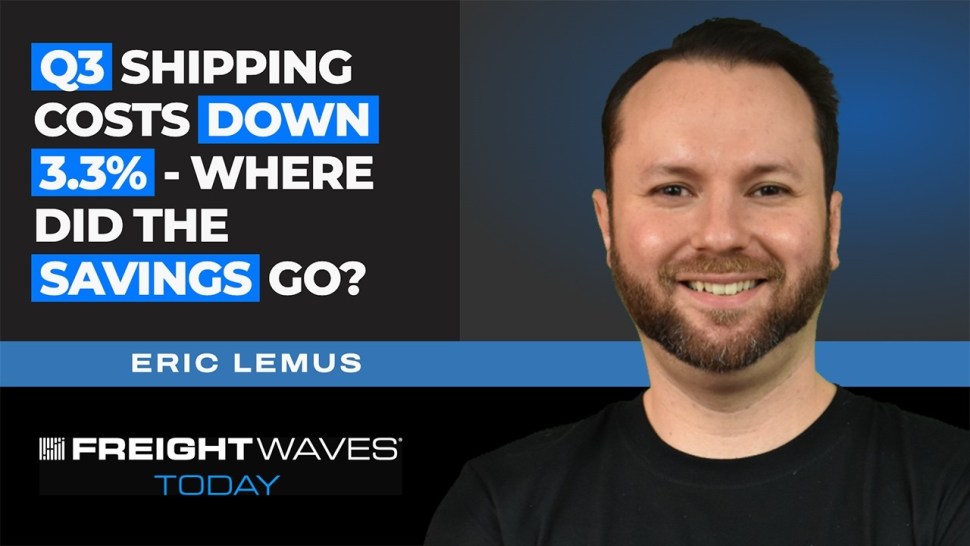
Carrier rates fell last quarter, but operators barely felt the savings. Eric Lemus from Deposco breaks down the unexpected disconnect in Q3 shipping costs. A shift to heavier packages, faster service, and residential deliveries meant higher per-package costs, offsetting carrier rate reductions. Learn why operators focused on customer satisfaction and how these trends will impact Q4 peak season with potential stockouts and increased overall shipping expenses.
Carrier rates dropped 3.3% per package in the third quarter, but operators captured just 0.6% of that reduction in actual savings, according to Commerce Signal data analyzed by DePascos. The gap stems not from contract rate negotiations but from a fundamental shift in what shippers actually put in the mail stream — heavier boxes, premium service levels, and a greater share of residential stops.
“What we saw in Q3 was heavier packages, faster service levels, and more residential deliveries,” said Eric Lemus, vice president of strategy and analytics at Deposco. He added that sub-5-pound package costs did decline, but volume surged in the 11-to-20-pound weight tier, wiping out much of that relief. Consumers driving the mix shift appear to be consolidating orders to chase volume-based discounts, putting more of the same products into each shipment.
Despite soft consumer sentiment readings, gross merchandise value growth closed Q3 up 11.7%. Lemus argued that survey-based sentiment measures have diverged from observed spending behavior for roughly two years and urged operators to anchor forecasts to actual order volumes rather than sentiment indices.
“Don’t rely 100% on those consumer sentiment surveys. Look at your actual order volumes, look at your actual demand, and make a decision going forward based on that to forecast your business because there’s noise — there can be noise in the data around consumer sentiment surveys,” Lemus said.
Inventory management adds another layer of risk heading into peak. Brands entered the season carrying roughly 94 days of inventory while third-party logistics providers held only 91 days. Lemus said that gap, combined with accelerating sales velocity, makes stockouts a central risk for Cyber Week and the broader Q4 period. Restocking picked up in the final two weeks of September, but Lemus believes operators ordered too late to fully cover Q4 demand.
The 3-day inventory advantage brands hold over 3PLs matters most for geographic positioning. Brands relying on 3PL partners for geographic diversity risk holding stock in the wrong locations, forcing them to pay elevated expedited-service rates to fulfill orders across longer zones. “You have one facility that’s a stockout and you have an order in that geographic location, but to fulfill the order … operators [are] paying higher service delivery rates,” Lemus said, predicting that dynamic will compress profit margins even if revenue growth remains strong.
Looking ahead to Q4, Deposco is tracking four primary signals: fewer new orders paired with slightly larger basket sizes; rising peak shipping costs relative to Q3; continued fuel-surcharge volatility that is shifting on nearly a daily basis; and inventory drawdowns driven by sales velocity. On the carrier side, Lemus recommended operators deploy at least two to three carriers to offset rate pressure, noting that alternative carriers outside the major four are increasingly fulfilling orders as shippers diversify.
Overall, Lemus said indicators point toward a solid but not outsized fourth quarter. He attributed lean inventory levels to higher interest rates making capital-intensive stock less attractive rather than to any expectation of weaker demand — a distinction he said operators should weigh carefully as the holiday selling season accelerates.
- Q3 carrier rates fell 3.3% per package, but shipment mix shifts — heavier weights, faster services, more residential stops — left operators with only 0.6% in realized savings.
- Sales GMV grew 11.7% in Q3 despite weak consumer sentiment surveys, underscoring a two-year divergence between observed spending and survey-based indicators.
- Brands held 94 days of inventory vs. 91 for 3PLs entering peak, raising stockout risk and likely pushing Q4 shipping costs higher as operators pay premium rates to fulfill mislocated stock.
This Summary is generated thanks to a transcription of the interview, for the full interview please enjoy the video above.