




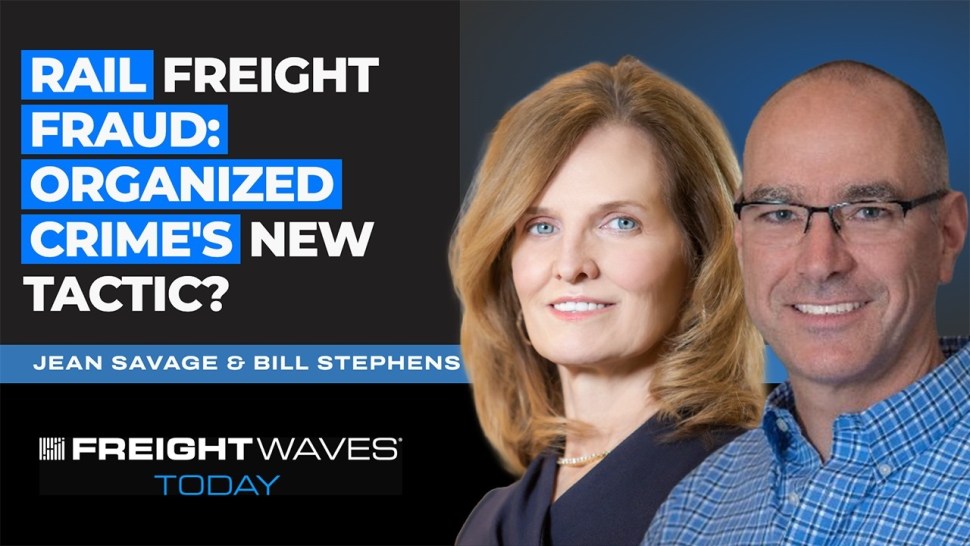
FreightWaves Today dives into shocking reports of cargo theft on California trains, where organized criminals are targeting slow-moving rail cars. Bill Stephens from Trains Magazine and Jean Savage, CEO of Trinity Industries, discuss the implications for the rail industry, market cycles, and the outlook for railcar demand and pricing. Discover how these incidents affect the broader supply chain and what to expect in the coming years.
The railcar market is tightening faster than many shippers and carriers anticipated, with new builds running roughly 15,000 units below annual scrappage and lease rates climbing — a dynamic that Trinity Industries CEO Bill Stephens says will intensify through 2027. With 17.5% of the North American fleet now parked — the lowest storage level since 2022 — the gap between available cars and demand is narrowing quickly.
Stephens said the industry is on pace to deliver just under 25,000 new railcars in 2024, the bottom of a prolonged down cycle, while scrapping roughly 40,000 cars. That 15,000-unit annual deficit has been compressing supply for 17 consecutive months. For the leasing segment, which Stephens described as the larger part of Trinity’s business, utilization is high and rates are moving up. New car manufacturing, by contrast, remains depressed.
Looking ahead, Stephens said Trinity’s third-quarter earnings call showed a greater than 1x book-to-bill ratio and a roughly 40% increase in new car orders for 2027 delivery. He now expects 2025 builds to reach 30,000 to 35,000 units — a meaningful step up, but one he cautioned will strain suppliers. Steel producers have already doubled their lead times and are still missing those extended windows by two to four weeks, he noted, and valve manufacturers for tank cars are struggling to keep pace even at current low production levels.
“For our customers, what we’re encouraging them to do is stop delaying because there are going to be some headwinds,” Stephens said. “We think getting to 30,000 to 35,000 new railcar builds next year is going to take the supply chain actually stretching and pushing hard to get there.”
Steel prices are also adding to cost pressure. Stephens said prices were up 63% year over year at the end of the third quarter and have risen an additional 5% to 6% since then. Because the cost of a new car sets an effective ceiling on what lessors can charge for existing equipment, rising input costs are reinforcing lease rate gains across the fleet. Trinity reported an 89% lease renewal rate last quarter, even as rates climbed.
On the demand side, the strongest order activity is coming from grain, metals and metallic ores, and petroleum segments — categories Stephens said are driven largely by replacement needs rather than new traffic growth. He downplayed the AI infrastructure buildout as a material near-term driver of rail cargo, saying its contribution through construction materials and metals is “small.” He attributed petroleum strength instead to war-related energy market disruptions, adding that overseas equipment damage means the market will stay elevated into at least 2028.
Cargo theft along rail corridors also drew attention during the discussion. Trains magazine contributor Bill Stevens described organized criminals targeting slow-moving trains through Tehachapi Pass in Southern California — a key corridor linking Southern California to the Bay Area and Pacific Northwest — by hopping aboard, cutting air hoses to stop trains, and throwing consumer goods overboard. “Clearly, they know what they’re looking for and what containers they want to hit,” Stevens said. Stephens and host Jean Savage both called for passage of CORCA, federal legislation aimed at coordinating law enforcement response to cargo theft, noting bipartisan support in Congress has not yet translated into enactment.
- Trinity Industries expects 2025 new railcar builds of 30,000–35,000 units, up from roughly 25,000 in 2024, as annual scrappage of ~40,000 cars tightens the fleet.
- Steel prices rose 63% year over year through Q3 and have climbed an additional 5–6% since, pushing new car costs higher and supporting lease rates on existing fleets.
- Organized criminals are targeting slow-moving trains through California’s Tehachapi Pass, cutting air hoses to stop trains and stealing consumer goods; advocates are pressing Congress to pass the CORCA cargo-theft legislation.
This Summary is generated thanks to a transcription of the interview, for the full interview please enjoy the video above.
