




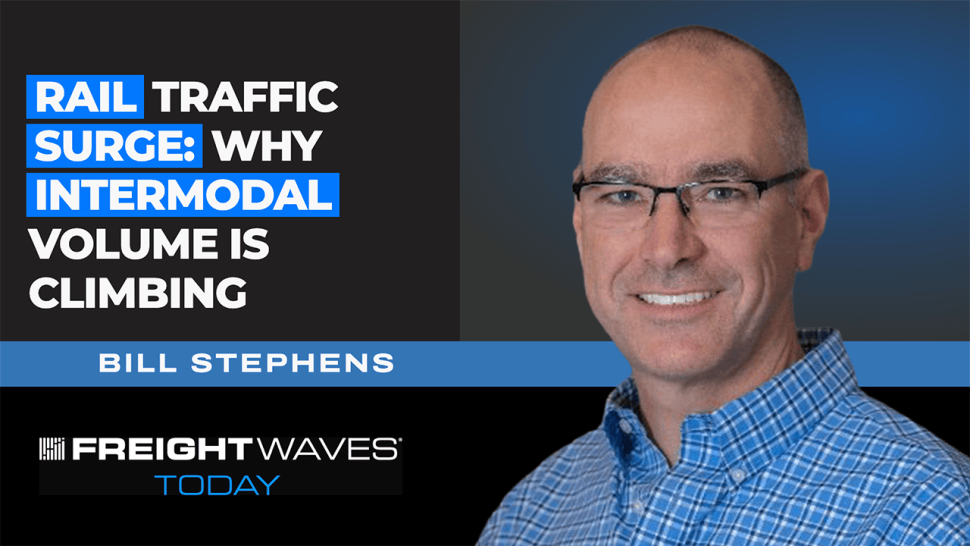
The latest weekly rail traffic numbers show a significant intermodal volume surge, propelled by high diesel fuel prices and tight truck capacity, causing shippers to divert freight to rail. Get insights into North American carloads, key commodity segments, and upcoming Class I railroad earnings reports that will shed more light on these trends.
U.S. intermodal volume surged 12.6% year-over-year in week 41, the Association of American Railroads reported Wednesday, as sustained high diesel prices and tight truck capacity accelerated a road-to-rail freight shift. Overall U.S. rail traffic rose 8.5% for the week, well above the 5.5% average pace recorded over the prior four weeks, while North American intermodal climbed 10.8% and total North American rail traffic gained 7.2%.
The intermodal acceleration is building on consecutive weeks of double-digit gains — the prior week came in around 10% to 11% — and is creating downstream pressure on drayage capacity. JB Hunt flagged the strain on its earnings call, noting difficulty attracting enough drayage drivers to move containers to and from intermodal terminals, a signal that the volume surge is testing last-mile infrastructure.
“High diesel fuel prices and tight truck capacity has shippers diverting freight to rail,” said Bill Stephens, adding that the vast majority of carload commodity segments were also in positive territory for the week.
On the carload side, U.S. volumes rose 3.5% for the week. Primary metal products stood out, jumping roughly 25%, driven by coke traffic up 15.4%, metallic ores up 7%, and iron and steel scrap up 9.1% — reflecting stronger steelmaking demand across both blast furnace and electric arc mini-mill operations. Chemicals and petroleum shipments gained 2.6%, agriculture and food products rose 6.7%, and coal edged up 0.9%. Motor vehicles and parts posted a 5.6% weekly gain, their second consecutive increase, though the segment remains slightly negative for the full year at -0.4%. Primary forest products were the lone notable laggard, down 10%.
Stripping out coal and grain — commodities considered less economically sensitive — carload growth came in at 4%, compared with 3.5% including those categories, a modest but telling sign of broad-based industrial demand. Wall Street analysts expect double-digit earnings-per-share growth at most Class I railroads for the third quarter. The lone exception is Norfolk Southern, where consensus estimates call for approximately 5.5% EPS growth versus the year-ago quarter.
A competitive shift in domestic intermodal is reshaping the Eastern rail landscape. Following the announced Union Pacific–Norfolk Southern merger discussions, BNSF and CSX unveiled new interline intermodal partnerships, pulling some domestic intermodal business away from Norfolk Southern toward CSX. NS executives have acknowledged the competitive dynamic is likely to persist, though year-over-year comparisons are expected to normalize as the railroad begins lapping last year’s results.
On pricing, railroads have generally targeted rate increases one to two points above the rate of rail inflation. Fuel surcharge programs carry a built-in lag of roughly one to two quarters before fully capturing sustained fuel price spikes, but Stephens said there is “nothing to suggest” that the practice of pricing above cost inflation would change in the current environment. Earnings calls this week from CSX, Union Pacific, and Norfolk Southern — followed by CN and CPKC next week — are expected to shed light on whether volume and pricing momentum holds into the fourth quarter.
- U.S. intermodal volume rose 12.6% in week 41, outpacing the prior four-week average of 5.5% overall rail growth, as high diesel prices and tight truck capacity drive modal conversion.
- Primary metal products led carload commodities with a roughly 25% weekly gain, reflecting rising steelmaking demand across blast furnace and electric arc mini-mill segments.
- Wall Street consensus calls for double-digit Q3 EPS growth at most Class I railroads, with Norfolk Southern the exception at an estimated 5.5% gain amid a competitive intermodal share shift toward CSX.
This Summary is generated thanks to a transcription of the interview, for the full interview please enjoy the video above.
Brokerage Compliance Symposium
The day before F3. Every compliance issue you face - fraud exposure, carrier liability, FMCSA rules, cargo theft, insurance gaps - navigated by attorneys and operators defining best practices in a changing industry.
F3 Awards Dinner
The night before F3. FreightTech100 companies honored. FreightTech 25 and Shipper of Choice winners revealed live. Cocktail reception into dinner and live music - 300 industry leaders in one purpose-built room.
F3: Future of Freight Festival
Industry-defining keynotes, rapid-fire technology demos, and industry leaders networking in experiences across Chattanooga - plus the inaugural F3 Awards Dinner featuring the FreightTech and Shipper of Choice reveals.
The day before F3. Every compliance issue you face - fraud exposure, carrier liability, FMCSA rules, cargo theft, insurance gaps - navigated by attorneys and operators defining best practices in a changing industry.
The Signal at Chattanooga Choo Choo • Chattanooga, TN Register NowThe night before F3. FreightTech100 companies honored. FreightTech 25 and Shipper of Choice winners revealed live. Cocktail reception into dinner and live music - 300 industry leaders in one purpose-built room.
The Signal at Chattanooga Choo Choo • Chattanooga, TN Register NowIndustry-defining keynotes, rapid-fire technology demos, and industry leaders networking in experiences across Chattanooga - plus the inaugural F3 Awards Dinner featuring the FreightTech and Shipper of Choice reveals.
The Signal at Chattanooga Choo Choo • Chattanooga, TN Register Now