




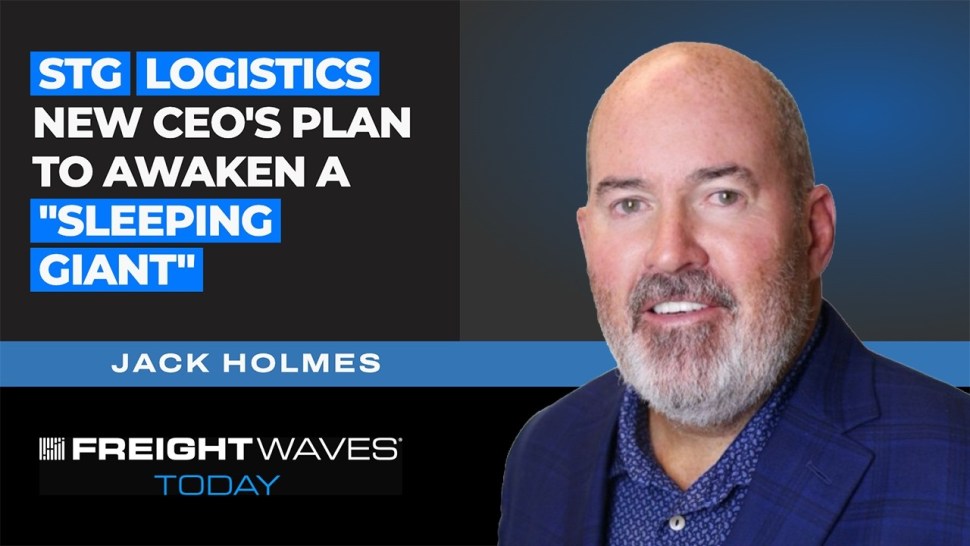
Jack Holmes, former CEO of UPS Freight, reveals why he ended a decade of retirement to become the new CEO of STG Logistics. He shares his vision for transforming the “sleeping giant” through strategic investments in technology and intermodal assets, focusing on culture and long-term growth. Discover how STG Logistics plans to redefine its brand and capitalize on current market advantages in the supply chain.
Jack Holmes, named CEO of STG Logistics on October 5, is pushing a broad operational and cultural reset at the multimodal company just weeks after its emergence from bankruptcy. Holmes, who previously led UPS Freight before a 10-year retirement, said the combination of a restructured balance sheet, owned intermodal assets, and favorable market timing made the opportunity too compelling to pass up.
STG is not one company but seven, Holmes said — a structure he views as a core strength rather than a liability. The portfolio includes the original St. George warehousing and transload operation, a contract logistics unit serving major retailers, a freight brokerage, an intermodal business rooted in the old Pacer stack train network, a drayage division, a deferred LTL product, and Freight Force, which operates on a model similar to commercial airline freight. “Job one is get all those businesses to provide a similar customer experience,” Holmes said. “Once you provide a similar customer experience, then you have the opportunity to leverage each of those businesses to grow other parts of the business.”
Holmes identified intermodal as a priority investment area, arguing the mode’s advantages over truck have rarely been stronger. He pointed to worsening driver capacity constraints and elevated fuel costs as structural tailwinds for rail-based freight movement, and dismissed autonomous vehicles as a near-term fix, citing regulatory barriers. “Those that move freight across our highways are more challenged than they’ve ever been right now,” he said. “That is not going to go away.”
“If you think about the capacity issues, the driver capacity issues that are happening right now, those that move freight across our highways are more challenged than they’ve ever been right now. That’s not going to go away.”
Holmes also flagged STG’s deferred LTL product as well-positioned given the current rate environment. He noted that years of excess capacity had made standard LTL cheap and highly reliable, but said that dynamic has shifted — shippers are now paying more and receiving lower service levels. A deferred option priced dramatically below standard LTL, he argued, fills a gap that is growing wider.
On technology, Holmes outlined a two-phase approach. The first priority is equipping each business unit with tools to compete in its own vertical — drayage, intermodal, and deferred LTL each face distinct competitive environments. Longer term, he wants to consolidate the more than seven technology platforms currently in use across the portfolio down to fewer than a handful, though he stopped short of promising a single unified platform as achievable.
Holmes described the internal challenge at STG as a “paradigm shift” — moving a management team conditioned by years of financial survival mode into longer-term strategic thinking. He compared the company’s pre-bankruptcy mindset to a household drowning in credit card debt where every decision is focused on getting through the day. With a clean balance sheet now in place, he said the work of rebuilding culture and long-range planning is already underway, adding that peers and competitors at recent investor conferences consistently described STG as “a sleeping giant.”
- Holmes was named STG Logistics CEO on October 5, returning from a 10-year retirement after leading UPS Freight.
- STG operates seven business units — including intermodal, drayage, deferred LTL, brokerage, and contract logistics — which Holmes plans to unify around a common customer experience.
- Holmes is prioritizing investment in intermodal assets, citing structural driver shortages and elevated fuel costs as durable advantages over highway freight.
This Summary is generated thanks to a transcription of the interview, for the full interview please enjoy the video above.
