Federal Maritime Commission alters operations to fight COVID-19 exposure
“Regulated entities remain obligated to comply with all filing requirements and deadlines,” the U.S Federal Maritime Commission said.


“With ongoing challenges posed by the coronavirus, there is real concern about these fees being assessed when there are equipment issues beyond the control of the shipper or motor carrier,” 67 trade associations told the Federal Maritime Commission.
“Right now, I believe most ocean carriers and marine terminal operators are acting responsibly and fairly in these challenging conditions,” FMC Commissioner Daniel Maffei said.
The 2018 Frank LoBiondo Coast Guard Authorization Act clarified and enhanced the U.S. Federal Maritime Commission’s authority over licensed ocean transportation intermediaries.
“We will continue to work with the FMC to make sure that outdated regulations do not prevent the marketplace from working at maximum efficiency,” said World Shipping Council President and CEO John Butler.
“As long as there continues to be a lack of cargo and documentation handling in the ports due to the virus, our exporters and importers shouldn’t be on the hook for per diem or demurrage charges,” AgTC Executive Director Peter Friedmann said.
The Agriculture Transportation Coalition has developed service contract guidance its members can use to set parameters for when ocean carriers should issue or withhold detention and demurrage charges.
Commissioner Carl Bentzel said the U.S. Federal Maritime Commission will have an increasing role in the development of shoreside activities that impact international container shipping.
The rules will clarify licensing and financial responsibilities of ocean transportation intermediaries and streamline the hearing procedures related to denial, suspension and revocations of licenses.
The U.S. Federal Maritime Commission is required by the 2015 Federal Civil Penalties Inflation Adjustment Improvements Act to annually adjust its civil penalty amounts in line with inflation.
The U.S. Federal Maritime Commission will proceed with proposed rule to eliminate the requirement for vessel-operating common carriers to publish essential terms of service contracts.
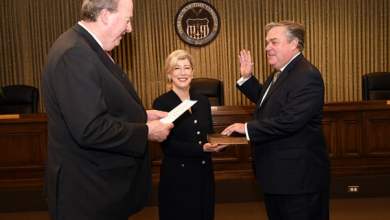
Longtime Capitol Hill legislative counsel and policy consultant completes the five-person commission.
Shippers and NVOs urge the U.S. Federal Maritime Commission to implement the interpretive rule, while ocean carriers and marine terminals say it needs further refining.
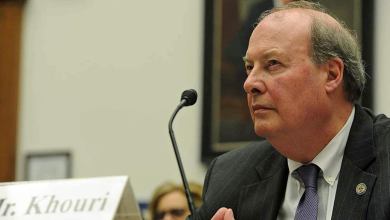
U.S. Federal Maritime Commission Chairman Michael Khouri talks with American Shipper about priority container shipping regulatory issues for fiscal year 2020.
The World Shipping Council considers next steps after the U.S. Federal Maritime Commission on September 26 denied a part of its petition calling for the elimination of service contract filing.
The U.S. Federal Maritime Commission does not expect easy answers to the question of how to fairly assess demurrage and detention when Customs and Border Protection holds containers.
The Federal Maritime Commission approves the ocean container carrier organization’s petition to eliminate publication of essential terms but retains the requirement to file the actual service contracts.
The U.S. Federal Maritime Commission (FMC) issued a proposed rule to promote “just and reasonable” demurrage and detention charges.
The U.S. Federal Maritime Commission set the new comment deadline for its notice of proposed interpretive rule to address demurrage and detention practices to Oct. 31.
Three marine terminal operators had approached the U.S. Federal Maritime Commission about forming a joint terminal services and stevedoring operation in the ports of Savannah and Charleston.