




Reed fencing is an inexpensive bamboo-like covering commonly used to cover chain link fences, walls and screens.
Inspectors at the land port of International Falls, Minn., first discovered a shipment infested with Cecidomyiidae flies (gall midges or gall gnats) and Phoma ssp., a plant disease. The flies feed on plant tissue and cause abnormal growths to develop on the host. Phoma ssp. are fungi that cause blight disease in a wide variety of plants, including nursery stock, trees and agriculture crops.
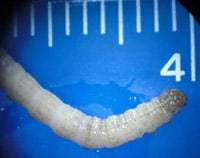
| Noctuidae moth larvae intercepted from reed fencing. |
A similar shipment was stopped at the Port of Seattle and subsequent investigation by local analysts using advance targeting information from shipping documents revealed that a large volume importer was shipping similar products through various ports on the East and West coasts, as well as on the northern border.
The Office of Field Operations (OFO) issued a nationwide alert to all ports of entry that resulted in 11 shipments of reed fencing being rejected by CBP since January. Other pests found in the shipments include Noctuidae moths and the Striped Rice Borer. Some species of Noctuidae eat the base of plants such as lettuce and broccoli. The Striped Rice Borer is a beetle that kills rice, but is not known to occur in the United States.
The shipments were fumigated or re-exported.
The importer has agreed to treat the reed shipments at origin prior to shipping.
