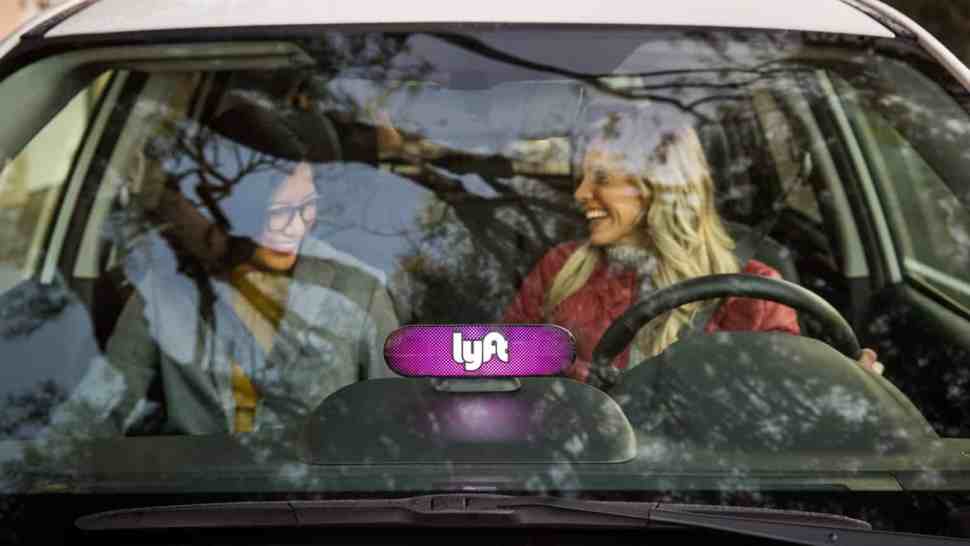

Today Lyft, the San Francisco-based ride-hailing startup, filed documents with the Securities Exchange Commission for its initial public offering (IPO) of equity. The number two ride-sharing company in the United States filed for an initial offering of $100 million—a number that will change as fees are calculated—at a valuation of $20 billion to $25 billion.
J.P. Morgan, Credit Suisse, and Jefferies are lead bankers on the IPO. General Motors stands to do very well in the offering; the $500 million investment the automaker made in 2016 could be worth more than $2 billion; Rakuten’s $700 million-plus investment could reach $3 billion. Legendary venture capital firm Andreessen Horowitz may stand to realize the greatest return on the IPO: the $60 million a16z put into Lyft in 2013 could be worth $1.6 billion when the company goes public.
Lyft’s revenue has grown exponentially, from just $343 million in 2016 to $2.2 billion in 2018, but so have its losses. Like its chief competitor Uber, Lyft has never turned a profit, and burned $991 million last year. That loss was 32% more than Lyft’s 2017 losses, but gross revenue doubled in the same period.
In January, Second Measure claimed that Lyft had about a 28.9% market share—less than the 39% figure cited in Lyft’s S-1—but that is not really the whole story. Every city is a discrete market with its own particular challenges and opportunities. Lyft is strongest on the West Coast, taking 43% of monthly ride-share spending in Seattle; San Francisco is Lyft’s next-strongest market. Meanwhile, Uber has a distinct advantage in Houston, Miami, and Boston, controlling between 70 and 80 percent of the market in each of those cities.
In the past few months, Lyft has aggressively hunted for market share by launching a price war against Uber, which tends to cost more and is favored by affluent and corporate clients. According to The Information, Uber and Lyft have long tracked each other’s promotions through the use of third-party technology tools.
Lyft is expected to do well in the public equities markets. According to Crunchbase, Lyft has raised $4.9 billion over 19 rounds. Investors are attracted by the vast total addressable market identified by transportation-as-a-service companies.
“Our market opportunity today includes transportation spend in the United States and Canada. In the United States alone, consumer expenditures on transportation were approximately $1.2 trillion in 2017,” Lyft wrote in its S-1. “On a per household basis, the average annual spend on transportation is over $9,500, with the substantial majority spent on car ownership and operation. Yet, the average car is utilized only five percent of the time and remains parked and unused the other 95%.”
Ride-sharing companies like Lyft and Uber specialize in turning that enormous transportation spend into liquid marketplaces where rides are dynamically priced according to supply and demand. These companies alert inactive drivers and offer them extra incentives to get on the road when demand is high, and, on the other side of the deal, increase prices for riders.
Lyft calls these special market conditions ‘Prime Time’, where 50% premiums are added to the price of rides—i.e., a $6 ride would cost $9 during Prime Time—and alerts drivers during major holidays, promotions, and events in certain markets if the company can guarantee Prime Time rates. Lyft displays heat maps on its driver portal, with pink squares indicating specific locations where Prime Time rates apply.
“We have collected data from over one billion rides and over ten billion miles driven to inform our machine learning algorithms and data science engines,” Lyft said in its S-1 filing. “We leverage insights from this data to improve the product experience for riders by presenting them with personalized transportation options. Our data insights also allow us to anticipate market-specific demand, enabling us to create customized incentives for drivers in local markets.”
Those algorithms enabled Lyft to connect 30.7 million individual riders to 1.9 million individual drivers for 178.4 million rides across North America in 2018, according to Lyft’s S-1. Revenue per active rider (and Lyft defines ‘active rider’ as a customer who uses the service at least once per quarter) has more than doubled to $36.04 in December 2018 from $15.88 in March 2016. Still, Lyft’s rider engagement lags behind Uber.
“In 2018, riders have called an Uber an average of 5.8 times per a month, compared against an average of 4.9 rides per a month for Lyft,” Second Measure reported.
Finally, Lyft is exploring autonomous vehicle technology, though not as actively as Uber. Rather than building the technology itself, Lyft has developed an ‘Open Platform’ that “provides market-leading developers of autonomous vehicle technology access to our network to enable their vehicles to fulfill rides on our platform.” Strikingly, in its filing Lyft included Apple in a list of ‘autonomous vehicle threats’.
Brokerage Compliance Symposium
The day before F3. Every compliance issue you face - fraud exposure, carrier liability, FMCSA rules, cargo theft, insurance gaps - navigated by attorneys and operators defining best practices in a changing industry.
F3 Awards Dinner
The night before F3. FreightTech100 companies honored. FreightTech 25 and Shipper of Choice winners revealed live. Cocktail reception into dinner and live music - 300 industry leaders in one purpose-built room.
F3: Future of Freight Festival
Industry-defining keynotes, rapid-fire technology demos, and industry leaders networking in experiences across Chattanooga - plus the inaugural F3 Awards Dinner featuring the FreightTech and Shipper of Choice reveals.
The day before F3. Every compliance issue you face - fraud exposure, carrier liability, FMCSA rules, cargo theft, insurance gaps - navigated by attorneys and operators defining best practices in a changing industry.
The Signal at Chattanooga Choo Choo • Chattanooga, TN Register NowThe night before F3. FreightTech100 companies honored. FreightTech 25 and Shipper of Choice winners revealed live. Cocktail reception into dinner and live music - 300 industry leaders in one purpose-built room.
The Signal at Chattanooga Choo Choo • Chattanooga, TN Register NowIndustry-defining keynotes, rapid-fire technology demos, and industry leaders networking in experiences across Chattanooga - plus the inaugural F3 Awards Dinner featuring the FreightTech and Shipper of Choice reveals.
The Signal at Chattanooga Choo Choo • Chattanooga, TN Register Now