




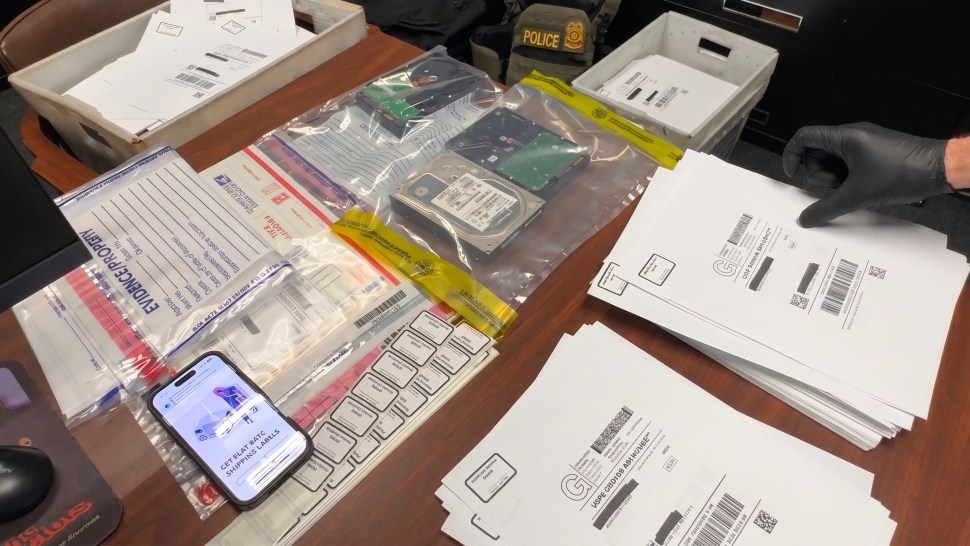
U.S. law enforcement authorities have seized an internet domain after charging a Pakistani national with operating an unauthorized website that allegedly sold more than 5 million counterfeit U.S. Postal Service postage labels, resulting in more than $126 million in losses.
The counterfeit labels allowed customers to ship packages at deeply discounted prices, resulting in a substantial loss of revenue for the national mail carrier, the U.S. Postal Inspection Service said in a news release on Thursday.
The number of counterfeit stamps being sold from online platforms has escalated. Many of these stamps are produced outside the United States. Scammers peddle fake stamps on social media marketplaces, and e-commerce sites via third party vendors, and other websites. Counterfeit stamps are often sold in bulk quantities at a significant discount — anywhere from 20% to 50% of their face value, according to the agency.
Court records show Faheem Akram, 33, of Khanewal, Pakistan, operated LabelsBank.com, a website that allegedly sold fake USPS postage at a fixed rate, typically charging $2 per label, regardless of the package’s weight, size or destination. LabelsBank.com was not authorized to sell Postal Service products and services.
Postal inspectors in Miami found more than 5,000 customers used LabelsBank.com to purchase more than 5.1 million counterfeit shipping labels, the UPIS said. In conjunction with Akram’s indictment, a federal judge issued an order authorizing the domain seizure and shutdown of the website.
Akram is charged with one count of conspiracy to defraud the United States and to make and sell counterfeit postage stamps, five counts of making and selling counterfeit postage stamp labels and four counts of wire fraud.
“Our reach goes beyond our borders,” said Bladismir Rojo, Miami division postal inspector in charge . “If you are defrauding the Postal Service and targeting U.S consumers by pushing phony postage, we will find you and bring you to justice.”
At the Postal Inspection Service’s Crime Lab forensic scientists are able to pick out the subtle differences between counterfeit and actual U.S. stamps.
Investigators say they are seeing counterfeit postage labels appearing on packages tied to reshipping scams. Victims, for example, are offered a job where they receive packages at their home and reship the items, which are often stolen goods. The company provides the victim with postage-paid labels to print. Dealing in stolen merchandise is a crime, as is using counterfeit postage.
Why It Matters: The Postal Service is losing billions of dollars each year. Fraud deprives the agency from revenue it needs to keep delivering mail and packages and it gives cheaters an advantage over other shippers that pay the full rate.
In July, a Los Angeles-area woman was sentenced to 30 months in prison for using counterfeit postage to ship tens of millions of parcels from China, causing more than $150 million in losses to the U.S. Postal Service.
Also, a federal grand jury indicted two men for their alleged role in a scheme to sell phony U.S. postage stamps. The men conspired to purchase counterfeit U.S. postage stamps from suppliers in China and resell the stamps in the United States. As part of the alleged scheme, the defendants formed a shipping supply company in Georgia and opened bank accounts in the company’s name, according to charging documents. The scheme generated $1.7 million in proceeds from the sale of about 6.5 million stamps.
The U.S. Postal Inspection Service cautions that purchasing stamps from a third-party wholesaler or online websites is risky because there is no way to verify whether they are genuine or not, and can cost the mailer too. It recommends purchasing from approved postal providers, including legitimate “big box” or warehouse retailers that do provide very small discounts on postage stamps under resale agreements with the Postal Service.
The U.S. has changed its regulations to specifically define counterfeit postage and developed processes to handle pieces affixed with counterfeit postage. Mail with fake postage is now considered abandoned.
Click here for more FreightWaves/American Shipper stories by Eric Kulisch.
Write to Eric Kulisch at ekulisch@freightwaves.com.
RELATED STORIES:
Woman in $150M counterfeit postage shipping scheme sentenced to prison
Brokerage Compliance Symposium
The day before F3. Every compliance issue you face - fraud exposure, carrier liability, FMCSA rules, cargo theft, insurance gaps - navigated by attorneys and operators defining best practices in a changing industry.
F3 Awards Dinner
The night before F3. FreightTech100 companies honored. FreightTech 25 and Shipper of Choice winners revealed live. Cocktail reception into dinner and live music - 300 industry leaders in one purpose-built room.
F3: Future of Freight Festival
Industry-defining keynotes, rapid-fire technology demos, and industry leaders networking in experiences across Chattanooga - plus the inaugural F3 Awards Dinner featuring the FreightTech and Shipper of Choice reveals.
The day before F3. Every compliance issue you face - fraud exposure, carrier liability, FMCSA rules, cargo theft, insurance gaps - navigated by attorneys and operators defining best practices in a changing industry.
The Signal at Chattanooga Choo Choo • Chattanooga, TN Register NowThe night before F3. FreightTech100 companies honored. FreightTech 25 and Shipper of Choice winners revealed live. Cocktail reception into dinner and live music - 300 industry leaders in one purpose-built room.
The Signal at Chattanooga Choo Choo • Chattanooga, TN Register NowIndustry-defining keynotes, rapid-fire technology demos, and industry leaders networking in experiences across Chattanooga - plus the inaugural F3 Awards Dinner featuring the FreightTech and Shipper of Choice reveals.
The Signal at Chattanooga Choo Choo • Chattanooga, TN Register Now