Borderlands Mexico is a weekly rundown of developments in the world of United States-Mexico cross-border trucking and trade. This week in Borderlands Mexico: Tariffs squeeze North American automakers as Chinese rivals gain ground; Mexico’s exports surge 30% in October; and Maersk rolls out 2% inland fuel surcharge in Mexico.
Tariffs squeeze North American automakers as Chinese rivals gain ground
The U.S., Mexico and Canada risk undermining their collective manufacturing advantage as tariffs and prolonged trade uncertainty disrupt investment decisions while global competitors such as China continue to advance, experts warn.
Luis Lozano, CEO of Odysseus Business Intelligence and the former president and CEO of Toyota Motor of Mexico, said North America needs a coordinated long-term industrial strategy that goes beyond trade negotiations and focuses on manufacturing competitiveness, critical minerals, transportation infrastructure and supply chain integration.
“The most relevant challenge that I think North America is going to look for in the future is how to compete with China,” Lozano told FreightWaves in an interview.
“I think we have to look for a strategy of making us stronger as a region and being more competitive and efficient in everything that we are working towards in the future.”
Lozano, who previously advised the Mexican government during trade negotiations, said uncertainty surrounding the United States-Mexico-Canada Agreement (USMCA) has already affected corporate investment decisions across the region, particularly in Mexico and Canada.
The three countries completed the agreement’s scheduled July 1 joint review without reaching a consensus on an extension. Mexico and Canada are now pursuing parallel bilateral negotiations with Washington aimed at securing tariff relief, Lozano said.
Those negotiations are less formal than the process that led to USMCA replacing the North American Free Trade Agreement, he said.
“Hopefully, before the administration is done, we can agree on something regarding the USMCA, because I think that’s crucial and strategic for the whole of North America,” Lozano said.
The economic stakes are significant. The U.S., Mexico and Canada collectively manufactured more than 16.1 million motor vehicles in 2024, accounting for approximately 17.4% of global vehicle production, according to data from the International Organization of Motor Vehicle Manufacturers.
The three countries collectively account for roughly 2.1 million or more direct automotive industry jobs, with millions of additional jobs supported through supplier networks, dealerships and related industries.
According to the Office of the U.S. Trade Representative’s July 2026 report to Congress, the U.S. automotive industry generated $771 billion in economic output in 2024, representing 10.8% of the country’s manufacturing output. Nearly three-quarters of U.S. automotive parts exports are destined for Mexico and Canada.
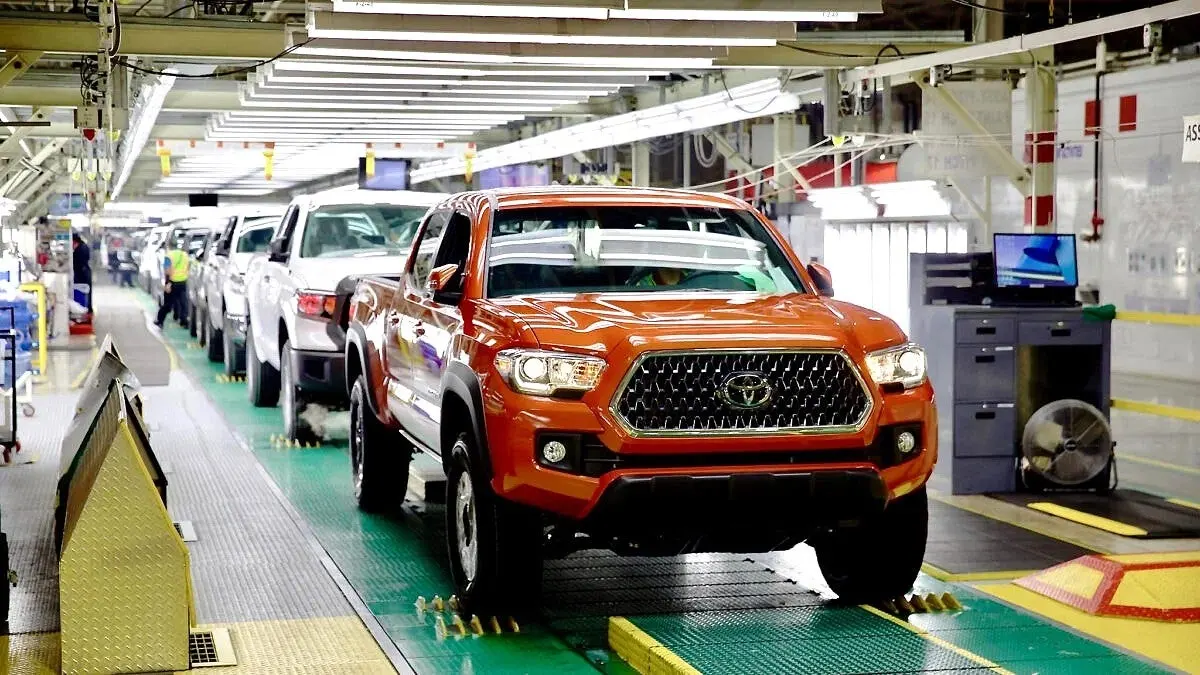
Tariffs squeeze North American automakers
The automotive industry, one of North America’s most deeply integrated manufacturing sectors, is facing pressure from both U.S. tariffs and growing competition from Chinese manufacturers, Lozano said.
He said tariffs have significantly weakened the profitability of major automakers’ North American operations, with manufacturers absorbing much of the additional cost rather than immediately passing it on to consumers.
“Right now the tariffs imposed by the U.S. have almost erased all the profits of the North American operations of the big OEMs,” Lozano said. “What used to be a very profitable region is not as profitable as before.”
The financial pressure comes as Chinese automotive brands expand their presence in markets such as Mexico and Europe, challenging established global manufacturers with competitively priced and technologically advanced vehicles.
Lozano pointed to Europe as an example of the risks of failing to develop a comprehensive strategy for Chinese automotive competition.
He said European policymakers have been forced to respond to changing market conditions as Chinese manufacturers expanded their electric vehicle offerings and subsequently shifted toward plug-in hybrids in response to trade restrictions.
“The Chinese vehicles are a real threat to local brands and to local manufacturers, and technologically they’re very good cars, they’re very appealing, and they are very affordable,” Lozano said.
Rather than relying exclusively on restrictions, Lozano suggested the U.S. could consider allowing limited Chinese automotive market access under strict conditions modeled on China’s historical approach to foreign automotive investment.
Such a framework could include mandatory joint ventures with majority American ownership, technology-sharing requirements and quotas allowing Chinese vehicles to be sold through established U.S. dealership networks.
Lozano said the approach could help established American manufacturers remain competitive while giving emerging domestic automakers access to technology and expertise. He added that such a system would require federal government oversight.
Unified customs system, joint port investments
Lozano outlined several priorities for strengthening North America’s industrial competitiveness, including restoring free trade within the region, developing critical mineral resources and bringing more Asian-based manufacturing supply chains to North America.
“Tariffs are not helping in making North America more competitive,” Lozano said. “Even though it’s difficult, I think we should aim at going back to free trade.”
Many automotive components currently sourced from China and other Asian countries could eventually be manufactured in Mexico or elsewhere in North America with sufficient investment and strategic planning, he said.
Lozano also advocated for greater coordination on customs procedures and transportation infrastructure, potentially including a unified regional customs system inspired by European economic integration.
He said the three countries should explore joint investments in railroads and maritime infrastructure, including the possibility of developing additional Pacific Coast port capacity.
“Why not build another port in the Pacific, where Mexico and Canada and the United States can chip in on the investment,” Lozano said. “Those kinds of things, I think, are opportunities for the future.”
Mexico needs to rethink its nearshoring strategy
Lozano said Mexico has a significant opportunity to benefit from efforts by the U.S. to reduce its dependence on Chinese manufacturing, but warned that Mexican policymakers need to better understand the country’s role within the broader North American economy.
Unlike China and Mexico, which compete in several manufacturing sectors, the U.S. and Mexican economies are largely complementary, he said.
“We’re not competing economies. We are helping each other,” Lozano said.
Mexico should focus on identifying products and components currently sourced from China that could instead be manufactured domestically to serve North American supply chains, he said.
“We could be very relevant for that transition of decoupling,” Lozano said.
He also criticized Mexican President Claudia Sheinbaum’s Plan México economic development initiative for focusing too heavily on domestic production and investment rather than regional manufacturing integration.
Lozano said Mexico’s industrial strategy should be aligned with a broader North American economic agenda, particularly given the interconnected nature of automotive manufacturing.
“I come from an industry where some parts cross the border eight times,” Lozano said. “So Plan Mexico, again, is not looking at the big picture of North America.”
Bilateral trade deals could provide relief in 2027
Looking ahead to 2027, Lozano said separate tariff agreements between the U.S. and its two North American trading partners could provide some relief for manufacturers and investors.
However, he cautioned that bilateral agreements would not necessarily resolve the longer-term uncertainty surrounding USMCA.
“But if in 2027 we begin with bilaterals with Canada and Mexico, I think we’re going to start seeing the light at the end of the tunnel,” Lozano said.
Lozano was less optimistic about the prospects of securing a long-term USMCA agreement during the current Trump administration.
He said one of his biggest concerns is that skepticism toward regional free trade could become increasingly entrenched across both major U.S. political parties, making a future agreement more difficult to achieve regardless of who occupies the White House.
“What concerns me the most is that I think this issue is becoming a bipartisan issue,” Lozano said. “And if that solidifies, it’s going to be very tough to get a new USMCA.”
Mexico’s exports surge 30% in October as US demand fuels growth
Mexico’s merchandise exports surged 30.2% year over year to $86 billion in October, driven by strong demand for manufactured goods from the U.S., according to preliminary data released Friday by Mexico’s National Institute of Statistics and Geography (INEGI).
Non-oil exports increased 31.2% year over year to $84.3 billion, while oil exports declined 3.4% to $1.74 billion.
The U.S. remained the primary driver of Mexico’s export growth, with non-oil shipments to its northern neighbor increasing 36.8% year over year, compared with just 0.8% growth in exports to the rest of the world.
Manufacturing exports rose 31.8% to $81.2 billion in October, led by increases across several key freight-generating industries:
- Electrical and electronic equipment: up 73.6%.
- Steel products: up 13.2%.
- Industrial machinery and equipment: up 7.7%.
- Mining and metallurgical products: up 7.4%.
- Automotive products: up 5.6%.
Automotive exports to the U.S. increased 7.2%, while shipments to other international markets declined 3.3%.
Mexico’s merchandise imports also increased 30.8% year over year to $85.7 billion in October. Imports of intermediate goods — including components and materials used in manufacturing — surged 38.1% to $69.9 billion, while capital goods imports increased 9.4% to $5.5 billion.
Mexico recorded a trade surplus of $298 million in October, reversing a $606 million deficit in September. The country’s non-oil trade surplus widened to $4.59 billion, offsetting a $4.29 billion oil trade deficit.
Through the first 10 months of 2026, Mexico’s total merchandise exports increased 30.3% to $713.2 billion, while imports rose 27.9% to $703.7 billion.
The country posted a year-to-date trade surplus of $9.55 billion, compared with a deficit of $2.87 billion during the same period in 2025.
The U.S. accounted for 85.2% of Mexico’s non-oil exports through October, underscoring the continued integration of North American manufacturing and supply chains.
Maersk rolls out 2% inland fuel surcharge in Mexico
Global shipping and logistics giant A.P. Moller-Maersk announced Friday it will implement a temporary 2% inland fuel surcharge in Mexico beginning Dec. 1, citing rising fuel-related costs tied to the evolving situation in the Middle East.
The surcharge will apply to inland haulage services for both import and export shipments, potentially increasing transportation costs for manufacturers, retailers and other shippers moving goods through Mexico.
In a Nov. 27 customer advisory, Maersk said the temporary measure is intended to maintain service continuity and operational efficiency amid changing market conditions.
The surcharge will be reviewed monthly and could be adjusted depending on fuel costs and market developments. The charges will appear on customer invoices as an Export Fuel Surcharge (EFS) or Import Fuel Surcharge (IFS).
For shipments subject to U.S. Federal Maritime Commission (FMC) regulations, the surcharge will take effect Jan. 1, 2027.
Maersk said it will continue monitoring market conditions to ensure adjustments reflect actual operational costs. The company did not specify an expiration date for the temporary surcharge.
Why it matters: Prolonged trade disputes could delay manufacturing investments, weaken cross-border freight demand and undermine decades of supply chain integration across North America.