With the more than 2,200 comments filed to the Federal Motor Carrier Safety Administration are overwhelmingly in favor of codifying current regulations on English Language Proficiency (ELP), the few urging caution tend to stick out.
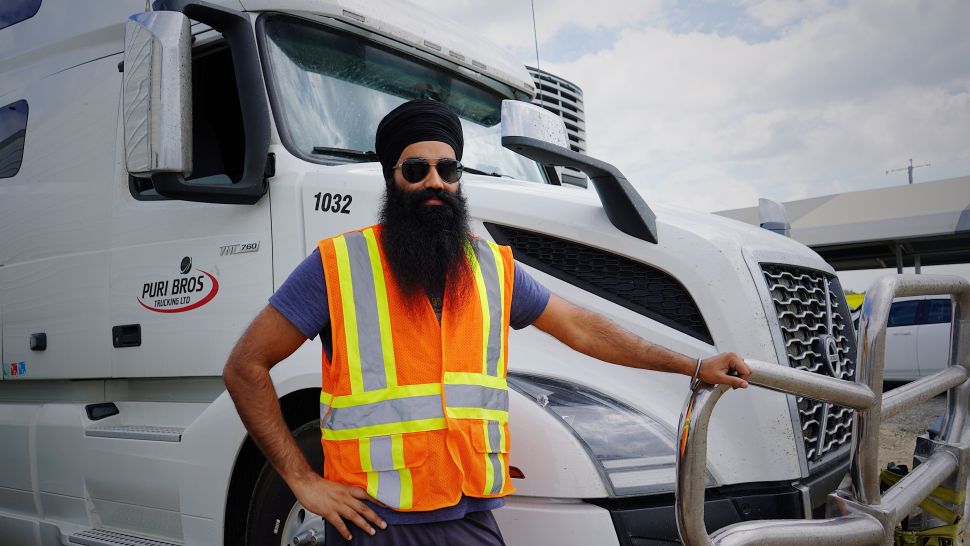
That is particularly true in the case of the Sikh Coalition, which is not a trucking-specific organization but one that given the large number of Sikh drivers on U.S. highways has taken particular interest in the ELP regulation.
The Sikh Coalition, in its comments filed to FMCSA, described itself as a “nonprofit and nonpartisan organization dedicated to ensuring that members of the Sikh community in America are able to practice their faith without fear of discrimination or backlash.”
Its description of the organization goes on to say that the group “(defends) the civil rights and civil liberties of Sikhs, including Sikh truck drivers, by providing direct legal services, advocating for legislative change, educating the public about Sikhs and Sikhi, and fostering civic engagement amongst Sikh Americans.”
The Notice of Proposed Rulemaking (NPRM) on ELP took comments through last Friday. The proposed rule “would make updates,” according to the NPRM, to various existing regulations to “reflect that noncompliance with ELP requirements will result in a driver being placed out of service.”
The one exception would be truck traffic localized to the U.S.-Mexico border that wasn’t heading further inland.
Supporters mount email campaign
The largest source of comments submitted to FMCSA was through a campaign from an unknown organizer in support of the proposed rule. It manifested itself in the form of verbatim submissions by dozens of individuals that raised the story of Dalilah Coleman.
Dalilah Coleman was five when she was injured in a 2024 crash in California involving a driver in the U.S. illegally.
The email comments from that lobbying drive all opened with the same wording.
“Dalilah’s story should not be the next in a saga of many others like it,” the emails said. “It should be the last one ever told. The illegal alien driving that truck should never have been allowed behind the wheel.”
That crash led to the introduction of Dalilah’s Law in the House of Representatives and the Senate. Its provisions include ELP requirements.
While the House of Representatives” Committee on Transportation & Infrastructure voted to advance the bill, it has not been taken up by the full House. Its Senate companion did not get a vote in the corresponding committee.
Given the calendar, passage of Dalilah’s Law is unlikely to occur this year. It would need to be considered by the next Congress to become law.
Concerns about discrimination
In its comment to FMCSA, the Sikh Coalition said it “(agrees) there is a common-sense safety need for all drivers to understand a level of English as is already required by federal law.” But it added that “certain steps needed to be taken to mitigate the risk of discrimination during the course of or under the guise of ELP enforcement.”
The Coalition said in earlier communications with the Department of Transportation, it had “raised concerns” about several issues, including what it said was “the lack of clear criteria for roadside inspectors to use to determine whether to subject drivers to ELP assessments, and the lack of any information as to what recourse is available to drivers rendered out of service (OOS) due to alleged ELP violations.”
It cited a FMCSA decision from 2016 that the agency “had previously removed the requirement to place drivers out-of-service because the Commercial Vehicle Safety Alliance could not substantiate the safety impact of the requirement.”
The Coalition also said it had communicated to FMCSA that the Sikhs’ analysis of FMCSA data on roadside inspections between 2021 and 2025 showed that just 0.19% “involved a driver’s inability to communicate in or understand English.”
ELP was a Road Check focus
However, this year’s Road Check Week resulted in EPL violations becoming a top 5 reason for inspectors to hand down an OOS order. ELP violations consisted of 9.1% of all OOS orders.
“Our goal is to reduce the risk of any discrimination against truck drivers who could
be profiled for their appearance and subject to disproportionate or discriminatory
additional scrutiny during roadside inspections in the name of ELP enforcement,” the Sikh Coalition comments said. “It is critical that FMCSA establish clear, objective standards for roadside inspectors tasked with carrying out ELP enforcement to mitigate the risk of wrongful discrimination against Sikh or other commercial drivers.”
The Coalition’s comments also raise the social media post posted last month by the Department of Homeland Security–later taken down–that made reference to Sikh drivers and declared “Get off our roads, you don’t know how to drive, Mr. Singh.”
“FMCSA has consistently provided reason to believe that it is less interested in improving safety outcomes and more interested in removing certain drivers from the road because of where they come from,” the Coalition’s comments said.
It wrapped up its comments by asking FMCSA to withdraw the NPRM, and “instead invest in tailored, evidence-based safety measures.”
The key U.S. trucking organizations, in their comments, broadly backed the goals of the ELP rule. But there were recommendations for some changes.
ATA’s concerns
The American Trucking Associations, in a comment that seemed to indirectly echo the Sikh Coalition’s criticism that the ELP/OOS criteria could be vague, said the ATA “remains concerned that the current assessment process leaves room for subjective interpretation by individual enforcement officials.”
“Without standardized scoring metrics or clearly defined evaluation criteria, ELP determinations may vary considerably from one roadside inspection to another,” the ATA said. “For example, a driver’s level of English proficiency may be deemed sufficient by one officer yet insufficient by another based on differing interpretations of the same interaction.”
ATA called on FMCSA to work with the states issuing CDLs “to establish and build in a standardized ELP assessment as part of the CDL issuance and renewal process.”
“Doing so would help evaluate and catch drivers with ELP deficiencies at ‘the front door’ – ensuring drivers are tested for ELP based on a consistent national standard before receiving a credential to operate, rather than relying primarily on roadside inspections to identify deficiencies after a driver has entered the workforce.”
The Owner Operator Independent Drivers Association’s (OOIDA) comments had few recommendations and was more effusive in its praise than ATA.
But it did add a history of earlier enforcement action.
It said that CVSA removed an ELP requirement in 2015. After that, OOIDA wrote, “ELP violations went largely unenforced and unreported for a decade.”
“In 2014, there were over 100,000 ELP violations at roadside; yet in 2024, there were just 9,700 ELP violations reported,” OOIDA said. “The lack of ELP enforcement, in conjunction with the growth of States issuing Non-Domiciled Commercial Driver s Licenses to foreign drivers during the same period, permitted hundreds of thousands of unqualified drivers to work on our nation’s roads. This needlessly resulted in numerous fatal crashes.”
More articles by John Kingston
FMCSA’s Elison: ‘weeks’ away from fixing Motus user experience
Wall Street analysts positive on C.H. Robinson deal; S&P more cautious
FMCSA split sleeper berth pilot program moves closer to launch
Brokerage Compliance Symposium
The day before F3. Every compliance issue you face - fraud exposure, carrier liability, FMCSA rules, cargo theft, insurance gaps - navigated by attorneys and operators defining best practices in a changing industry.
F3 Awards Dinner
The night before F3. FreightTech100 companies honored. FreightTech 25 and Shipper of Choice winners revealed live. Cocktail reception into dinner and live music - 300 industry leaders in one purpose-built room.
F3: Future of Freight Festival
Industry-defining keynotes, rapid-fire technology demos, and industry leaders networking in experiences across Chattanooga - plus the inaugural F3 Awards Dinner featuring the FreightTech and Shipper of Choice reveals.
The day before F3. Every compliance issue you face - fraud exposure, carrier liability, FMCSA rules, cargo theft, insurance gaps - navigated by attorneys and operators defining best practices in a changing industry.
The Signal at Chattanooga Choo Choo • Chattanooga, TN Register NowThe night before F3. FreightTech100 companies honored. FreightTech 25 and Shipper of Choice winners revealed live. Cocktail reception into dinner and live music - 300 industry leaders in one purpose-built room.
The Signal at Chattanooga Choo Choo • Chattanooga, TN Register NowIndustry-defining keynotes, rapid-fire technology demos, and industry leaders networking in experiences across Chattanooga - plus the inaugural F3 Awards Dinner featuring the FreightTech and Shipper of Choice reveals.
The Signal at Chattanooga Choo Choo • Chattanooga, TN Register Now