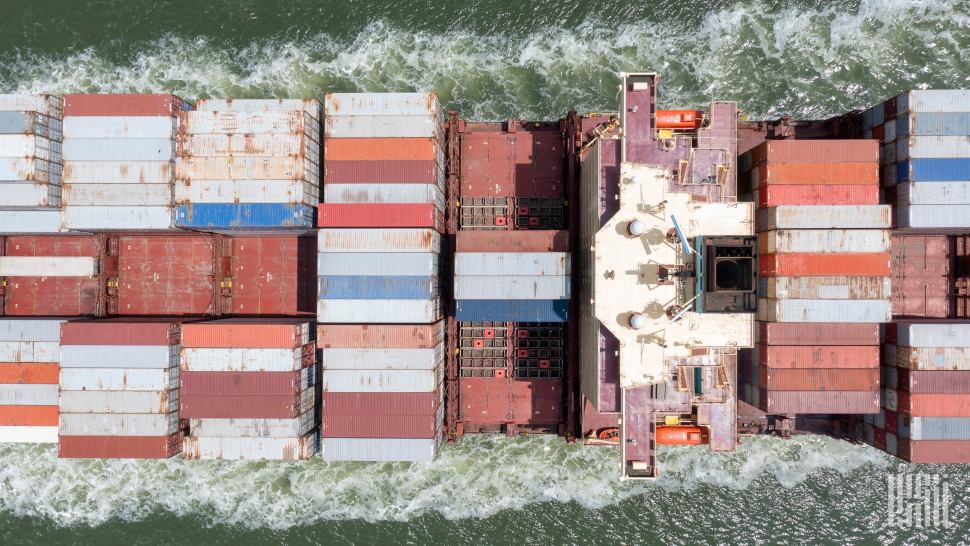
Global container volumes reached 17.35 million TEUs in September 2026, up 8% from a year earlier, as trade remained resilient despite mounting disruption and rising freight prices.
Monthly liftings fell 1.4% from August, although the decline followed the highest monthly volume recorded in the Container Trade Statistics database. Year-to-date volumes remained 5% above the same period in 2025, maintaining the growth rate seen since June.
North American imports increased 9% year-on-year, driven primarily by cargo originating in Asia and Europe. That marked an acceleration from the 7% annual growth recorded in the second quarter, extending the region’s recovery following weaker performance earlier in the year.
For the third quarter, global container volumes totaled 52.2 million TEUs, an increase of 2.4% from the second quarter. The gains came as the industry continued to face geopolitical disruption, capacity constraints and higher operating costs.
The Global Price Index rose to 123 points in September, up 5.1% from August and 62% above its September 2025 level.
The increase pointed to pressure on container shipping even as cargo volumes continued to expand. Disruption to major shipping routes, constrained capacity and higher operating costs continued to influence pricing.
The ongoing Persian Gulf crisis, constraints surrounding the Panama Canal and pressure on shipping capacity added to the difficult operating environment. Port congestion and high terminal utilization also threatened to limit the industry’s ability to clear backlogs and keep cargo moving efficiently, CTS said.
Every region recorded higher imports in the third quarter than in the same period of 2025.
The Indian sub-continent/Middle East also returned to quarterly year-on-year import growth following disruption earlier in 2026. Although the increase amounted to only about 6,600 TEUs, it represented an improvement from the second quarter, when imports fell 12%.
Export performance was less uniform. The Indian sub-continent/MidEast and North America were the only regions to record year-on-year declines in the third quarter, with volumes falling 7% and 1%, respectively.
Asia and Sub-Saharan Africa posted the strongest percentage growth, each recording an 8% increase. Strong cargo flows between the two regions contributed to their respective gains.
European exports rose 3% from the third quarter of 2025, supported by increased shipments to most destination regions. However, the gap between the region’s inbound and outbound trade persisted. Europe imported approximately 1.5 containers for every container exported over the year to date.
Why it matters: Container trade remains strong, but freight prices are up 62% year on year as disruption and capacity constraints put continued growth under pressure.
Read more articles by Stuart Chirls here.
Read more:
Maersk raises profit outlook as earnings surge, but shares slide on expectations miss
Asia-US container rates hold as carriers seek $3,000 November rate hikes
ONE lifts profit forecast to $2 billion as earnings surge
Successful quarter at Expeditors boosted by hyperscaler business