March trailer orders stabilize but supply chain issues stunt production
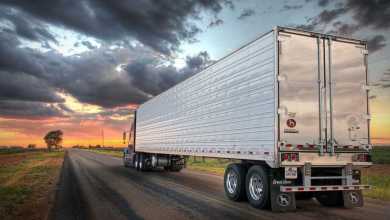
Trailer orders edged back toward trend in March, but the crush of orders in recent months leaves manufacturers addled by supply chain issues struggling.
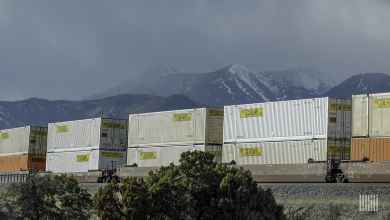
Potential service disruptions from the proposed Canadian Pacific-Kansas City Southern merger could be a key issue explored by regulators reviewing the merger, FTR says. The consulting firm also projects favorable market conditions for intermodal rail and carloads in 2021 and into 2022.
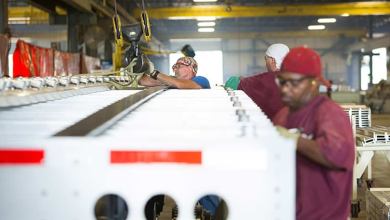
Trailer makers cannot keep up with demand, pushing out delivery times while navigating supply chain bumps.
Class 8 truck orders have exceeded 30,000 a month for six consecutive months, more bookings than in the previous 18 months combined.
After four straight months of near-record orders, trailer bookings took a breather in January as some manufacturers slowed taking reservations.
Welcome to FreightWaves Truck Talk, your Friday look at industry news with context, perspective and a bit of commentary. You can get Truck Talk delivered via email by subscribing at https://www.freightwaves.com/truck-talk.
Parts shortages and supply chain issues could push planned Q1 production into spring as robust orders continue in January.
2020 was supposed to be a year when trailer orders dropped after racing ahead of Class 8 tractor reservations. Even with practically no orders in April, annual trailer bookings blew away early-year predictions.
Consumer goods demand, recovery in manufacturing and shortage of drivers combine to create profits that fleets spend to upgrade and expand truck capacity.
Orders for new trailers dipped in November but the total bookings in the last three months are still the second highest in industry history.
Concern over the supply chain for wood and aluminum components to build new trailers adds to consumer goods-driven demand that pushed equipment orders over 50,000 for a second straight month in October.
Fleets placed 52,000 preliminary orders for new trailers in September, the third-highest month in history as pandemic-driven consumer goods demand continues unabated.
Cash from higher spot rates and replacement orders led September Class 8 truck orders to their highest monthly total since October 2019
The continuing rebound in trailer orders is in line with three-year high in spot freight rates as consumers buy more goods than services.
Record freight rates led to another solid month of Class 8 truck orders despite a pandemic, a presidential campaign and social unrest.
Despite economic uncertainty surrounding the coronavirus pandemic, freight demand drove July Class 8 orders to their highest levels in six months.
U.S. rail traffic is still facing double-digit percentage declines amid trade uncertainties and the coronavirus pandemic.
Preliminary orders for Class 8 trucks in June rebounded to a four-month high, following a rapid improvement in freight rates.
Class 8 orders in April plummeted to their lowest level since September 1995 as the COVID-19 pandemic froze new bookings and led to postponing near-term deliveries.
Order cancellations and only essential replacement bookings dropped new trailer orders to just 6,500 units in March. Separately, Wabash National announced a two-week suspension of production and cash-conservation moves.