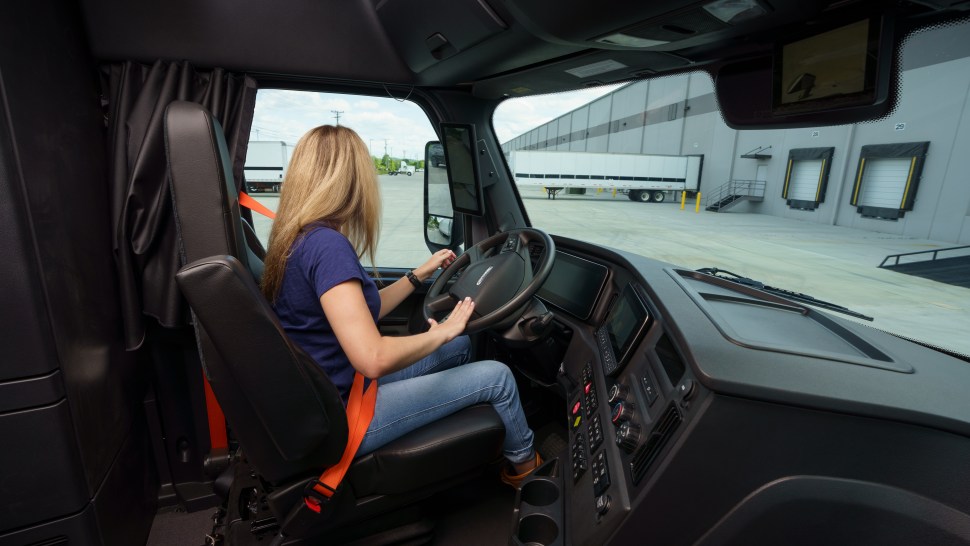
Somewhere in your truck right now, a connected system is quietly recording how it is driven, how hard it works, where it goes, and how healthy its engine is, and that stream of data is no longer just a maintenance convenience, it is becoming one of the most important numbers in your business, because at a recent candid session with Daimler Truck leadership, a reporter cut straight to the point and asked whether all that telematics information is effectively his new credit score, and the answer from the people who finance and insure trucks was close to yes.
That exchange deserves attention from every carrier, because it marks a real shift. The information your equipment generates is increasingly shaping what you pay for insurance, how quickly you get financed, how your warranty claims are handled, and even how a lender sizes up the risk of doing business with you. Here is what Daimler’s leaders said about how that data is already being used, and what it means for an operator trying to protect both the bottom line and a little privacy.
From Maintenance Tool To Risk Engine
Telematics started as a maintenance and tracking tool. You could see where your trucks were and get a heads-up when something needed attention. What has changed is that the same data is now feeding decisions that used to be made with paperwork, gut feel, and a credit report.
Kevin Bangston, who leads Daimler’s financial services arm in North America, described the connected ecosystem built around the manufacturer’s Detroit Connect system and was candid that the company uses it for a wide range of purposes. On the service side, the data helps decode whether a truck has a problem that can safely wait until the next scheduled maintenance or whether something needs immediate attention, which ties directly into how warranty claims get prioritized and handled. That alone changes the economics of uptime, because catching the difference between a wait-and-fix and a fix-now can save a breakdown on the road.
But the more consequential uses are financial. Bangston acknowledged that in the cases where loans default, the connected data helps the company locate its trucks, and because it knows where the trucks are, it is actually reducing its losses. Read that plainly. The same system that tells you your truck needs service also tells your lender where to find it if you stop paying. That is not sinister on its face, it is how a modern secured lender manages risk, but it is a reminder that the data flows both ways.
Connected Insurance And The Geico Pilot
The clearest example of data becoming your rate is insurance. Daimler announced a connected insurance program with Geico, and Bangston said it was tailored primarily for small fleets rather than mega fleets, with the company looking at how to extend a similar approach to mid-sized and large operations in another format down the road.
The idea behind connected insurance is that precise, real-world data about how a truck is actually operated and where it is can be used to price coverage more accurately than traditional broad-brush underwriting. For a safe, well-run small operation, that is potentially good news, because it opens a path to being priced on your actual behavior rather than lumped in with everyone in your category. The flip side is the obvious one. If data can reward the careful operator, it can also flag the one whose trucks are driven hard, and the same transparency that lowers one carrier’s premium can raise another’s. The reporter’s instinct to call it a new credit score was not far off, because that is exactly how a score works, it turns your behavior into a number that other people price off of.
Faster Money, Built On Data And AI
The data story runs straight into financing, and here the news is mostly good for carriers. Stephan Unger, chairman of Daimler Truck Financial Services, and Bangston both described how artificial intelligence and analytics are compressing the time it takes to make a credit decision from days down to hours. For a carrier waiting on approval to put a truck to work, that speed is real value, and Unger tied it directly back to customer benefit, noting that faster, more efficient decisioning can also flow through to better terms.
Behind the scenes, Daimler is also using advanced analytics on its own portfolio, learning from the pain of the multi-year freight recession to build something more resilient. Bangston described using smart analytics to figure out how to construct a portfolio that performs better in the next downturn and to target where the company should be acquiring business. The company even noted that its head of operations is the driving force behind its AI activity in North America. What this means for you is that the same data-and-analytics machine that speeds up your approval is also constantly assessing which kinds of carriers and segments represent good risk, which quietly shapes who gets the easiest access to financing and on what terms.
The Two Sides Every Carrier Should Weigh
So is this good or bad for a small carrier? Honestly, both, and pretending otherwise would not serve you.
On the upside, connected data can lower your insurance if you run clean, speed up your financing, catch mechanical problems before they strand you, and help you prove you are a professional operation worth doing business with. For a careful operator, data is a chance to be judged on your actual record rather than a stereotype about small fleets.
On the other side, the same data gives lenders and insurers a level of visibility into your operation they never had before, from how your trucks are driven to where they sit to when you are struggling. It can locate your equipment if you fall behind, and it can feed decisions about your rates and your terms that you do not fully see. The reporter who asked whether this is his new credit score was pointing at a genuine shift in power, because a score is something others control and price you on. The practical response is not to reject the technology, which is becoming unavoidable, but to understand that your telematics is now part of your financial reputation, to run your operation knowing it is being measured, and to ask pointed questions about what data is collected, who sees it, and how it affects your rate before you sign up for connected programs.
Why It Matters
The data a fleet’s trucks generate has quietly crossed the line from operational tool to financial instrument, now feeding insurance pricing, credit decisions that have compressed from days to hours, warranty triage, and even asset recovery on defaulted loans. For fleet and finance leaders, that means the same transparency that can lower premiums for a well-run operation and speed access to capital also hands insurers and lenders a level of visibility into the business they never had, so the strategic question is no longer whether to connect but how to govern that data, understand how it shapes rates and terms, and treat it as the reputational asset and exposure it has become.
This article is based on a panel discussion with Daimler Truck and Daimler Truck Financial Services leadership at the DTFS North American headquarters in Charlotte, North Carolina, featuring Stephan Unger, chairman of Daimler Truck Financial Services, and Kevin Bangston, president and CEO of Daimler Truck Financial Services USA LLC. Program details and statements are as presented by the executives.
Brokerage Compliance Symposium
The day before F3. Every compliance issue you face - fraud exposure, carrier liability, FMCSA rules, cargo theft, insurance gaps - navigated by attorneys and operators defining best practices in a changing industry.
F3 Awards Dinner
The night before F3. FreightTech100 companies honored. FreightTech 25 and Shipper of Choice winners revealed live. Cocktail reception into dinner and live music - 300 industry leaders in one purpose-built room.
F3: Future of Freight Festival
Industry-defining keynotes, rapid-fire technology demos, and industry leaders networking in experiences across Chattanooga - plus the inaugural F3 Awards Dinner featuring the FreightTech and Shipper of Choice reveals.
The day before F3. Every compliance issue you face - fraud exposure, carrier liability, FMCSA rules, cargo theft, insurance gaps - navigated by attorneys and operators defining best practices in a changing industry.
The Signal at Chattanooga Choo Choo • Chattanooga, TN Register NowThe night before F3. FreightTech100 companies honored. FreightTech 25 and Shipper of Choice winners revealed live. Cocktail reception into dinner and live music - 300 industry leaders in one purpose-built room.
The Signal at Chattanooga Choo Choo • Chattanooga, TN Register NowIndustry-defining keynotes, rapid-fire technology demos, and industry leaders networking in experiences across Chattanooga - plus the inaugural F3 Awards Dinner featuring the FreightTech and Shipper of Choice reveals.
The Signal at Chattanooga Choo Choo • Chattanooga, TN Register Now