




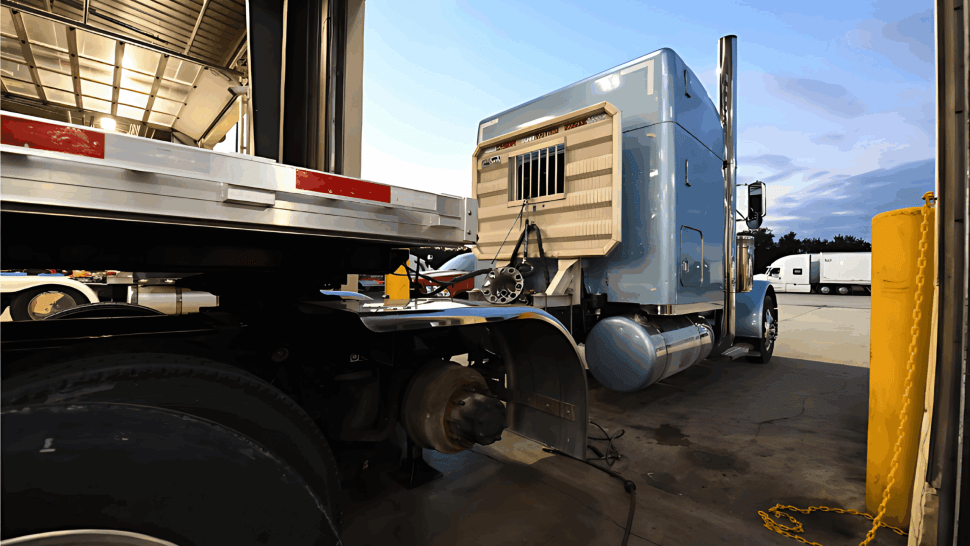
Why Small Carriers Are Pushed To Haul Heavy
Let’s be real. Brokers and shippers sometimes dangle freight that runs a little heavy. Maybe it’s “just” 2,000 pounds over. Maybe it’s right at the legal limit, but you know the scale could tip you depending on fuel, axle spread, or the way the load is balanced.
And when the market’s soft, it’s tempting to take it. The math in your head says, “One extra run at 46,500 pounds won’t hurt. I need the revenue.”
But here’s the truth: the long-term cost of running heavy almost always outweighs the short-term revenue. You might escape the DOT’s eyes, but you won’t escape the toll it takes on your equipment.
Suspension – The First System to Complain
Your suspension is built to handle weight, but only within a defined range. Consistent heavy hauling means every bushing, spring, and shock is stretched to its limit.
What Happens When You Run Heavy:
- Bushings tend to wear faster. The rubber components take on more stress, flex more often, and split prematurely.
- Leaf springs flatten out. Instead of keeping your ride height, they sag, throwing off alignment and causing uneven tire wear.
- Shocks lose long term effectiveness. Extra weight forces them to compress harder and longer, cooking the fluid inside and shortening lifespan.
- Air suspensions work overtime. Compressors run more often, air bags stretch beyond intended range, and leaks can form faster.
Brakes – Stopping Heavy Is Expensive
Every extra pound takes longer to stop. More weight means more brake heat, and heat is the #1 enemy of brake systems.
How Heavy Loads Beat Up Brakes:
- Lining and drum wear accelerates. A 5–10% increase in load can shorten brake life.
- Heat cracks drums. Overheated drums can spider crack, forcing full replacements.
- Slack adjusters and cams wear unevenly. Extra stopping force causes uneven pulls, which wear the adjustment system prematurely.
- Air system stress. Compressors run harder, increasing the risk of moisture and contamination.
Cooling System – The Silent Victim
Most drivers don’t connect overloading with overheating, but they should. Heavy loads mean engines work harder, climbing RPMs longer, and pulling more torque. That equals more heat — and the cooling system takes the beating.
What Heavy Loads Do to Cooling Systems:
- Radiators clog faster. High heat cycles bake dirt and debris into fins, reducing airflow.
- Fan clutches wear early. The fan runs more often to combat heat, wearing out bearings and clutches.
- Coolant breaks down quicker. Excess heat shortens fluid life and leads to cavitation (tiny bubbles that eat metal surfaces inside the engine).
- Water pumps fail faster. Bearings and seals wear prematurely from constant higher temps.
Tires and Alignment – The Hidden Expense
Even if you don’t blow a tire outright, running heavy chews them up.
- Sidewalls flex harder. Heavier loads make sidewalls run hotter, risking blowouts.
- Irregular wear. Heavy steer weights eat outer edges fast.
- Alignment drift. Sagging suspensions cause misalignment, and tires scrub down quicker.
Numbers Don’t Lie:
A set of drive tires might last 70,000 miles under normal conditions. Add consistent overweight loads, and you could be replacing at 30,000 or sooner. That’s $4,000–$6,000 burned quietly.
The Multiplier Effect – How Heavy Costs Stack
Here’s how it plays out over time:
Scenario:
- Truck runs overweight 2,000 lbs on average.
- Carrier hauls 100 loads like this per year.
Potential Extra Costs from Running Heavy:
- Brakes: $1,500/year more frequent replacement.
- Tires: $4,000 lost life over two years.
- Cooling repairs: $2,500–$5,000 every 18 months.
Total hidden maintenance cost over two years: $15,000–$20,000.
Compare that to the “extra” revenue — maybe $300–$500 more per load. Multiply by 100 loads = $30,000–$50,000. Subtract hidden costs and downtime, and suddenly the “profit” shrinks or disappears.
The Downtime Factor
It’s not just parts — it’s lost days.
- A suspension rebuild can take 2–3 days.
- A radiator swap? Potentially 1–2 days.
- Tire blowout on the road? Half a day at depending on where, plus service call fees.
For a small fleet, those lost days mean lost loads. A truck parked for repairs doesn’t just cost you maintenance dollars — it costs you revenue opportunities.
Why Brokers and Shippers Push Heavy
Let’s not ignore the other side. Brokers and shippers know trucking margins are thin. When they have overweight freight, they bank on desperate carriers taking it anyway.
Some even advertise “legal weight” while loading to the edge. Others say, “It’s only 45,500, you’ll be fine.”
But remember: they’re protecting their margins at the same time attempting to maximize the volume on the trailer. If the load damages your truck, it’s not their problem. They’ll find another carrier tomorrow. You’re the one eating the repair bill.
How to Say No (and Still Make Money)
Here’s the hard part — learning to decline freight that’s bad for business. But there are ways to protect yourself:
- Ask weight upfront every time. Don’t wait until you’re loaded. Make “what’s the weight?” part of your first question.
- Factor fuel into the equation. Heavier loads cut MPG. Show the broker the math and use it to negotiate.
- Charge for heavy. If you decide to take it, don’t do it at the same rate. Add $0.05–$0.10 per mile for loads over 44,000 for example. Set your standards.
- Have a limit. Draw a line where you won’t go. Example: “I won’t haul over 45,000.” Stick to it.
FAQs
Q: Is running consistently heavy really that bad?
Yes and no. Once or twice won’t break a truck. But consistent overweight loads compound the wear — especially on suspension and brakes.
Q: What about overweight permits?
Permits keep you legal with the DOT, but they don’t save your equipment. The wear still happens.
Q: Can newer trucks handle heavy loads better?
Modern suspensions and cooling systems are stronger, but physics hasn’t changed. More weight = more stress = shorter lifespan.
Q: What’s worse: heavy flat land or heavy mountains?
Mountains every time. Climbing grades = hotter cooling systems. Descending = harder braking. If you’re heavy, the Rockies will punish your truck faster than flat Midwest runs.
Final Word
Heavy freight is one of those traps small carriers fall into because the math looks good in the short term. But trucks don’t lie. Every extra pound beyond what your suspension, brakes, and cooling system normally handle shows up later in repairs, downtime, and potential lost revenue.
The mega carriers spread that cost across thousands of units. You can’t. One suspension issue or cooling system failure can erase the margin from a month of hauling.
The lesson? Be disciplined. Know your weight every time. Know your limits. And if you take heavy, make sure you’re compensated for the punishment your truck is about to take. Because in trucking, running heavy doesn’t just wear out your truck — it wears out your profit eventually.
Brokerage Compliance Symposium
The day before F3. Every compliance issue you face - fraud exposure, carrier liability, FMCSA rules, cargo theft, insurance gaps - navigated by attorneys and operators defining best practices in a changing industry.
F3 Awards Dinner
The night before F3. FreightTech100 companies honored. FreightTech 25 and Shipper of Choice winners revealed live. Cocktail reception into dinner and live music - 300 industry leaders in one purpose-built room.
F3: Future of Freight Festival
Industry-defining keynotes, rapid-fire technology demos, and industry leaders networking in experiences across Chattanooga - plus the inaugural F3 Awards Dinner featuring the FreightTech and Shipper of Choice reveals.
The day before F3. Every compliance issue you face - fraud exposure, carrier liability, FMCSA rules, cargo theft, insurance gaps - navigated by attorneys and operators defining best practices in a changing industry.
The Signal at Chattanooga Choo Choo • Chattanooga, TN Register NowThe night before F3. FreightTech100 companies honored. FreightTech 25 and Shipper of Choice winners revealed live. Cocktail reception into dinner and live music - 300 industry leaders in one purpose-built room.
The Signal at Chattanooga Choo Choo • Chattanooga, TN Register NowIndustry-defining keynotes, rapid-fire technology demos, and industry leaders networking in experiences across Chattanooga - plus the inaugural F3 Awards Dinner featuring the FreightTech and Shipper of Choice reveals.
The Signal at Chattanooga Choo Choo • Chattanooga, TN Register Now