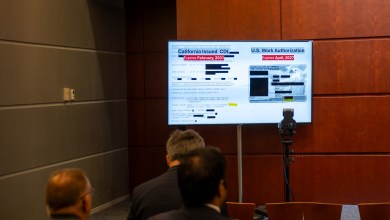
Romanian trucker’s back channel to Mar-a-Lago
Part two of a two-part series on how Dragos Sprinceana, while carrying $889,630 in unpaid federal fines, became a self-described envoy to Trump’s inner circle.

Part two of a two-part series on how Dragos Sprinceana, while carrying $889,630 in unpaid federal fines, became a self-described envoy to Trump’s inner circle.
Part one of a two-part series that highlights 150 crashes, 10 fatalities, $889,630 in unpaid federal fines, and a dead man running a Mar-a-lago linked trucking company
Dalilah Coleman is a seven-year-old girl from California’s San Bernardino County who, on June 20, 2024, was five years old and riding in her family’s car when a commercial 18-wheeler driven by Partap Singh — a citizen of India who entered the country illegally through the southern border in 2022 and was later issued a […]
For most of the past year, two federal agencies have been doing more to reshape the trucking driver pool than anything else in the industry: the Department of Transportation with its non-domiciled CDL crackdown, and the Department of Homeland Security with its immigration enforcement raids. DOT and DHS have operated in close coordination — DOT […]
A driver gets his permit in Hawaii, boards a plane to New Jersey, trains Sunday through Thursday, passes a skills test on Friday, flies home Saturday, and walks out of a DMV with a commercial driver’s license. Federal law allowed all of it. That’s the problem.
Before you can have an honest conversation about what’s happening to DACA recipients in the trucking industry right now, you have to first be honest about what DACA actually is – because a lot of people are weighing in on this policy debate without a firm grip on the facts, and that confusion is doing […]
Most small carriers do not lose in hiring. They lose in what happens after the handshake — the documentation that didn’t get collected, the employer verification that never got followed up on, the drug test that cleared but nobody logged into the right system, the medical card that expired and sat in a drawer for […]
A firsthand, frontline reality of how freight moves from broker, carrier, spot, shipper direct, interlined and non-commodity freight to the crash scene.
Our investigation reveals that 5% of carriers, as identified by their insurers, account for nearly a third of all truck crashes. No federal or state law requires insurers to review a single page of safety data before binding a policy.
The 287(g) program has turned local law enforcement into immigration officers across 40 states. Compliant hiring is not defensible hiring. Here’s the difference, and why it matters now more than ever.
You can’t own a fishing boat, fly an airplane, broadcast a radio signal, split an atom, or drill for oil in America without proving you’re an American. But you can operate an 80,000-pound commercial motor vehicle on every highway in every state in the nation without being a citizen of this country, or even setting foot in it. Welcome to the American trucking industry, where the door isn’t just open. It’s been taken off the hinges.
For decades, insurance was the one thing you couldn’t fake your way past to start a trucking company. That’s no longer true. As instant-issue coverage and $300 authority fees make it easier than ever to place 80,000 pounds on public highways without verification, a scalable, pre-authority risk-control model could restore the gate the industry lost without adding a single federal employee to the payroll.
My investigation found 76 Risk Retention Groups insure nearly 30,000 motor carriers linked to more than 6,300 fatal crashes, all without state guaranty fund protection for crash victims. The findings come as reports indicate that major insurers, including Chubb and AmTrust, are exiting the Chicago trucking market, funneling high-risk carriers into RRGs that have already incurred $199 million in unpaid losses and multiple insolvencies.
It’s a win.
The non-domicile CDL final rule eliminates EADs as a pathway to a commercial license and restricts eligibility to H-2A, H-2B, and E-2 visa holders. With 97 percent of the current 200,000 non-domiciled CDL holders unable to qualify under the new standard, expect 30,000 to 40,000 drivers removed from the commercial pool every year.
Thirty people are dead. At least 17 fatal crashes in 2025 alone involved non-domiciled commercial drivers who should never have been behind the wheel of an 80,000 pound truck. That’s ends today. People should be asking why it took this long to put American Trucking and American Motorists First.
42 investigative article links covering CDL mills. Chameleon carriers. Fraudulent examiners. Bought legislators. Exposed vehicles. Every failure point in America’s deadliest supply chain crisis, exposed by an 25 year industry veteran.
Less than 1% of insurer-carrier relationships are tied to 6% of the crashes and fatalities in America. The scorecard shows exactly who. The fix isn’t just regulation. It’s insurers taking ownership of their books and investing in risk-control professionals who actually know trucking.
The Stop Underrides Act 2.0 is back. Should trucking companies be forced to spend billions armoring their trailers against crashes that are overwhelmingly caused by the other driver? The bill’s sponsors say at least 300 people die annually in underride crashes. Meanwhile, distracted driving kills more than 3,200 people a year and is a contributing factor in the very side-impact crashes this bill claims to address.
The question people always ask is, “Where did they get the money to grow to 500 trucks?” It’s all in the model, and it’s often rinse, reuse, repeat.
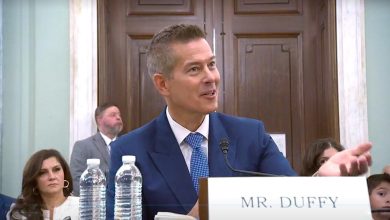
A fatal Indiana crash has exposed a pipeline stretching from Kyrgyzstan to Chicago to Philadelphia, chameleon carriers sharing trucks and DOT numbers, a CDL school with no public footprint, an ELD allegedly built with a backdoor, and a driver whose immigration status passed a federal database check. Secretary Duffy is investigating. Will the investigation follow the money?
The agency confirmed investigators visited the carrier linked to a deadly Indiana crash and a massive chameleon network. But the enforcement pathway matters more than the headline.
A Mexican licencia federal de conductor can be obtained without a behind-the-wheel road test. Third-party brokers advertise mail-order processing for as little as $200. Under existing reciprocity agreements, that license can be converted to an American CDL in states that accept foreign credentials, and at least six of those states have been flagged by FMCSA for failing to verify the legal presence of non-domiciled applicants.
On Tuesday afternoon, a 30-year-old truck driver from Philadelphia named Bekzhan Beishekeev failed to stop for slowed traffic on State Road 67 in Jay County, Indiana. He swerved into oncoming traffic and killed four Amish men from the Bryant community: Henry Eicher, 58, his sons Menno, 33, and Paul, 31, and Simon Schwartz, 22.
On Tuesday afternoon, a 30-year-old truck driver from Philadelphia named Bekzhan Beishekeev failed to stop for slowed traffic on State Road 67 in Jay County, Indiana. He swerved into oncoming traffic and killed four Amish men, a father, two of his sons, and a family friend.
GenLogs provides a visual, objective source of truth. You can put your eyes on what a carrier is actually doing: where they’ve been, when they last hauled freight, whether they ever hauled freight, and for whom. Instead of asking carriers what they claim to do, GenLogs shows you what they actually do.
11 rate hikes, 26 months of manufacturing contraction, driver wages falling behind inflation, while the Fed blamed workers for price increases. Kevin Warsh’s nomination signals a fundamental shift in how Washington thinks about monetary policy , and trucking stands to benefit.
When a driver or carrier challenges bad data through FMCSA’s DataQs system, the appeal often goes right back to the same officer who issued the violation. That’s about to change. The Motor Carrier Safety Screening Modernization Act finally brings independent review to the challenge process, and that’s the real game changer buried in this bill.
FMCSA and its state partners conduct 3.3 million roadside inspections annually, placing nearly a million vehicles and drivers out of service, but states are measured on inspection volume, not enforcement outcomes. The inspectors’ own alliance wants to eliminate the requirement that carriers confirm they fixed the problems. There are 800,000 carriers and 12,000 audits a year. Texas has a state law that conflicts with federal ELP requirements, so drivers get licensed there and are placed out of service elsewhere. We’re counting inspections. Nobody’s counting compliance.
The D.C. Circuit stayed FMCSA’s non-domiciled CDL rule in November. The agency asked to place the litigation on hold while it works on a final rule. FMCSA is still seeking three-year approval for the information collection requirements, states must retain ID documents and SAVE queries for two years, and produce them within 48 hours of request.
Arizona lawmakers just passed a bill out of committee that would let cops seize a commercial truck on the spot if the driver is here illegally with a fake CDL. Welcome to the new reality of trucking legislation, where highway safety and border enforcement are colliding in ways that will reshape how carriers operate.
Nearly 88,000 trucking companies closed in 2023. Fraud losses topped $455 million in 2024. Carriers filing claims against $75,000 surety bonds are discovering that the pot’s already been split 50 ways. As the Supreme Court prepares to rule on whether brokers can be held liable for hiring bad carriers, it’s time to ask: who really bears the risk in freight, and is the system rigged against the people actually moving the loads?
The National Weather Service is forecasting a “significant East Coast winter storm threat” for this weekend, with a coastal low forming Friday and rapidly intensifying into a bomb cyclone as it tracks up the Eastern Seaboard. If you’re running freight anywhere from the Carolinas to Boston over the next five days, you need to pay attention right now.
The Florida Senate Transportation Committee voted 6-3 on Tuesday to advance legislation requiring law enforcement to detain commercial truck drivers in the country illegally, impound their vehicles, fine owners $50,000, and ban the carrier from operating in the state. This is the tip of the spear now aimed at CDL programs nationwide.
The favorite argument from those supporting the ATA’s teen trucker push is “if they can go to war at 18, they can drive a truck at 18.” Military service transforms young people into disciplined, responsible adults who understand that their decisions affect others. That’s why military-trained drivers have 42% fewer accidents. The solution isn’t younger drivers; it’s requiring the standards that make military drivers safer. We’ve lost something fundamental in how we raise our young people, and the highway data proves it.
The ATA wants FMCSA to extend a failed pilot program that produced 42 graduates out of a planned 3,000. Meanwhile, we’re handing CDLs to drivers who can’t pass basic safety screenings, and carriers who kill people on our highways are walking away with slaps on the wrist. Lowering the age requirement doesn’t solve a labor problem; it creates a safety catastrophe.
A viral dashcam video and a puzzling lawsuit showcase what the trucking industry has known for decades: Distraction kills, and for CDL holders, it kills careers too.
When Harjinder Singh made an illegal U-turn on Florida’s Turnpike on Aug. 12, 2025, killing three people, he exposed what many in the industry have known for years: the American commercial driver licensing system is fundamentally broken. Singh failed his CDL written exam 10 times. He held licenses from two states simultaneously. He couldn’t read road signs or communicate with law enforcement. And yet, he was legally permitted to operate a 40-ton truck on our nation’s highways. This isn’t just an immigration story. This is a licensing standards story.
Secretary Duffy has moved beyond funding threats. He’s now openly discussing pulling California’s ability to issue commercial driver’s licenses to anyone, a move that would effectively ground 700,000 CDL holders and create supply chain chaos that would make the 2021 port backups look like a minor inconvenience.
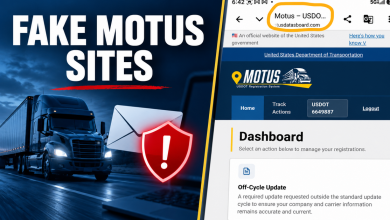
If you got an email from FMCSA this week telling you to prepare for Motus, you might have rolled your eyes. Another promise to modernize. We’ve heard this song before. This one actually matters.
The Federal Motor Carrier Safety Administration is seeking public comment on renewing its commercial motor vehicle marking requirements. While the FMCSA documents over 153,000 marking violations in 2024 alone, an underground economy of swapped placards helps chameleon carriers and Carrier Identity thieves stay one step ahead of investigators.
A credit card and fifteen minutes can now put an unvetted operator behind the wheel of 80,000 pounds, with full legal authority to share the road with your family. The underwriting standards that once kept dangerous carriers off the highway have collapsed, and everyone from crash victims to taxpayers is footing the bill.
In December 2025, Waymo recalled 3,067 robotaxis after its vehicles ran red lights and blew through school bus stop signs at least 20 times in Austin alone, including one incident that occurred moments after a child crossed in front of a vehicle. Meanwhile, Aurora’s autonomous trucks have completed over 100,000 driverless miles in Texas without a single school bus incident. The difference is methodology, and understanding that difference might just save your life.
The freight industry moved $14 trillion in goods last year. It cannot function without trust, trust that the carrier picking up your load is who they claim to be, trust that the broker paying you will actually pay, and trust that the load you accepted exists. That trust has been systematically exploited for decades. At its root, every form of freight fraud, chameleon carriers, double brokering, cargo theft, identity spoofing, comes down to one question: Are you who you say you are?
Dartanyan Gasanov, co-owner of Westfield Transport, is scheduled to stand trial on March 2, 2026, in Springfield, Massachusetts, on federal charges related to the June 2019 crash that killed seven Jarheads Motorcycle Club members. He reportedly rejected a no-time plea agreement and chose to fight the charges at trial. Meanwhile, the driver who killed seven people was acquitted, remains free under an immigration supervision order, and becomes eligible to petition for his license back in June 2026.
The Trump administration’s decision to drop its appeal that tied billions in transportation funding to immigration enforcement represents a significant legal setback, but don’t mistake this tactical retreat for surrender. For motor carriers employing non-domiciled CDL holders, the regulatory battlefield has only shifted, not cleared.
A stolen 39,000-pound front loader became a weapon against Nevada police this week, and the incident underscores an industry losing up to $1 billion annually to equipment theft with only a 20% recovery rate.
A five-year-old Maine boy was dragged nearly 300 feet and run over by his own school bus after his arm became trapped in the closing doors. The NTSB investigation comes as national data shows approximately 16 children die annually in school bus loading zones, a number that has persisted for decades despite available technology to prevent such tragedies.
When a commercial vehicle operator is charged with killing three people and walks out of jail on bond following a hearing that doesn’t appear on the public court docket, questions need to be asked. El Hadji Karamoko Ouattara’s January 7 bond hearing is on the docket, but after nearly three weeks since the crash, no one has identified the motor carrier he was hauling for.
Tennessee has notified approximately 8,800 CDL holders that they must provide proof of citizenship or lawful presence by April 6 or face an automatic downgrade to a standard driver’s license. The move follows Transportation Secretary Sean Duffy’s escalating enforcement campaign that has already frozen California’s non-domiciled licensing program and threatened multiple states with the loss of federal highway funds.
The Chinese American Truckers Association filed suit against FMCSA and California DMV this week, challenging an indefinite licensing freeze that has stranded qualified drivers in bureaucratic limbo.
Congress is scrambling to block Chinese purchases of farmland near bases. But nobody is systematically vetting who climbs into the cab to haul freight to and from military installations. Given everything we now know, shouldn’t we at least ask the question?
North Carolina’s non-domiciled CDL program just posted the nation’s worst audit numbers: 54% of licenses reviewed were issued illegally. Nearly $50 million in federal funding is at stake. But if you’ve been paying attention, none of this should surprise you.
USPS didn’t track deaths. It didn’t verify who was authorized to transport its freight. And it kept hiring carriers with conditional safety ratings while 79 people died in contractor crashes over three years. Now, with Duffy’s DOT threatening to revoke California’s CDL program and USPS’s first enforcement attempt collapsing within days, the Postal Service is trying again, this time claiming safety as its priority, a priority it ignored for a decade.
California’s years of documented CDL fraud, enforcement failures, and defiance of federal regulations finally caught up with it. Today’s $160 million funding cut for non-domiciled CDL violations, combined with October’s $40 million ELP penalty, marks the largest federal enforcement action against a state licensing program in FMCSA history.
The last time “south Minneapolis” and “National Guard” appeared in the same headline, Reginald Denny was getting his skull fractured in 91 places four blocks from where an ICE agent just shot a woman in the head. What fleets need to know about the Insurrection Act, driver safety protocols, and operating when federalism breaks down.
State licensing agencies had a decade to implement what amounts to a database connection for CDL medical certifications. Instead, FMCSA has spent 2025 issuing waiver after waiver while drivers get placed out of service and fraud vulnerabilities persist. The agency’s hands-off approach to NRII enforcement explains why states feel comfortable ignoring federal CDL standards across the board.
California’s latest high-risk audit reads like a warning label for the freight industry. As the state struggles with data integrity, benefit administration, and mounting fiscal pressure, the consequences may extend beyond Sacramento, into CHP staffing, roadside inspections, and federally funded enforcement programs that trucking depends on.
California delays cancellation of 17,000 non-domiciled CDLs until March despite Secretary Duffy’s January 5 deadline. With $160 million in federal funding and potential decertification of the state’s entire CDL program on the line, the standoff could reshape federal-state authority over commercial licensing for years.
A class-action lawsuit filed in Alameda County seeks to block California’s Jan. 5 cancellation of nearly 20,000 commercial driver’s licenses. The plaintiffs argue the DMV is punishing immigrant drivers for the agency’s own administrative failures while refusing to let them reapply for corrected credentials, violating state law and due process.
California is expected to reissue approximately 17,000 non-domiciled commercial driver’s licenses it planned to revoke after federal enforcement pressure, setting up what may become the most significant federal-state confrontation over CDL authority in decades.
Trump’s marijuana rescheduling could strip DOT of testing authority for 4 million CDL drivers. Without a safety carve-out, the agency that’s kept impaired operators off highways for 34 years loses its legal teeth. Here’s what carriers need to do before the rules change.
One owner who hired an unqualified driver got 60 days. Other owner offered no time plea deal. The driver who killed seven was acquitted. The system that enabled them both remains largely unchanged.
Discover why 9,500 drivers out of service doesn’t mean what you think it means and what that really means for the industry.
When a November 2025 draft memo from the Department of Transportation surfaced promising a groundbreaking “data-driven severity matrix” to catch chameleon carriers, it raised uncomfortable questions about ARCHI (Application Review and Chameleon Investigation), built with $3.5 million in congressional funding in 2012-2013. Is this bureaucratic amnesia, rebranding of an underperforming system, or evidence that FMCSA’s chameleon detection infrastructure has been quietly abandoned?
The Federal Motor Carrier Safety Administration is rolling out Motus, a new registration system designed to replace the agency’s decades-old platform, offering what it calls “a more intuitive, user-friendly experience.”
A federal lawsuit is now underway challenging the Federal Motor Carrier Safety Administration’s (FMCSA) new interim final rule that limits the issuance of non-domiciled commercial driver’s licenses (CDLs). The lawsuit, filed on October 20, 2025, in the U.S. District Court for the D.C. Circuit, argues that FMCSA’s decision to enforce the rule immediately—without going through […]
California just wrapped up a record 1.5 billion pound pistachio harvest, but cargo theft hit record highs in 2024 and nuts remain prime targets. We’ve documented sophisticated nut theft since 2006, $10 million stolen between 2013 and 2017 alone. Will it continue in 2025?
Inspectors pulled 2,296 commercial vehicles off the road during the 2025 Brake Safety Week, a 15.1% out-of-service rate virtually identical to 2024’s 15% failure rate. With next year’s enforcement already scheduled for Aug. 23-29, 2026, the question isn’t whether we’ll see similar results
The Federal Motor Carrier Safety Administration issued a waiver on October 9, 2025, extending the deadline for full implementation of the National Registry II electronic medical certification system to January 10, 2026.
Federal watchdogs are once again questioning whether we have one CDL standard or 50. With nearly 5,000 truck and bus fatalities last year and English proficiency enforcement under fire, the new OIG audit could reshape how states test, license, and oversee drivers nationwide.
Two pilot programs will test flexible hours-of-service configurations as questions persist about ELD fraud, system vulnerabilities, and whether current regulations effectively reduce fatigue-related crashes despite improved compliance rates.
The U.S. International Trade Commission has ruled in favor of Motive, rejecting Samsara’s claims of patent infringement.
The Federal Motor Carrier Safety Administration on Wednesday removed three more electronic logging devices from its registered list, giving affected fleets until Nov. 3 to swap out the non-compliant systems before facing enforcement action.
The Federal Motor Carrier Safety Administration has extended its temporary waiver allowing commercial drivers and motor carriers to use paper medical examiner certificates for up to 60 days after issuance, up from the previous 15-day allowance, as state licensing agencies continue transitioning to electronic medical certification systems. The modified waiver addresses ongoing implementation challenges with the National Registry II electronic transmission requirements that took effect June 23, with only 38 states and the District of Columbia currently compliant while 12 states including California, Florida, and New York have yet to implement the new system.
A commercial tractor-trailer’s illegal U-turn on Florida’s Turnpike last week killed three people in a minivan that collided with the trailer at highway speed, putting new focus on critical flaws in commercial driver licensing and training standards that have made America’s highways increasingly dangerous.
With Colorado requiring commercial vehicles to carry chains starting September 1 and other states following suit through October, truck drivers need to understand the complex web of chain laws, installation requirements, and hefty penalties that await the unprepared. From $880 fines in Oregon to $1,000+ penalties in Colorado for blocking highways, the stakes have never been higher.
The trucking industry’s decade-long push for hair follicle drug testing is reaching a critical inflection point as the Trump administration prepares to address guidelines that have been delayed repeatedly since 2015. Major carriers say hair testing catches 10 times more drug users than urine screens, but face fierce opposition from minority groups and independent truckers who claim the methods are discriminatory.
For the first time in decades, the federal government is shifting its attention from policy roundtables to the actual drivers and fleets keeping the country moving.
Starting June 2025, the FMCSA will enforce long-delayed rules on driver medical certification and English proficiency, with direct implications for fleets, intrastate drivers and licensing agencies. From MVR downgrades to out-of-service roadside inspection orders, these rules shift from paper compliance to real-world enforcement. Fleets that fail to adapt may face costly violations or sidelined equipment.
The Texas Department of Public Safety does not enforce the federal English language proficiency requirement for intrastate CDL drivers. This aligns with state law but may conflict with the FMCSA’s updated ELP enforcement policy, raising questions about federal funding under the Motor Carrier Safety Assistance Program.
The FMCSA is quietly revamping its National Consumer Complaint Database (NCCDB), aiming to transform it from a bureaucratic black hole into a real-time system for identifying unsafe carriers, shady brokers, coercive shippers and repeat fraud offenders.
NHTSA’s proposal to require drunk and impaired driving prevention technology in all new passenger vehicles has sat in limbo since early 2024. Now, with a new White House, fleets, OEMs and safety advocates are asking: Will the FMVSS become reality or is this another safety initiative lost to election-year politics?
With over 12% of trucks sidelined during last year’s CVSA Brake Safety Week, the 2025 focus on rotors and brake drums puts heavy-duty and vocational trucks in the crosshairs. This guide breaks down what inspectors look for and how clean, well-maintained rigs are more likely to pass or avoid inspection altogether.
Freight fraud and cargo theft have reached crisis levels, but recent FMCSA identity verification measures are chipping away at fraudulent registrations. Proactive enforcement and innovative tech solutions are starting to protect our supply chains.
What the 2025 FMCSA rule blitz really changes: a side-by-side breakdown of old rules, new language, and what fleets, drivers and compliance teams need to know. FMCSA dropped 18 proposed and two final rules into the Federal Register. We’re giving you the practical play-by-play.
Recap hours and sleeper berth splits are two of the most misunderstood parts of hours-of-service regulations. Whether you’re a new CDL holder or a seasoned fleet operator, knowing how to use these tools can extend your driving day without risking an HOS violation.
With 1 in 3 drivers only medically qualified for short-term certification, and FMCSA policy updates arriving next month, fleets must treat driver fitness like the operational risk it is. A house in New Jersey hit by a truck might have been spared. The next one might not.
FMCSA audits shape your safety rating, impact your ability to haul freight and determine if your company stays on the road. In 2025, with scrutiny rising and technology advancing, understanding how these reviews unfold is mission-critical.
According to reports, nearly 4% of drivers on U.S. highways don’t have valid CDLs, and that’s just the tip of the iceberg. With licensing standards fractured across states and risky drivers slipping through the cracks, here is how fleets can get ahead of driver risk before it costs them a verdict, a fatality or the whole business.
With CVSA reinstating English proficiency violations as out-of-service offenses, FMCSA’s new guidance puts front-line carriers and drivers on high alert and raises deeper questions: What about drivers who are deaf, mute or communicate differently? Who gets left behind, and what can fleets do now to stay compliant?
From nuclear verdicts to unqualified drivers behind the wheel, this article dives into the latest Texas bill that could restrict what juries hear after a crash and what that means for fleets, families and front-line accountability in trucking.
Facing a DOT audit in 2025 doesn’t have to be a nightmare. Learn how fleets can stay ready year-round, avoid common audit pitfalls and keep their trucks rolling smoothly without regulatory worries.
On Monday, the FMCSA revoked eight electronic logging devices tied to Gorilla Fleet Safety LLC, citing failure to meet federal technical standards. Fleets now face a 60-day deadline to replace noncompliant systems or risk violations.
With MC numbers disappearing, tougher English proficiency rules hitting drivers, broker transparency tightening and several regulations disappearing, fleets face challenges and opportunities. Here’s your essential guide to navigating trucking’s changing road ahead.
With CVSA’s International Roadcheck around the corner, thousands of inspectors will be out in force, and if you’re not ready, your truck could be the one parked roadside with an out-of-service sticker. This guide breaks down what a Level 1 inspection really involves.
Two new executive orders refocus attention on English language requirements for truck drivers, reviving enforcement protocols that have existed since 1937. Industry voices say training, licensing and real-world risk management are essential priorities beyond language rules.
At Motive’s Vision 25 Summit, fleet leaders saw firsthand how AI-powered tools can transform safety, efficiency and driver culture. With new AI features like Motive AI Coach, real-time fatigue detection, fraud prevention and natural language analytics, Motive emphasized that technology should serve, not replace the people behind the wheel. Real-world success stories and a major courtroom win against Omnitracs reinforced that Motive’s future isn’t just built on innovation, but on trust, transparency and tangible results for fleets ready to lead the next era of trucking.
A proposed California law, Assembly Bill 1331, could upend how trucking fleets monitor drivers by prohibiting dashcam and GPS surveillance during off-duty periods, even inside the vehicle. If passed, the bill would redefine off-duty time as private, creating costly compliance challenges and raising concerns about safety, theft prevention, and liability. With $500 penalties per violation and the potential for lawsuits, fleets operating in California, and nationwide, may need to rethink how they balance privacy with operational oversight.
Fleet maintenance has evolved beyond the old-school break-fix mentality. While preventive maintenance is a step up from waiting for breakdowns, predictive maintenance, powered by telematics and AI diagnostics, is the new gold standard. By using real-time data to forecast failures before they happen, fleets can drastically cut repair costs, improve safety, and reduce costly downtime.
Technology-driven platforms like Motive and Fleetio enable fleets to automate diagnostics, optimize maintenance schedules, and track performance metrics in real time. In an industry where compliance, efficiency, and cost control are everything, predictive maintenance is a necessity.